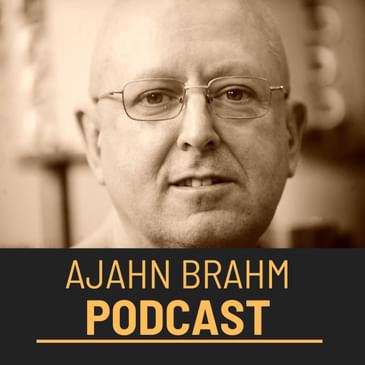
The Dhamma talk for the evening is on the topic of "right view," which is not about following a set of beliefs or rituals, but rather about how to look at and react to life. Ajahn Brahm shares a story of a man who gets upset when a stranger yells at him, but later finds out the man has a brain injury. The moral of the story is that we should focus on our reactions to life, rather than external triggers, and understand that anger is a dysfunctional reaction. In this Dharma talk, Ajahn Brahm discusses the importance of right view in Buddhism. He explains that right view is all about how we perceive and react to life. If we can change our view, we can change the way we experience life and ultimately find peace and happiness.
—
This dhamma talk was originally recorded in 4th July 2008. It has now been remastered and published by the Everyday Dhamma Network, and will be of interest to his many fans.
These talks by Ajahn Brahm have been recorded and made available for free distribution by the Buddhist Society of Western Australia under the Creative Commons licence. You can support the Buddhist Society of Western Australia by pledging your support via their Ko-fi page.
Right View – How and Where to Look
by Ajahn Brahm
Transcription
So the title for this evening's Dharma talk will be exciting moment, isn't it? Wondering what the double talk is going to be sometimes exciting for me too, because sometimes I don't know what I'm going to talk about. But today I'm going to recycle the talk I gave over in Toronto. Sometimes when you give talks, I give you the subjects, and quite often you want to have the subject, but give it a different slant, an angle which people haven't heard before so as to not just tell people what they already know, but to take ones understanding of the nature of the world and especially you, to a deeper level, so that that understanding can equip one to deal better with the problems and difficulties of life. So not just with philosophy, but also just with experiential strategies for life. And they asked me to talk in Toronto about, uh, the first factor of the Eightfold Path, which is called Right View. And it's so great difference here because the right view does not mean right dogma. Sometimes people think, oh, well, what is right for you and you've got to believe this and you've got to believe that, and you've got to do this, and this is the right way of doing the ritual. For example, when you light the candles, you must always light the candle on the your left, which is the Buddha's right, and don't do it the other way around. I do it the other way around just because I'm rebellious, but because it does, that doesn't have any meaning at all. So right view is not like dogma. So this is not just some other sort of religion, which is, you know, there to sort of make you be able to recite some sort of catechism or some list of Buddhist teachings. So this is what it means. Because sometimes people use what we call views to actually almost enslave people. So telling them what to believe rather than telling them how to look at life and how to react to life, how to be in life, and how to make a much better job of your life. And even to get to that place where you can liberate yourself from life and be at peace and content no matter whatever happens. Which is what I was talking about earlier. I know when people ask that question, Is Buddhism a religion? I often tell them, yes, Buddhism is a religion for tax purposes. It's a philosophy if you want to study at university. It's it's a it's a psychology if you're counselling somebody. In other words, you can use it for whatever you really want. Because this is a great set of tools which help with life. But today we're talking about right view but not sort of saying that right view is going to be a set of beliefs or frameworks which you have to believe in, but rather just a way of looking. An idea of right view is actually telling you, number one, where to look. Her number two. How to look. So the where and how of use not the what is the view. So we're not talking about what you're supposed to find out, but where you're supposed to look and how you're supposed to look. And if one gets a message into your brain, it makes life far easier. I have just come back, and sometimes I do these things because I'm really trying to get into the Guinness Book of Records because I just came back from Toronto in Canada, as Eddie went there for seven days, actually 11 days. I've been away before those days were travelling even. I worked out that I arrived back here in November at 430 this afternoon. That's Friday, and I left Toronto and this is Perth time, not Toronto time left Toronto at five. The house I was staying at 5 p.m. on Wednesday evening. So that's from 47.5 hours from door to door. Now that's a crazy thing to do. So I'm both jetlagged, tired. I don't know where I am, but nevertheless, who cares? Now, how can you do these sorts of things? And the main thing is just stop worrying about them and start thinking about them and stop complaining about them. They've got to be somewhere at some time. If you're not meditating in your cave and boneyard and monastery serpentine, you might as well be meditating at 30,000ft. And actually, the air is really nice at 30,000ft if they'd only open the windows. But they wouldn't do that for me. But nevertheless, you've got to be buried somewhere. So why not meditate? Wherever you are? You can always be at peace no matter what happens. And this is the most important thing with the right view. It does not matter what you're doing, where you are, or what you're experiencing. The whole point with right view is to what is. How are you reacting to this? What are you doing with this? Number one, to get right view, you should be looking at your reactions to life, not what actually life is, but how are you reacting to this? What is your relationship between you and life in this moment? And if you actually put your attention in your viewing, this, you know, this wonderful place, the space between you and life. Now the reaction, how you're dealing with it, how you're appreciating, oh, how you're complaining about it. Then there you will find what the Buddha meant is right for you. That's where the so-called Four Noble Truths lie. That's where nakama exists in the space between you and your whatever you're experiencing. And too often in life, I found out that people sometimes they put this terrible ideas of one. Number one, they're not looking where the action is. A good example of that is getting angry at somebody. Whenever you get angry at someone, where are you looking? Where is your view focused? When you're angry at someone, you are focused on the trigger of that anger. In other words, your your wife or your husband or your kids, or your boss at work or the government or whatever else it is, you'll get angrier. Your focus is on what you think to be the cause of the anger. Then, therefore, and you need to tell them off. When you're not viewing in the right place, you'll find that anger is never understood. You find the solutions are never really solved and the life gets worse and worse and worse. How many times have people solved problems with anger? Sometimes you get temporary solutions if they're afraid of you, but long term. And actually, most times, even temporary solutions don't exist. You get worse and worse. It just makes things worse. So instead of focusing on the other person, next time you get upset, not even focusing on yourself and feeling guilty, we have this beautiful way of focusing. The right view is what is my relationship with this experience? Now why get angry at that experience and get upset at it? When you look in the right place. You'll find that reactions like anger are just so dysfunctional that only a stupid person would get angry. You know, that's a story which I don't know when. The last time I told it of the man who went to the market for eggs about two weeks ago. Was it? Was it close to three weeks ago, something I'll tell you very briefly that it's a great little story if you haven't heard this before. Guy had afternoon off work. Wife was busy making dinner. She needed some eggs, so she asked her husband, darling, I need some eggs. Can you go to the market and get me some eggs? And then he was a very nice guy. He said. Yeah, because he'd been to the Buddhist society for a few weeks. So, you know, he knew about what? Good karma. So he's a good guy. He went to the market, said. But first of all, I need instructions. I've never been to the market before. I don't know what to do or where to go. So she gave him the basket, gave him some mud in it, gave him instructions, and so off he went to the market to buy some eggs. When he got to the market, I'll tell you very briefly, the guy came up to him, started abusing him, cursing him, telling all sorts of terrible names. He got so embarrassed because number one, he didn't even know the guy. I have done nothing wrong. He thought he recognized that when someone gets angry at you and scold, you think, why me? I haven't done anything wrong. And number two, it was in public. It's very embarrassing when people scold you and tell you off in public. And he was so upset of being treated unfairly by someone he never knew. And also in the middle of the marketplace, you can't get more public than that. So I was so upset. He turned around and went home, and as soon as he got back in the door, his wife said, darling, you're back early. He said yes and never want to go to that stupid market ever again. He never said stupid. Say something else. But this is on camera. This many children here today and listening. I do have to behave sometimes. And he was so upset. Wife calmed him down. When he was calmed down, what had happened? He told him about this young man who had come and abused him and cursed him. And she recognized him. Oh, it's him. Because that young man, she told her husband. His brain damaged. The poor boy had an accident. When he was very small. He hit his head and he damaged his brain. So he will never be able to go to school. So he won't be able to get any job. He probably won't even be able to find a wife or bring up a family. The poor boy is brain damaged and so he hangs around the market every day. Sometimes he abuses me, sometimes he skull somebody else. But you don't have to worry. He's just crazy. And as soon as her husband heard he'd been abused by a crazy person, by someone who'd been brain damaged because he hit his head. All his resentment disappeared. He wasn't upset anymore. And when the wife saw that, she said, darling, I still need those eggs. Which I don't know why. That always gets a laugh. But anyway, darling, I studied those eggs. So he said, certainly I'll go back to the market for you, and you don't need to worry about the crazy guy. No I won't. So he went back into the market. He was abused by the crazy guy again, calling him names, shouting at him, cursing him. But it didn't matter anymore because he knew the guy was crazy. He could buy his eggs and walk out the market being cursed and abused and scolded throughout the whole purchase. And it didn't matter. And the moral of that story is, if your husband comes home one night and starts getting angry at you and cursing you and scolding, you don't need to feel upset. All you need to know is he probably hit his head that day. It has been brain damaged, fortunately only temporarily, because the Buddha called anger temporary insanity. So anyone if your wife sort of starts shouting and scolding you. Ah. Never mind darling. Temporary insanity. Yes. Very soon. Because no one in their right mind would use anger to somebody else, especially someone they love, because it's a dysfunctional method of achieving your so-called ends. Instead, when we look between ourselves and the so-called trigger anger instead of that person, we don't look at the person, that stupid guy who's abusing me. We don't look at ourselves. Why me? Look at how we reacting to life. And if we could only see how we're reacting, if we put our view there, then it's amazing just how you can deal with life in such a positive way. And also understand the traditional view of the right view, what actually suffering is, what the cause of suffering is, and what the end of suffering is, and how it feels to end suffering. Because all that happens in that space between you, the observer, the experiencer, and whatever you have to experience. Which is why I can do these long trips without getting worried at all. Who cares where however far you're going, what you have to do next. You just go and do it. And anyway, have good fun as a monk. Very rare that a monk gets some excitement. But yesterday morning or something, I'm not quite sure what's yesterday and what's day before. I'm crossing date lines, completely jetlagged. I was in Los Angeles airport, just arrived and checked in for the connecting flight, you know, back to Singapore and then to Perth. And then all this policemen came in and they cleared out the whole airport. There was a bomb in terminal three of Los Angeles yesterday. And so all the police came in with the machine guns. Was I scared? Actually, I thought it was really funny because these Los Angeles, the LAPD, I think it's called Los Angeles. Policemen are not like in the movies. They were fat. And I saw these two policemen trying to run up the stairs there with their machine guns, trying to stop terrorists. And the terrorists would have probably run away before these two fat guys got out with them. You know, there's only two flights of stairs and they have to pause halfway up. So what a wonderfully joyful experience that was for me. But, you know, I've got very good karma. I must admit that maybe just, you know, things which I've done in this life in the past, because when they cleared out the whole airport, you know, this is not sort of Puerto positive thinking. There's a huge airport, very, very busy. And his police came in there and they had all their guns and their telephones and their keeping people out and trying to check people. And you couldn't get out of the airport. You couldn't get in. It's completely isolated for about 2 or 3 hours. I know what I was caught. I was stuck just where they were serving food at lunchtime. With a very nice disciple. So there I was. All the action was going on. I could actually see it because we're at the mezzanine floor. And I was very happy having my lunch. Watching all the action. It's like a TV lunch. But it wasn't really a TV. It was real action. And I must. I must really admit that I was very, very impressed with these sniffer dogs. I took the dogs all around me because this was a real party. They found the bomb. I was told afterwards it was only a small bomb, but they found it and defused it. It was a real bomb, apparently. So I heard and they had all these dogs, and I was sniffing around, and I was really impressed with the discipline of the dogs in the LAPD. Not the sort of the policemen. They were not overweight, but the dogs because they were sniffing. And they right along the food court where I was. And there was many more interesting things to sniff than people's legs and bags. But they were so disciplined they never I had a nice pie, which I was eating, and they never sniffed that at all. They just sniffed my bags. So that's very, very well disciplined dogs. Well done. The dogs of Los Angeles. Could you do that? I'm sure you'd sniff my pie. That was. The very delicious pie as well. Anyway. There. You got some people freaking out. Oh, we're going to die. It's an exposure the terrorists have got us, and there's other people just not worrying about what's happening. I was enjoying my pride. Actually had a very nice conversation with a man who was serving me this. I told you I had very good cam. He got me stuck there for two hours. Just him and myself was supposed to go to his house but couldn't go. There was stuck there. So he had me to himself to offer Dana to offer all his food, just him and nobody else. And he taught, you know, meditation and, uh, Buddhism all the time. So that's very, very nice little time we had together. So everyone else was freaking out. We had a wonderful time. Now, you see, this is how you deal with life. You know, when you're in a terrorist situation, have a Pi and talk about Dharma. Once. So you can understand what I mean by talking about having a pie. I mean, you can do anything. You're going to get blown out. Are you going to get blown up? So you're going to die sometime. So just stop messing around and just worrying about things. This is the problem of life. It's not being in a terrorist situation. It's not just being an ordinary situation. It's how you're in these situations and what you do in that particular time that sometimes people get sick and people just worry like hell about being sick. This was what I was told when I was a school teacher, because I was a school teacher for one year half and said, that's why I became a monk. Teaching high school is enough to make anyone leave the world. And when I was teaching at school just beforehand, I was teaching science. And surely you know that one day some kid is going to sort of, uh, spill the acid over himself, you know, kids being kids, why are they going to put some some metal into the, uh, the power source and electrocute themselves or something like that? And if it can happen, it will happen. So if are you going to be the teacher in charge? You know, I want to know what to do. Give me some basic first aid. And I got the best piece of advice from this GP who the students be told, can we get a GP in, you know, a doctor to tell us what to do in such emergencies? I know what he told us. He said, don't worry. Now, if you see a kid who's got a bad injury, he said, the first thing to do is to lie, say, oh, that's not bad. You'll be okay. Now, this is really great advice, not to lie. I mean, but, you know, actually, not to worry. I've got to be careful with this thing because he was saying, I'm not a doctor myself. I didn't do much in biology, but he was saying it is the shock which kills people more than anything else. If you see someone as injured, you say, oh my God, look at that. That's terrible. How would that make the person feel? That's certainly happened to me. I remember just as a young monk, I stepped on a nail and there were about 2 or 3in into my foot a long way, and it didn't hurt at all. It must have been one of those acupressure points which has got no pain, because it just went in and that was interesting. But then the guy who was with me said, oh no, look at that. And as soon as he said that, it began to her. Stupid guy should. Cheers my friends more carefully. But the point is, it was I. That was a good example of how I reacted to it. That was the problem. And you find much of life is there if you know where to view. So you have a tragedy in life, you know you're sick, you got cancer, or someone else is sick. For goodness sake, stop worrying about it. So worry which kills you was that wonderful piece of research because I really try hard to keep up. And so when people do get some really interesting research which is being done, they usually sell it to me, or you download it from the internet or, you know, you read it in some magazine that some research was showing that when people are diagnosed with cancer, the cancer suddenly gets very worse. And they know I don't know how they know this, but they said that cancer is almost certainly been in that person for many years. But once they know it's cancer, then it starts to cause big trouble. It's obvious why. Because people start worrying about it. They don't know how to relate positively to whatever they have to experience in life. So the right view is looking not I've got cancer. Oh, my best friend is sick and going to die. I just I've lost all my money on the stock market. Ah, you know, my girlfriend has left me. Ah. Or whatever else is happening, I don't know, all these hours, these days. Instead of your worrying, getting upset about it, there's another way of dealing with it. First of all, you look where the action of life is. Where is the happiness and suffering of life? It's not in life itself, nor is it in you. The observer is pretty neutral. It's the way you observe, the way you react, the way you think. Which is why that when we look at that, that's what we're looking at when we do some meditation. Remember what I've been saying when we were meditating? It doesn't matter what the sounds are. Doesn't matter what the pain is. Embrace it. Be with it. Make peace with it. Know it, understand it. That's why that I don't know how long I've been teaching meditation now. It doesn't matter at all whether you're in jhana or whether you are sleepy, whether you're restless, whatever you're thinking about, goodness knows whatever. What really is important is how you're doing that, how you reacting to it, how you're relating to it. Even in meditation, it swoops between you and whatever you're experiencing right now. I call that meditation karma. I'm going off the track here. But meditation karma, there's good meditation karma and bad meditation. Karma. Good meditation. Karma. What's that? Just letting things be. Being kind, being gentle. Making peace. We all know if you're a Buddhist, that's called good karma. There. Being kind is good karma, being gentle, being generous, you know, making peace. This is known worldwide what Buddhists are supposed to be. Your peaceful people, your kind. You're gentle, are you? So he is supposed to be. Maybe on the outside you are. But what's going on inside? Good meditation. Karma is. No matter what you're experiencing, you're going crazy. Okay, I can make peace with that. I've been kind, gentle, the door of my hearts open to me. Going to great lands or whatever you're going to go. Be kind to yourself. Be gentle. That's good meditation. Karma. What is bad? Meditation? Karma. I don't want this. It should be different. They should sort of make sure this place is got personal air conditioning. You know, we're building a retreat center. One of the proposals was to have personal air conditioned, like a tube, which comes down just over every meditator and with an adjustment there so you can have, you know, 22 degrees, 24 degrees. So. It goes you can't do that no matter how much you try and control the environment. People get more frustrated the more control they have. Again, I'm going off all sorts of tangents on this talk, but this was a wonderful little anecdote we got from this retreat center, which was built in United States a long time ago. They raised a lot of money, much more than they needed, I think. So they decided to make this really the best retreat center you can possibly get. And they did everything sort of state of the art, really comfortable, great food, great accommodation. And when they put it all together, then they decided, how can we make it even better? So they put in the complaints box or suggestions box. And what really surprised them was how quickly that suggestion box filled up with complaints, because they all knew they had been to other retreat centers, which were far from as good as this one. The worse they were, the less complaints they had. But when you get so close to perfection, that's when you really get upset because it's just that little bit more. This is the problem with controlling. The more we try to control. We get so successful, that doesn't mean we let go of controlling what we try and control even more. The more successful and accomplished we become. It's a great little piece of psychology that. So instead of trying to control so much and meditation, we let go. We make peace. Become kind. We become gentle. That meditation calm is I want, I want, I want, I have to get. And some people are incredibly aggressive. They fight their mind. They fight the pain. They sit there. I am not going to move. This is what I did once because I was very stupid as a young man. I'm not that smart now. But you know, young man, I was really dumb because I heard this was my first, uh, big Buddhist ceremony. The birth, enlightenment and final passing away of the Buddha. And my first one. And then I heard the story of the Buddha who decided to sit down. He made this, this resolution. I will not move from my meditation seat. Until I achieve full enlightenment. Even though my blood dries up and my bones turned to dust. I will not move until I see the truth. That's really inspiring. So I thought, well, if the Buddha could do it, why not me? I'm as good as the Buddha. That's the arrogance of an 18 year old. So I went back to my room. Straight afterwards, I cut out my cushion and I sat down. I'd only ever managed 20 minutes meditation before. It's crazy how stupid you are. 20 minutes was my maximum, but I made that great determination. I am not going to move from this cushion until I to achieve enlightenment. I was a busy man. I had many things to do in life and when to get it out of the way. You know what? It's like it out there waiting. Go on to other things. So not lose. I get full enlightenment. Even though my bones turned to dust and my blood dries up, I really meant it, I did. I lasted 40 minutes. Incredible agony. My hope. My eyes. When I opened my eyes, I wasn't enlightened and actually my blood hadn't dried up yet. That is controlling. That is force. That is bad. Meditation come. Still many people do that though. They're so aggressive and think they can get to this peace and freedom and wisdom through controlling things. This bad meditation come with good meditation. Karma is just letting things be. Being kind, being gentle, not being aggressive. So even in meditation, where the action is where you should be viewing is not what you're experiencing, but how you experiencing it. So you're tired. Be kind to your tiredness. Let it be. Make peace with it. So you've got a restless mind. Oh, it's just cause and effect. It's come for me. Cause you've been thinking a lot. Be kind to it. Be gentle. Did it be? That's called good meditation. Karma. And if you make good meditation karma, looking at the the where the action is, what's happening between you and the experience. And you put the good. You know what? You have the right view of how to work in that space. And of course you get the beautiful, good results. It's incredible. I've been meditating for such a long time. This works and it works really amazingly well. Of course it works. You make good meditation, come, you get good results, you make bad meditation calm, your meditation never happens. And it's the same with life. Does it matter who you're married to? Beautiful guy, happy guy, the nice woman, not so nice woman or whatever. Whoever you're married to. Who married to your dog, I don't care. It's a relationship. You have to that being. That's what's really important. What's between the two of you when you view that. And that's where you put your attention. I said, that's where the four Noble Truths live. That's where the suffering is in the relationships you have, in the space between what you have to deal with and how you deal with that. Because if you have this craving, this one thing, this controlling, I don't want this, I want that, I don't want it to be this way. I want it to be another way. You really start messing up things. Prefer this beautiful love and embracing. Sometimes people, when I talk like this, they start complaining. He said, yeah, but if you don't do something, you never get anywhere in life. Look, where have we got in life with all our doing and controlling and making and planning, we plan so much that we miss the point. Planning. Why are you planning for the future? Because you think by. By thinking about it, by contemplating it, by planning it, you are going to have a better future. What happens? You just get big headaches and worries and stressed out anxiety disorders, panic disorders. Simply because we miss the point that now is the place where the future is made. It becomes obvious when you put it that way. Where can you work to make a good future tomorrow? Next week? It's now. So whenever we start planning the future, take it. What we're going to do tomorrow, what time are we going to go to the shops and what are we going to buy? Who are we going to meet? What are we going to have for lunch? What are we going to have for dinner? Sometimes you have to do that, but please minimize it. The absolute minimum, because now is the place where you can actually make a future. The more peaceful, the more calm, the more gentle, the more kind you are right now. That's where you'll have a good future, because this is making karma. We can't make karma in the future. The only way we can make karma is right now. So we make good karma. Kindness. Gentleness. Peace. We're obviously going to have a beautiful future. So we trust this. That is why the you know, even though I knew roughly the subject of my talk and I haven't got any clue how I'm going to present the right view. It's not exactly the same, but it's actually very different than the talk I gave in Toronto a week ago. I never planned talks, which I give. Because I know planning the talks is not the best way to have a good talk. You put your energy in this moment, your kind, your gentle, your peaceful, and then it all comes out. That's the way you can do stupid things like travel for 45 hours and give a talk right afterwards. You don't worry about it. You don't start thinking about it. There's something which is called conceptual proliferation. It's a beautiful word. It's called perfection in Buddhism. It's how we have some. We just think too much about it. We just consume our mind with what might happen. The classic story of this, which I wanted actually to put in Open the Door of Your heart, but it was copyright and it couldn't get put in there because this was a story from that great English philosopher. Of all the philosophers, you know, actually probably all the philosophers of the, the 19th know. So the 20th century. This was my favorite philosopher, Winnie the Pooh. The reason why it was very wonderful. It was down to earth, straight, and even children could understand it. But don't think this was children's philosophy. This is important. Deep stuff. Once, Winnie the Pooh and his best friend Piglet were walking back from rabbit's house, where they'd had a nice afternoon tea as they were walking back through the forest. The wind started to build up his ferocity as they were still a long way from home. It became very clear that a storm was coming and they would not get home in time. Now remember these two characters. Winnie the Pooh was someone who had hardly any education and was also fat like me. There must be something with wisdom and being a bit overweight and he had his innate wisdom. What we call in Buddhism the bare awareness. Now come on. This is a terrible joke. Anyway, I tried it. Anyway. His friend was this little guy. Little piglets and little guys are usually always anxious. You don't understand why? Because they're living in a big world and they're so tiny and vulnerable. So there was Piglet and Pooh walking together home, you know, from a nice afternoon tea and a long way to go. And the storm got worse and worse. The rain wasn't a problem, but the wind was so strong that branches started coming off the trees. And then some, even trees were being uprooted by the storm, and they still had a long way to go. And when these, these trees or even the branches, they go front and they really make you scared. And so. Little piglet got more and more anxious. More and more afraid. And he was holding the poor of Winnie the Pooh tighter and tighter and tighter, until little Piglet held it so tight that even Pooh stopped, and Piglet turned around and said, I can't go on any longer. I can't go on. I've been thinking what would happen if a tree fell when we were underneath it? That's called fear. What would happen if a tree fell when we were underneath it, and there was a valid fear that could happen? Trees were falling around. But the answer to that question came to Pooh very quickly. Yes, he said, what would happen if a tree fell when we were underneath it? But what would happen if a tree didn't fall where we were underneath it? And that's all that was needed to overcome fear and to walk on in peace. Too often we have this conceptual proliferation called worry and anxiety. What would happen if and that's followed by some negative thing? You got cancer. Ah. What would happen if it got worse? Yeah, but what would happen if it got better? You know, you having a relationship is getting difficult. Ah. What would happen if she left me? What would happen if she didn't? Ah, there's someone I know is very, very sick and dying. What happens if they really die? Yeah. What would happen if they didn't? A lot of times that. Because when we think of the future, we think with negativity. Because we're negative, conditioned beings. We always think of what might go wrong. And because we think of what might go wrong, we lose a lot of mental power. We lose a lot of happiness and we lose a lot of peace. He made bad meditation called bad Mind. Karma if you like. So if ever you are a person who has anxious, who feel fears things, if you think know what would happen if that biopsy which I took yesterday, what would happen if that turns out to be malignant cancer? See if you can counter that by saying what would happen if it didn't. You have that test. How are you relating to it? Why is fear always the negative expectation of what might go wrong? And why can't we just turn that around and say what might go right? What might go well, what if the nice things were happening? And you will find if you start to expect the positive, the positive starts to happen. If you keep expecting the negative and negative starts to happen. Which is why that doctor said it's the shark. It's a negativity. Look at that. That's terrible. Wow. When we add the negativity to life, that's when it goes wrong. So instead of reacting in a negative way, the right view is see the situation we're faced with. This is me. This is what's happening. What am I putting in between those two? That way it's amazing just how you can be effective, successful, happy and content in life instead of always fighting life. We can actually learn how to make peace and how to guide life gently, just in the same way that, you know, you train as sort of a dog to be a sniffer dog. Just like you. You train your children when they're growing up. You don't say crap for peace with the crap. I'm just gonna put my leg out for a moment. Just. Just as you learn how to be kind and peaceful to sudden physical feelings which come into your body. And you can make a joke about it in the same way that whatever happens to you in life, it's not what you experience, but how you experiencing it. So the right view, putting your attention not what you're experiencing, but how you're experiencing and putting positive karma there. I've already mentioned the Four Noble Truths. If you look at conventional Buddhism, they say the right view is usually four noble truths and understanding karma and also say rebirth as well. So understanding karma is this is where the action of life happens. This is where you can effect life and the present moment and also the future. If you understand the law of karma, it means it's what you're doing about what you're experiencing. That's actually what karma is. I know that sometimes people think, oh, it must have been bad karma. I imagine Bran must have kicked an enlightened being in this past life. That's why he's got a crab nab. It's all gone anyway. That's not what the law of karma is. Karma is not retribution. As if you get. You get punished for things you do wrong, or you get rewarded for things you do right. That's not the essential meaning of karma, because karma means action is what you're doing, but not just with your body, with your speech in your mind, literally how you're reacting to life. So the law of karma is how are you reacting with what you've got right now? So you're in an airport and there's a terrorist scare. Great. You can have lunch, so you're late. You can have more time to have a dharma discussion with your friend. So, you know, you lose some money. Great. You don't have so many things to worry about unless you lose too much, that is. So you know, you get sick. Well, wonderful. Teaching sickness is. It teaches you to be humble. And as I mentioned quite often here, if you are sick, what a wonderful gift that is to other people, so that they can help and show their compassion and kindness to you for saying this is an offering to other people. Here am I, I need to be cared for. Be kind. What a wonderful thing that is. So an even death. Death is a wonderful thing to do. That is making space for other people. I say making space in other people in life, whatever happens. But if you do get sick and you do know you're going to die, the wonderful thing that is at least you know the time you can prepare yourself. You can understand about what the nature of life is. So even death is not a problem. It's not dying. It's the problem. It's how you die. It's how you relate to that. The karma you put in with how you react and relate and deal with what you have to experience in life. You also have things like disappointments, the death of your hopes and dreams. Yeah, the things don't work out as planned. You know that. That's why I plan as minimum amount as I possibly can, and look at my itineraries just a few hours before I go. So you don't look too much about what you're doing in the future. And you'd do a little bit of planning. I'm not saying you shouldn't plan at all, but a little bit of planning. But don't overdo it. Because life. This is one of the sayings of the Buddha life. Or rather the what is it? Whatever you think it's going to be, it would always be something different. The great little saying, whatever you think it's going to be, it will always be different to that. So sometimes when I really understood what he meant by that saying, I didn't really plan too much. A lot of times when people do plan for their future, they plan it so solid as if their plans have to happen. And when it doesn't happen, when it all sort of starts to change. People get so angry and frustrated. It's not the sort of the airlines for that. It's late. It's not your friend's fault. You know, it didn't turn up on time. This is why if you don't turn up on time, sometimes this life is like this. But we try and plan it to our schedule. And that causes immense frustration. And also anger retreats us up. Sometimes even. We plan for our relationship to last a long time. And it doesn't. We plan for our children, you know, to sort of go up, get a job, get married, or even better, become a monk or a nun. But it just doesn't work out that way sometimes. And we get frustrated and anger so much. Anger is because of frustrated plans. And instead of having such hard and fast plans, we should just make them more more plastic. So we can always change our plans at any moment. Just like when you give a talk, you can just change its direction at any moment. And that way you're not being fixed. When you don't fix your intention in life, you don't steer your course in a certain direction, which you have to keep. No matter what happens when you are more able to react to the moment in positive, good, calmer ways, you finally become a much happier, more resourceful person. Instead of just having all planned out from the beginning. You just allow nature to evolve and your decisions and your course to evolve as you see more and more of life. We always get more views, in other words, more information. Life is continually seeing deeper into things. So view is not static because our understanding is ever growing. How can we really make such strong plans or make such strong statements right now, when we may get different, better information later on? We should always be able to change and amend our plans. If you can be one who can change them in the plans, you know about what impermanence is. You don't have to always have things going in that direction, which you planned and expected a long time ago. You can add that. That's what I mean by adapting is making peace. Being kind. Being gentle. Embracing life with all its twists and turns and unexpected events. Without anger, without upset, without being frustrated. I don't know how many times people say when they sort of someone gets sick or they lose their job or they die. So why did this happen to me? Why did this wasn't as planned? I didn't expect this to happen. Even when a long time supporter of this temple here died while I was overseas. When I heard the news, I expected it to happen. I didn't feel I didn't have some premonition this person was going to die. What it is. I knew that son was going to die. That's my prediction. So. Someone's going to die tonight. They expect people to die at any time. This is one of those little nice teaching, um, lessons, which you often do in a group of people. I don't know how many people are here this evening. Maybe 300, maybe a little bit more than that this evening. But out of 300 people, at least six of you will be dead by this time next year. Just a quick statistical calculation. Six of you will be dead by this time next year. Now the question is, which six would it be? And I just looked at the old ones. It could be you. And no one knows that's going to be them. So this is life. It happens that people die. If you can plan for that. What a wonderful thing it is. I can die at any time. That's my plan. I don't expect to live forever. I don't even expect to live for next 30 years. Or ten years or ten days or ten minutes. Wow, that makes life interesting. What that means is our plans are tentative and we understand we don't spend so much time looking into the future, nor do we spend so much time viewing the past. I don't know how many people are prisoners of the past who said what are who and why. Look, even if someone really gave you a hard time and did things they shouldn't have done or said things they shouldn't have done. Why are you allowing that to spoil your day? One of the great insights was I don't have to carry the past around. I can actually choose to carry which parts of the past around that I want. So I chose a long time ago. Anything which is negative, which I didn't like. Just like if I have some food and you've got some sort of dirty parts, you've got to fly in the soup. If you've got a fly in the soup, do you eat the fly or do you take the fly out and just eat the soup? That's like people, you know. They look at the past, they just eat the flies. You know, they got all this available. You know, the soup or the fly, you know, from the past what happened to you even today. And people just take the flies. Sometimes I argue about something. I say stupid things. I'm a stupid monk. Sometimes I'm a great monk. Sometimes neither is me. I'm just a monk. But when I say stupid things sometimes, that's what people remember. They collect the flies in the soup. Other people are smarter. If I say something stupid, I had to put that aside. Just eat the soup. Now, where we collect the past, that's what it's like. Sometimes it's really ridiculous. If you are going to collect the past and think about the past, please click the nice stuff. Any mistakes? Difficulties, pain? Disappointments? The love alone? Don't carry it around with you and spoil the day. Just click the nice stuff and don't worry about the future. You haven't got any fears. So is what if that might happen? Say what if it didn't? And probably even more probable. Very few people get hit by falling trees. Many, very few people actually get hit by lightning. But people are so afraid. What would happen if the lightning struck were we were outside? Very unlikely to happen. But many people are afraid of that. So when we learn how to deal with the future and the past, then we can actually have this beautiful view that the present moment is where the action is. Enjoying this moment more. Because sometimes I think that you've worked so hard in your life, always preparing and thinking for the future. You work hard when you're a kid doing the examinations, working hard so you can have a good future. The future is now here. Can't you enjoy this moment? You've worked so hard for it. What do most people do now? Instead of enjoying the fruits of their hard work right now, they go just discarding that as they think about an even better future or a different future. Look, we plan for the future sometimes. So sometimes in the future we can have a nice time. Today is the future of your past. Right now is what you've been planning for this time you've been working hard for. Can't you just enjoy this moment? Spend some time not moving forward into the future, not lingering back, but being here and resting and enjoying the fruits of your karma by making peace. Being kind. Being central to this moment you work so hard for. You look in this moment. You look in this space. You look. This is right for you. And in that space you give it kindness, peace and gentleness. You let go. You can do that. You have what's called right there. You understand karma. You understand the cause of suffering and the end of suffering. You can't control people. You can't even control yourself, can you? But if you can make peace with yourself, you can always be kind to yourself. You can always be gentle. You can always make peace that summer. You can always do whatever you. Whatever your situation you're in. Even in your dying moments, you can't so control the body anymore. You can't control your bladder. You can't control your bowels. Sometimes you can't even speak when you're sick and die. But you can always make peace. You can always be kind. You can always be gentle. Now we know what right for you is. Something you can do at any moment. Any time. It's good karma. It has to leave. Lead to beautiful results. So when I look for the future, when I plan my future, I think if I want some happiness and peace and success, whatever else I want. I know the law of karma. By making peace now, by being kind, by being gentle, by letting things be. By doing that. Right now I am planning the future, as it were. I am ensuring that my future will be wonderful, joyful, free and easy because I know the future is made now and how I make it. Good karma. That's cool right there. And that leads to freedom. To peace. What do you want in life? Did this wonderful peace of mind? Sense of freedom. Its beautiful kindness and love. You can't make love by making war with yourself or with others. If you make peace, you make love. You make kindness. You let things be right. Now you are building what I call the house of peace. The house of kindness, a house of love. A house is made of many bricks, each laid one by one. The House of peace is made by many moments of peace laid one after the other. Like the house of kindness. Like the house of freedom. By making freedom in every moment as much as you can, there you understand what right view is and how it leads to perfect peace and perfect freedom to enlightenment itself. So there you go. There's something to contemplate right for you. Thank you for listening. Okay. Sorry, I'm a bit too close to the microphone. I hope the sound was okay. Especially when I had a bit of cramp, which is all gone. Okay. Has anyone got any questions or comments about this evening's talk about right view? Any questions or comments? Going going on over there. Oh, yeah. Oh, good. Oh, Lawrence. So, Lawrence. I tell you, that's being kind. Being peaceful. Being gentle. Like, a good example of that is like, um, Mahatma Gandhi. He was peaceful. He was kind. He was gentle. And he actually kicked out the British from India. No one else would have been able to do that. So sometimes it may be the quietism is not quite enough. I don't know, it's an interesting question because sometimes, as far as I do, read the newspapers on the aircraft and to see, let's say, being political in Zimbabwe, it's a mess. And it is. How can that mess be so? It's a difficult question. That's maybe that's one of the reasons I never go into politics, get into some being a monk instead. It's much easier. That's why I never co-operated, but was never violent and was always kind and was always even understanding of the mind of an oppressor. Which is, I know that sounds something from the teachings of teaching at hand, because one of the things which the great poems he wrote was actually about the boat people from Vietnam coming over to places like Australia who were very brutally raped and robbed by Thai Buddhist pirates. This is supposed to be Buddhist, but they're obviously just superficially Buddhist. No human being deserving of that term would do such things. But he wrote this wonderful poem. I can't remember it in detail, but something said, I am the the woman who's lost everything. He was in the boat, tossed in the seas, raped and robbed by the pirates. And I am the pirate who rapes and robs her. Now I am the the person you know who has nothing to eat. But I'm also the great merchant because of their profit means they haven't got anything to eat. He did a wonderful little thing there of not just criticizing, but understanding. Is such a hard thing to do, but such an important thing to do. To understand the mind of a dictator. And with that understanding. Maybe there's a way past that, through that, to transcend it. To solve the problem, but actually to be in that very difficult position by putting yourself in the mind of someone who does such things, understand them. And then maybe we can have some solution. It's an interesting possibility. Remember right view is always changing, adapting, growing. It's never fixed. So my right view is. And these things are always changing adapting. So a different thing every week sometimes. And that's so it should be. So if you're coming here looking for dogma in no way you're not going to get ex cathedra actually says this because I'll say something different next week. Yeah. It's good to see. Yeah. Okay. Yeah. When we were going past. So this is a long time ago. It's a very interesting situation. We had clay trucks coming past our monastery, creating a lot of noise, but even worse. And this is the main reason why I kept fighting. This was. It was dangerous. It was a very dangerous situation. Especially when I saw trucks turning over on this side. Dangerous. Not just for the monks, but for all of you who would come to visit from time to time. And I thought I had a responsibility there to do something, but to do it with gentleness, with kindness. I remember just one of the monks here, and I thought, what a beautiful gesture. He sent Christmas cards one year to the people were fighting. So no, these were the our adversaries instead of Chris Cohan and Merry Christmas. And we got a letter back saying, wow, that blew me away. You know, you're fighting court cases with us. And then you said a Christmas card, Merry Christmas. And we meant it wasn't sort of some some legal strategy.