
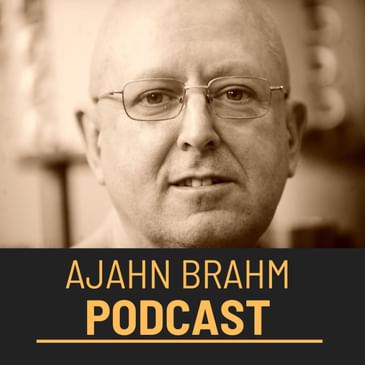

Ajahn Brahm gives a talk on something to do with Buddhism, life, spirituality, another talk on
how to be a happier human being. Specifically on how patience can bring us all these things if we practice it.
—
This dhamma talk was originally recorded in 26th June 2009. It has now been remastered and published by the Everyday Dhamma Network, and will be of interest to his many fans.
These talks by Ajahn Brahm have been recorded and made available for free distribution by the Buddhist Society of Western Australia under the Creative Commons licence. You can support the Buddhist Society of Western Australia by pledging your support via their Ko-fi page.
On Patience by Ajahn Brahm
Transcription
Very good. So for this evening's talk on something to do with Buddhism, life, spirituality, another talk on how to be a happier human being. If tonight's talk will be on. I like to make things exciting in these talks, so wait for it on patience. Because sometimes people, they just want to find out. They want to know. They want to get somewhere. And patience is one of those qualities. For those of you a traditional Buddhist. You know, it's the Buddha actually said Canti. Paramount to Pacifica, the patience is the highest of all the spiritual qualities. So what does it mean by being patient? You can just see just how many people are rushing around this world trying to get somewhere. And often I think, where are you trying to get. Sometimes, you know, you fly off to Thailand and you fly back again. Sometimes you go home and you come back here, you come back here, you go home again. You ever notice? You always start. You always finish off where you started. That's why sometimes I see these poor horses on this horse racing. They go round and round and round and never get anywhere. Oh. Olympic games, the same thing. If you go on a sprint, they go round and come back again. High jump. You go up, you go down. That's just a lie. You never really get anywhere, do you? That's why that sometimes you have like a phrase in English and it's ask how you're going. You're getting there. Where are you getting. I'll tell you where you're going. Karrakatta. Pinnaroo or Fremantle. That's where you will end up. So when you say I'm getting there, that's where you're going. So is that really where you went? What are you. What a hurry to end up there. So instead of doing that, instead of trying to get somewhere, instead of trying to sort of go somewhere, what patience means is being here. Three with what you have now. That's sometimes very difficult because what you have is sometimes really unpleasant, really nasty, really difficult to bear. The night mother in law, husband, wife, kids. Sometimes these people can drive you crazy, but if we don't have that patience, then we miss so much of life. In fact, sometimes you ask a person, how old are you now? Where's all those years gone? How many years have passed by? Why? Where have you really been? There. Why? Life is happening. Because otherwise people, they just rush ahead of themselves so fast. So that's why life goes by. And we wake up one morning with 40, with 50, with 60, with 70. And where was all that time gone? It's all gone because we weren't here. But being patient is learning how to be here and learning how to be here is not an easy thing to do. Number one, our life keeps on telling us to plan for the future. And what are you going to do this weekend? Anyone know what they're going to do with this weekend? Absolutely uncertain. You don't know what's going to happen this weekend. So you may have sort of plans but tentative plans. So keep it just not set in concrete because when you have future plans, you spend too much time there in the future. A lot of times it's trying to get this out of the way so you can go and do something else and you find out what you're really getting out of the way is your life. So being patient is learning how to be here, being with things rather than trying to get rid of things. Isn't it wonderful just being here and not a mother center? Just on a Friday evening with nothing to do with your friends. Listen to a dharma talk. You're not going to be given an exam after this Dharma talk to see how much you remember. It's not school or university. You're not going to have to, uh, to do anything or to compete anything. The only thing you have to do. The only requirement I've used to sit still and shut up. Surely that must be an easy thing to do. So many things in life are very stressful. But to sit still and shut up, that can't be any stress. So you're just relaxing here while I entertain you? So by doing such a thing, surely it should be easy to be here? Now that's what we call patience. Just being here with what's happening in a place like this, it should be easy to be here. But however, in many other parts of your life, because life is sometimes unpleasant, you're sick or is hot or it's cold. You all know. Are you very cold this week? Well, I just came back from Thailand on Tuesday afternoon as soon as I came out from this warm country. You got hit by this cold, icy wind. But you know what happens when that happens to you? When you feel really cold, when you're cold outside. You should make an even warmer heart. And when you have too much heat, what should you do? Keep a cool head. That's called Buddhist aircon. It doesn't cost anything. It's environmentally friendly. So remember, when it's warm, keep a cool head. When it's cold. Keep a warm heart. And what do we mean by a warm heart? A warm heart means you have love. You embrace these things. And we can embrace almost anything. You can love anything that. If I mention that story last couple of weeks ago, that that story of that woman who. Who, um, always kept a photograph of her husband in her. In her purse. You know, in her sort of handbag. And there have been married about 30, 40 years, and she always carried a photograph of her husband around with her to use in times of difficulty and trouble. Because whenever life was a real problem, whenever it was just so difficult, she would open up her handbag and take out the picture of the man she been married to for 30 years. And she looked at him and said, if I can endure that, I can enjoy anything. So that put other problems in perspective. This is the thing about being patient with things that life is like this. We have to learn how to put up with things, but to learn how to be patient, to learn how to be with things is actually to, you know, have that warm heart towards things. Well, when life gets difficult, I have a bit of a cool head so you don't get too upset. And that's actually learning patience, a cool head and a warm heart because life is not always easy. We always have to do things and worry about. Do we always have to do things? But it's when we worry about the things that causes the impatience. Never notice that patience means being with what's happening. If it's unpleasant, we can learn from it. We can always do something with something. But impatience is when we want to get rid of things, to try and be somewhere. Now I call patients waiting in the moment. An impatience is waiting in the future. Waiting for something to happen. Waiting for some place where you don't have to have this problem, this anxiety, this trouble, these people. Of course, your all sorts of problems waiting in the future for something to happen rather than waiting in this moment. The idea of waiting is a very beautiful word and doesn't just mean being patient. It means like a waiter in a restaurant, you're actually serving this moment rather than fighting it. And if any of you have ever been waiters in restaurants or in cafes, you spent your time or some time earning a little bit of extra money by serving on tables or serving in a sort of a shop? Some of the customers are just so demanding. Some of them are so nasty. I don't know what it's like in the library shop here, but sometimes some of the librarians that will say they want their book now, they want us for the receipt. Right now, they want to book up for a retreat. They want to pry enlightenment. Are you setting enlightenment in the shop right now? Whatever it is, they're asking so much and it can be very demanding. So what do you do when you're in that sort of, uh, that position? You're serving someone, you're waiting on them. You're serving them. When you wait on somebody, you actually in this beautiful sense of giving, not wanting anything back in return. This is like waiting, serving as being with that person. Learning how to be with things is learning how to be patient, serving the moment, serving the sickness, serving the difficulty which we're experiencing right now, serving it rather than trying to get something back. So when one learns how to wait in a moment to serve in this moment, you know, we learn about what patience truly is, and you find that it becomes an easier thing to do. We don't always rushing off into the future. We're not always making things happen, having to have things happen. We learn important factors of this spiritual path. It does take time to grow in peace and kindness and wisdom and compassion. It takes time, but it goes much faster the slower you go. In other words, the more you're in the moment, the quicker you learn. The more you run ahead, the slower you go. In other words, the more time it takes. There's a story of one of my first meditation teachers in Thailand. He told me, I usually tell this on a meditation retreat, not usually on a Friday night. He told me when I was starting up my meditation career, that when he was a young boy in Thailand, that his father gave him some seeds to grow in the garden. He was only about 5 or 6 years of age. It was the first time he grew anything 5 or 6. Put these little seeds with the help of his father, underneath the ground, underneath the soil, and he would water them every day after 3 or 4 days. You saw no result. But where are my plants? Where my flowers? This few days now can't see anything. His father had to tell him that when you have seeds, when the water gets to them, they germinate. They split the seed and little green shoe comes out. It's probably under the ground right now, pushing its way to the surface. Just wait for a little while and you'll see a shoot. Be patient. And he took his father's advice. Unfortunately, at the end of two days, a tiny green shoot was appearing above the earth, so he decided to water those flowers two times a day. He was getting excited. And those flowers grew, who grew until about two inches high. And that's when he lost his patience. He decided to stretch them, to make them grow faster, and he killed every one of them. He learned a wonderful lesson. You can't stretch nature. Nature takes its time to grow. So this is many things I see and I can't stretch it, can't make it grow faster. For those of you who want the receipts for your donations for the end of the tax return stretch, nature just takes time. Be patient. It will come. Instead of demanding, I want it now, I need it now. That's being impatient. I've seen that also. When you know you're in stuck in traffic jams. There's no real traffic jams here compared to places like Bangkok. So what do I do now when I go to Bangkok? I'll tell you what I do. What happened to me last week when I went to Thailand to teach a meditation retreat? This is. You know how monk is patient. I landed at the airport and it was a 220 kilometer ride to the retreat center. I was giving my retreat, so it usually takes about four hours. So what does a monk do? A four hour journey. I'll tell you what I did. I got police escort. Wee wee wee wee. Only took me two hours. That's what happens when you're a patient. You get there faster than anybody. It's really fun being a monk, having a police escort. But I was really disappointed when I came back to Perth. Where's my police car? Actually, once when I was in Sri Lanka, I was given a police escort down the hall road, a very busy road. And so, you know, they had a policeman in front of me in the car with the sirens wailing. And I was sitting in the back with a friend who was a driver. And the drivers. Well, I think his brother passed him on the other side of the road. He didn't realise he was taking a monk to sort of an important engagement. And his his brother seeing his, uh, uh, another friend seeing his brother behind a police car, sort of rang him on his mobile phone. Are you in trouble? Do you want to lose anything I could do? That's one of the troubles. If you follow. If you're following a police car. Think people think you've broken the law. But anyway, uh, being a patient person, you don't worry if you get there whenever you get there. It doesn't really matter because you're not really going anywhere. You're always where you are. Maybe the situation and the scenery around you changes, but doesn't really matter. You're always here. So learning how to be patient, learning how to be here with what you have and learning from it. And when life gets difficult, instead of trying to get rid of it. And when's it going to get out of the way? When's it going to be finished? You learn to be with it, to learn from these things, because that's what life is really all about. That's what we're here for, to learn. If you're not patient with things, you try and get rid of things too quickly. You miss these wonderful opportunities. I'm learning and growing and being much more beautiful people. During the week when I came back, somebody sent me a fax about the story of a man in Singapore. They wanted me to talk about it because it's inspiring story and it does fit into this talk. There was actually an article which was in one of the newspapers in Singapore, about a man who hadn't had a sort of some spinal problem and had an operation. And during the operation, the surgeon actually dropped an instrument on his spine and paralyzed him. A surgical accident. What would you do if they happened to you in Australia? Would you sue the doctor? This guy said I forgive you is an accident. Never mind. Even though he was paralyzed. He forgave the doctor and had no anger or ill will. So not hardly being able to walk. Just be able to stagger with incredible pain. He goes to the hospital every week, actually, to to help some of the medical students learn about these difficult conditions, like paralysis. He offers his time there for free without a complaint. Just getting on in his life. Not with any negativity. Just learning how to be with his so-called disability. And this is the important thing in life. A person can do that and is inspiring so many people, apparently. Simply by the fact that something terrible happened to him. And instead of being negative about it, instead of complaining about instead of getting a lawyer and suing this doctor, he's learning how to be with his disability, to embrace it and use it for something wonderful. To inspire other people on how we can live a much more beautiful life without complaining so much. And indeed, this is a core teaching of the Buddha. He said even though your body hurts, your mind doesn't need to be hurt. He said his two types of suffering as a physical suffering, which sometimes we just can't do anything about. And it's a mental suffering which we can do everything about. He said whatever you have to experience in this life, it's the mental suffering is a big problem, which is why that I've noticed that here in a country like Australia, people are just so well looked after, so well fed, but such good medical care. And such a high suicide rate. Doesn't make sense, does it? We're very healthy. Well looked after physically. But why do sometimes people kill themselves? The reason is the mental pain. People don't kill themselves. They don't jump off of bridges or shoot themselves or hang himself when they've got cancers. They kill themselves for emotional reasons. The pain in the mind is far, far, far greater than the pain in the body. No matter how much, uh, physical pain you have to bear. The mental pain hurts more when you really understand that. You understand just that. If we learn how to deal with the mental part of the pain, like that fellow from Singapore, learn how to do. Yeah. You're paralyzed. You install a great physical pain. But his mind was strong and wise enough to learn a little bit about patience. Bear to be with things, rather than wishing he was somewhere else or wishing that the pain would go away. Learning how to be with things is an important part of our spiritual life, and to know how to be with things is a core story which was in the book. Opening the door of your heart. And every time I say some of these stories, I opened the door of the heart. A lot of people I found, even though they the books available, they haven't read that book. I don't mind telling these stories. When I asked people in Thailand and that the book in Thai is very popular over there, sold about 300,000 copies by now. So how are you patient? There is a very core story, something you can take home and put into practice. The Empress three questions. Powerful story which did changed my life when I first read this in a book of short stories by Tolstoy. How to be patient and basically how to live life. There was an emperor who was way ahead of his time because he had it up to here with organized religions. No, Buddhism is not an organized religion, is it? If you try and get anything organized in this place, you find how it is not an organized religion. You know, we get by, you know, with best wishes to the vice president and to our committee. Yeah, we get by. We managed to sort of do things eventually, but it's not all that organized. So it's not an organized religion. So he had it up to here with organized religions. So like, you know, powerful person. He wanted to get his own religion. So get the best from here and the best out of there like modern people today to find out something which worked for him and which was practical. So after a lot of contemplation, talking to wise people, discussing with his ministers, he finally came up to three questions. Three essential questions. If he had the answers to these questions, he would have all the religion philosophy he needed. Keep it simple was his motto. So the three questions were when is the most important time? Who is the most important person and what is the most important thing to do? Those was his big questions, and the short story told his journey to find out the answers to those questions. And he never found an answer that answers from a monk, or from a priest or from a book. He found those answers from his own experience of life and the answer to the first question when is the most important time? What's the answer? Now that's the right answer. So what is the most important time to say sorry? Now, if you wait till tomorrow or even one minute from now, the opportunity passes. Letter. How many of you wish you would have said sorry? And now that person has passed away, you can't say sorry anymore. How many times did you wish to say to someone you really cared for? You really did love them and the opportunity has passed. How many times has been an opportunity? Put a donation in the box. Missed the opportunity. So now is the most important time. In a couple of days time, it's the end of the financial year. You'd have lost your tax breaks. So now. Now is the most important time. So you all know that. But take that seriously because opportunities in life, they pass you by too quickly. And if you don't sort of are in the moment and realize that now is the most important time, don't put it off until tomorrow. Anything really important, do it now. Now is the most important time. And the next question who is the most important person now? Those of you who've heard the story before who read the book, please shut up, because I love having this little game and having a bit of fun. Who is the most important person? Any ideas yourself? Someone say to yourself, please put your up your hand if you think it's yourself, it's the most important person. Too many of you are scared, I think, or you know the story because that is the wrong answer. It's not yourself. But many people think that's the right answer. I thought that was the right answer, but that misses the point of patience. You aren't the most important person in the world. The most important person in this story is the one you are with. Wherever there happens to be, and sometimes not even the one you're with, the dog you're with. The most important dog in the world right now. When it's barking, when you're with them, the pain you're experiencing is the most important person, whoever you are with. That's the most important thing in the world because that's your life. That's your experience. And the most important thing to do is not to shoot the dogs. The most important thing is to care. The care for those dogs, to care for the person in front of you. The care for this moment. Be patient with it. Embracing it. Respecting it and allowing it to be. This is what we mean by patient. That little simile or that story. The big question now is the most important time. The one you're with is the most important personal thing. And the most important thing to do is to care. Became the answers to those questions and made him a very wonderful man. A very efficient emperor of spiritually. Very profound person. Very deep. Very wise. Very caring. And it's also very useful in your life. There was one of the disciples from Penang a couple of years ago. She heard that story and she put her in her to her life and customer relations. And she was in a big firm in Penang. And he came up to tell me with great glee that she applied for a promotion, a prestigious promotion. She added 100, 150 other people applying for that job. She got it. And he said she got it because she used the empathy question whenever she was in customer relations. Whoever was in front of her, whether it was her boss, a customer, or a coworker. They were the most important person in the world for her. Now is the most important time. And she cared. He cared for this person. They felt it. When you can have that attitude, now is the most important time. The one you're with is the most important person. And the most important thing to do is to care. You have a secret of life which is going to create a huge success, richness and peace in your life because you're with life and you're caring for life. No matter who it is, no matter what it is, no problem is the half of life you want to get rid of, half of people who want to get rid of. When I first heard that answer to that question, the three questions. It's made so many things clear to me. At that time I was a student, and like many students, you know, after the lecture, you now have an interesting sort of take on what was being said. So you go up to these lecturers and you ask them afterwards and they're not listening to you. They're trying to get rid of you. You know, because basically then, you know, they've got more important things to spend their time. Talking to a long haired student. And I felt so rejected. Person wasn't interested in me. It wasn't caring at all. But every now and again, I came across people. I remember this one person I came across. He gave a lecture. He's a very famous individual. And I went out to ask a silly question, and he paid total attention to me. There's a wonderful feeling that this might be the first time that someone who I didn't know. Looked at me as if I was the most important person in the world for them at that time. And that's why there was communication and respect. Now, on that empathy question, when you go home tonight and you see your partner, are they the most important person in the world for you? Why are they not really taken for granted? And now you've got something else to do. I talked to her later. I'll see him afterwards. One of the reasons why relationships break down. Why marriages fail. Because when husband sees wife, they don't look upon each other as the most important person in the world anymore. Take it for granted. If you look at your partner and really think in this moment, right this time, they are the most important person in the world and you care for them. Then you'll find your relationship will blossom and grow. You'll have a wonderful time together. Is the other person who will know that you are respecting them and giving them importance. How do you find this out of the one who's with you when your partner goes and maybe your kid? There are. How many children in today's world are never given that sort of quality attention from their parents, because the parents are so-called busy. They're not busy. They just haven't got patience to be with things. Last night I gave a talk at the Chinese Chamber of Commerce. All his big shop business leaders, and they were all sort of. One of the questions was saying, it's all very well, but, you know, we've got so much stuff to do. How do we do it? And I say, look, you get far more done in life when you stay in the moment, you're patient and do things, be with what you're doing rather than always running ahead of yourself. You get far more done. One of the problems in productivity is that we forget about efficiency. The hours spent at your desk in front of the computer are not as important as the quality of your work. How efficient you are. Can you find, if you can actually do one thing at a time and be with it? And this telephone call right now is the most important thing in the world to you at this moment. And when you finish, then the next thing is the most important thing, and you care for every moment you're in the moment, rather than trying to get this thing out of the way so you can do the something which is more important later on. That's where people get stressed out. Trying to get rid of things so they can go somewhere else. That's the meaning of stress. If you're with this moment, putting your whole effort and life and energy into this one moment, caring for it, this is the most important moment in the world for you. It's the only moment you have to care for it. Give yourself totally whatever you're experiencing right now carefully, and you'll find the stress disappear and you get so much done. Sometimes when I look at the programs, when I go overseas, you know, I gave that retreat last week where you were here last Friday, Saturday and Sunday in cold Perth. I was at the Sheraton Beach Resort at who were teaching 320 people how to meditate. However, even though you think it's a beautiful place for a monk is torture. You have a TV you can't turn on. You have a Jacuzzi. You can't get in a beach. You can't swim in a mini bar, which you can't even open. The bottle tops off. So much stuff and luxury which other people can enjoy. And you're in this big room and you can't use any of it because of your rooms, because of your rules. That's what we call torture. It's like a few years ago, there was, I think, the 25th anniversary of the International Declaration of Human Rights. And Amnesty International invited me to the dinner to give a speech. I had to decline. I said to them, Your Amnesty International, of all people, should never invite a monk to dinner, because if I came, I'd have to sit down in front of an empty plate. We're not allowed to eat in the evening. I'd have to look at all the delicious food you guys are eating. And I can't taste any of it, if any of it. That's, as you would understand, Amnesty International. That's torture for a monk. And you should be embarrassed, even contemplating torturing a monk. You bunch of hypocrites. That's how I decline. And so it's like torture being in a resort, you know, where you can't use anything. But nevertheless, I was just happy to be there have to be in front of a TV you couldn't turn on. Happy to be sort of in front of a Jacuzzi. You couldn't get in, happy to be on a beach. You couldn't swim in a swimming pool you couldn't even dive into. Happy to be there. No matter what happens. As a monk, you learn how to be happy, to be there, no matter what's happening. Waiting in airports, you know, being in sometimes in traffic jams. There wasn't always a police escort talking all day, just happy to be here. If you learn how to be happy to be here, you know how to be patient in this moment. Now, whether you're a monk, whether you're a layperson, a business person, whatever, there's always tough times and easy times. But the point is, it's easy to be with the easy times to wait in this moment when this life is very good. But actually, you can't even do that, most of you. You're having a good time instead of waiting for it to be over. People usually go on holiday. They can't wait to get there. And when they're there, they can't wait to get back home again. That's why even on that last day of the retreat which I was in, who were in Thailand, you know that we didn't finish the retreat until mid-afternoon. People had their bad bags packed before breakfast. Were you packing your bags for so early? You haven't left yet? That what you do is pack your bags early, just in case you don't live in the moment. We live in the future because we live in the future. We're never here because we're never here. We never know patience. We never know about. This is the most important time. The thing you're with right now is the most important thing. And maybe the caring is the most important because the caring is valuing something. This is important. So last night one of the business people said, look, it's so hard sometimes being in business you have to really push through a contract. You have to spend hours working on it. You know, you chose to be in business. That's what business is like. Now you have to give that extra hours sometimes, but you got a choice there. You have to do that contract. Enjoy it. Let me enjoy the struggle. Enjoy the little bit of extra work you have to do. Why not? You've got to do it anyway. Care for it? And that's what I have done as a monk. Now, I don't just sit here all the time. Just a couple of weeks ago, when we were all that rain, just before I gave the talk, last time I was out there at the meditation retreat center, sort of getting soaking wet like all the other monks, and just now putting some of the old, uh, building materials you got buried under some earth and some trees. You know, when the builders were there, they left it there, and just someone else bulldozed some, uh, some earth over it and got all mangled out. We had to pull it all out and so we can recycle it. It was a really tough work. And there you are, a 58 year old monk working in the wet and the dirt and getting all, uh, all, uh, dirty. I love that. No boys being boys again. Getting the mud and the dust. So you're lucky. But even if it was tough, you know, you just allow it to happen. You're with this moment. You learn how to be in this moment. You haven't got much choice. So you just do it and and have fun with it. If you learn this method of actually being patient, being with things, you find that life is much easier. Perhaps the the most important experience I had about this was when I was still with Ajahn Chah, my master in Thailand. Sometimes, you know, people say, how did he teach you? Especially, you know. Basically, by this time I was fluent in Thai. When you first went to places like that. Now, how did you know this? Ajahn Chah couldn't speak a word of English. Actually, he did learn one word of English when he went to London for a few weeks. And when he came back, he asked me, did you learn any English? Know any English words when you were staying in LA? And he said, yeah, I learned one word. What was that cup of tea? That's the only way I heard the other day. Cup of tea one. A cup of tea. Have a cup of tea. So that was a. The only word in English he knew. That's probably because he was Ajahn Chah. But anyway. How did he teach us? And this is an example of, like, the wisdom of a great monk. It was more like by example, by object lessons. Because on this one occasion we were building by just building a main hall in his big monastery in Wat Bar Pong, where he lived. And once the hall was finished, there was all this earth left over. And so the guests who had to move it. The monks. No free labor exploitation. We didn't have a union in that time. We always thought we should have started a union. So we were not exploited by the senior monks. But now I'm a senior monk and I explored my younger months. But that's just part of it. It's not really exploitation. It's given the opportunity to make good karma. So this occasion, Ajahn Chah was giving us the opportunity to make good karma. We had to move all this earth, and it was a huge part of Earth. Now imagine just this is not sort of Bangkok, not some city. This is out in the jungles, in the forest. Many of you may have gone to these monasteries, but they're much thicker in those days. And now it's sort of. It's really nice in those days with thick forest, lots of mosquitoes. We'd have hardly anything to eat. Very small amounts of food. The meal was over by about 9:00. And so the rest of the day, from 9:00 until you couldn't see anyone, we couldn't see. Got lanterns out. We were shuffling and pushing a all day. So was that about 15? No, I'm about 13, 15 hours now. Yeah, it was about 13 hours of solid work, sort of pushing, laboring in the hot weather, sticky, steaming and being bitten by mosquitoes. It was really tough work. But, you know, you had a lot of faith. This was not for your teacher, for a monastery. They didn't mind doing that. The three days it took us to move the earth to where I wanted to put it. And after the earth we finished and we thought, great. Now I could have a shower, wash my robes, and mother did some meditation. What happened that night? Ajahn Chah went to visit another monastery. And so the second monk, the deputy monk who is now the abbot, took over by the deputy monk. After our morning meal called us all together. He said, I'll be thinking last night. So that erst in the wrong place, that we should move it somewhere else. And he had a he had a good point. It made a lot of sense once he explained it to us. So another three days of hot work in the steaming, mosquito ridden jungle. There were just one meal a day. It was tough, but you know, you could do it. No patience and stuff. So three more days of hard, filthy work. And after the sixth day, you know, we finished. We moved it to where we wanted. And again, I thought, I can have a nice rest tonight. Tomorrow I'm going to wash all my robes. They were filthy. They were stinky. And have a nice meditate the next day. But that night I don't cha came back. And after the meal he called us together and said, I thought I told you to put the earth over there. Now you put it over here, move it. So we had to move it again. Three more days of hard, filthy work. When found to me. It was at that time that I lost my faith. These stupid senior monks, they don't push the wheelbarrows. They just sit in the room talking to people all day. They don't have to sort of work hard. They don't enjoy mosquitoes and stuff. And I was really upset. I was angry and like I was conditioned to do. If you're angry in a place like Australia or in England, what do you do? Swear. So that's what I was doing, swearing sort of in English at the time. I couldn't understand what I was really saying, but they could see I wasn't very happy and one of them came up to me. And Sardou to him. He gave me this incredibly powerful teaching. He told me pushing the wheelbarrow is easy. Thinking about it is the difficult part. Pushing the wheelbarrow is easy. Thinking about it is the hard part. And that just went right to my heart. I stopped thinking about it and complaining. And instead I just pushed in. The moment came for what I was doing, not complaining, and I found the wheelbarrow was very easy to push. From that time on it felt lighter. And those extra three days went by in a flash. When I thought three more days. I wasn't being patient, I wasn't waiting in a moment, I was waiting in the future, waiting for this terrible experience to disappear. But when I learned patience, I was in this moment pushing a wheelbarrow and caring for it, and there was no problem at all. This is a thing when you know what patience is. It makes everything so easy. When you're waiting for it to finish, it makes it impossible to bear. And that's what complaining is not want to be here? Wanting to get rid of this and go somewhere else. That is the problem. It's the mental suffering. So when I learned not to think about these things, let's do it. This time, it actually was far more pleasant. It was fun. And of course, after those next three days, when we finished moving that earth, we didn't have to move it again. After nine days, I could have my shower. I could wash my robes and do some more meditation. Have a rest. And to this day, to this day, I think those two monks sat down the evening before and planned it all out. We'll teach these monks about patience and about some teachings which will help them for the rest of their life. That's what I have to do now. If I had to travel somewhere, I just do it now. If you have to give lots and lots of talks. And sometimes I talk from early in the morning till late at night, you don't think about it, you just do it. If you have to go to the dentist, if you have to have chemotherapy, radiation therapy, surgery. Let's do it. Don't think about it. Then you find the trick of being patient. Waiting in this moment. Being here. Caring for this moment. Instead of complaining and wanting to get somewhere. Understanding this, you understand just how to be here. And just by not wanting to go anywhere else, you find a lot of the emotional suffering disappears, and that's 90% of the problem. You find that life becomes so much more easy and you can do so much more. I told that business person, whenever you're doing a very difficult contract, the difficult part is complaining about it. When you're complaining about it, you're not being efficient. You're wasting too much time. You have to do it anyway. So just do it and stop the complaints. That's why monks are supposed to be peaceful beings. We don't always have an easy life time. And sometimes we work hard. We do difficult things. We have to talk to people in emotional stress, sometimes for hours on end. Sometimes we work our butts off. Uh, maybe you get up at 4:00 in the morning. That's sometimes when I start work. That's very difficult sometimes, but you don't complain. You enjoy every moment of it. That's why it's easy to do. So how hard do you work? How many hours? How many difficult is your life? For goodness sake, stop complaining and just do it. If you know you know how to do that, life becomes so easy and it's so much more fun. You have more joy in life. It's learning, as I say, how to wait in this moment. Serve this moment. It's here for you. It's teaching you. And if it is a difficulty, it means there's something you have to learn. It's all growing pain. I call it growing pain. Because of this pain, you have to grow. You have to learn something. So a lesson there for you. So from the difficulties in life, that's the fertilizer. That's the cow shit which we put on our gardens to make the flowers grow. It's smelly now, but what you what can you do when you're. You're loaded with a bundle of shit and it's not. That's the the title of the opening the door of your heart. American version. Who ordered this truckload of dung? It's called. And isn't that what happens to you in life? Your treated so unfairly, isn't it? Sometimes these things happen to you and it's not. You didn't do it. Not your fault. And someone criticizes you totally unfairly. They spread rumors about you, which are totally unfounded. And you've got terrible luck. You know, you sort of know. You find that you've won the $90 million lotto, but, you know, your tickets expire, expired, or your husbands run away with your lottery ticket or something else. It gets so close. It's so unfair sometimes. Do you think that life is unfair? If you do, you're missing the point. The point of life. If these things happen to you. Thank you. That's more fertilizer for my garden. Every time someone dumps a load of shit on you. Thank you so much. More fertilizer for my garden. Oh, about that story which I told some time ago. I told this some years ago to the president of Sri Lanka. He loved this story because if you're in any position of power, if you're a prominent personality, the media eventually gets on your back and gives you a very, very hard time. And this little story is one of my favorites. I haven't tried it for a long time now. It's a story of the donkey. Now, once there was a donkey. And this donkey. This is how to actually to make use of things. Instead of complaining about the wishing they weren't there. How to embrace this moment. Be patient and learn how to make use of what life gives you. So this donkey was happily wandering through the forest, minding its own business and doing a bit of a leaf here and just enjoying the beautiful scenery of the forest that unfortunately, the donkey fell into a well. There was an abandoned well in the middle of the forest, and the donkey fell right into it. And fortunately the well was dry, and the donkey was in that day, and the donkey didn't break any bones. But there was a donkey at the bottom of the well, and as you know, donkeys can't climb. So how could the donkey get out of the well? He did the only thing a donkey could. He cried out for help. And this is my donkey cry. Uh, which doesn't really sound like a donkey, but nevertheless, that's the best you're going to get out of me. Uh, actually, what do donkey sound like, anyway? Oh, okay. That's much better. Thank you. That. Oh. That's a that's not much of an improvement, but that's what you asked for. So be patient with this man. Had you been going for a long time and the farmer heard a sound is really a weird sound. Like a donkey, you know, from underground. He followed the sound just out of curiosity, and he looked into the well. He saw the donkey down the bottom. The donkey thought last I'd been saved. But this farm was a very cool, mean man. He hated donkeys, especially that donkey. They serve you right? But then I can't leave the donkey like that in the world. And also that. Well, was the dangerous has health hazards. Somebody else might fall into that. Well. So he got a great idea how he can solve two problems at once. I was going to say kill two birds with one stone, but that's not a Buddhist parable. These days we say cut two carrots with the same knife. I like to change these sort of Western metaphors. Kill two birds with one stone. You should never say that. If you were Buddhist, cut two carrots with one knife or you know the other one, which I don't like. You know you teach a man to fish? No. You give a man a fish, you feed him for one day. You teach him how to fish and he breaks his five precepts forever. So I don't like that one, he said. Teach him. Give a man a carrot and you feed him for one day. Teach a man how to grow a veggie garden. You feed him for life. Now change these old parables. Make them more Buddhist. But anyway, this donkey was in the bottom of the well. And the man thought, no, he's going to cut two carrots with the same knife. So he decided to get out his spade and fill the well in. With a donkey on the bottom. He was going to bury this donkey alive. And so he started shoveling dirt all over the donkey. And as soon as the donkey realized what was going on, he or he all. He all really loud. He's really upset. Is being killed. I'm sure you do something like that. If you were being buried alive at the bottom of the well. But after a few minutes, that donkey. He had an insight. I think he must have been listening to these talks on his iPod or something, because the donkey got a great insight. Just be patient. Embrace the moment. Don't try and get somewhere else, but learn how to make use of what you've got. The donkey was quiet. Did make a sound. And a farmer thought. Ha ha ha! I buried that stupid donkey. But what? The donkey. What? The farmer didn't realize that donkey, the next shovel of earth, which went on its back, or the donkey did, was shake it off. Stamp it in. And the donkey was an inch higher. Another shovel of earth. Shake it off. Stamp it in. And another inch higher. And that farmer was so busy shoveling he didn't notice. A pair of ears appear above the rim of the well. He did even notice a whole donkey head go above the rim, because every several of earth shake it off, stamp it in another inch higher. And soon the donkey was high enough. He jumped out of the well, and according to the story, he bit the farmer on the backside just to teach him the law of karma and ran away. So I told that to the president of Sri Lanka. Look, if people shove dirt all over you, just shake it off, stamp it in and you're an inch higher. There is no wonderful thing. If your husband scolds you and throws earth on you, stampede, shake it off and then you an inch higher. You don't have to be negative about these things which happened to you in life. Whatever happens, you can always make use of it. It's always fertilizer for your life. So that's why we can be patient. We can wait in this moment. This is where the action is. And if we wait in this moment, this is where the action is. Instead of thinking, oh, why does this always happen to me? Why do the people are so cool to me? Why do people ask me to do so much? Why do people always call me up from overseas? As soon as I arrive back from overseas, they called me back from overseas and other places. Can you solve this problem? That problem? I don't know why they keep sort of calling up a monk to solve their problems for them. It's not that they actually did call it dial a monk service abode in the monastery. I don't think the only reason why they ask a monk to solve all their problems is because they don't charge anything. And if we charge now in our data bank service $0.06 an hour, you probably think twice about ringing us. Maybe we should do that one day. Anyhow, as we understand and accept this moment, that's what patience is. We're stuck in the traffic where they're out there in the rain. Whether you're having a surgery for some difficult ailment, whether you are, you know, with in the funeral parlor, with somebody you love is just I can't be with this moment. It's important. Can't we realize that whatever we experience is the most important moment of our life? The most important thing to do is to care. Care for this moment is constantly teaching us, constantly strengthening us. And this is actually where we learn the Dharma, just like the Emperor. You don't learn it from books or from monks. You learn it from life. And life is constantly offering you this wonderful teaching. What do we do? We reject it. We want to get somewhere else. Want to get it out of the way. Want to finish with life. And that's why so many people, when they get old. They wonder where life is gone. And they're as stupid as when they were born. Which is why they have to come back and do the class all over again in their next life. Do you really want to come back again and get reborn again? Have to go to school again when? Nappies again? Not me. So if you don't want to get reborn again, whatever happens to you in life, please embrace it. Be patient with it. Wait in this moment. Serve this moment. It's got lots to teach you. That's my little talk this evening on Patience. So, has anyone got any questions or comments? Hopefully not. Complaints of this talk this evening on patience. They can all be more patient people, especially if you work in the tax office. It takes a while for people to fill out the tax forms at the end of the year, so be patient. I'm still waiting for a question. Are you waiting to go? Okay, we'll let you go now.