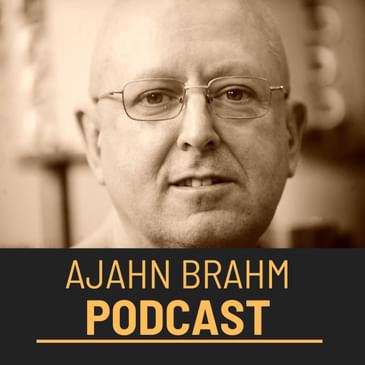

Ajahn Brahm explains that the fear of making a mistake is what makes decision making difficult, and it comes from the conditioning of punishment associated with making wrong choices. The speaker also mentions that whatever decision we make, we can always make something out of it and that life is continuously evolving. When it comes to decision making, it is important to not let personal desire, ill will, delusion, or fear influence our choices. We should learn to make decisions quickly and not be afraid of making mistakes. Many people make decisions out of fear, but we should remember that whatever path we choose, it will always lead to different options and learning experiences. The best way to make decisions is to be well informed and not let fear hold us back.
—
This dhamma talk was originally recorded in 9th May 2008. It has now been remastered and published by the Everyday Dhamma Network, and will be of interest to his many fans.
These talks by Ajahn Brahm have been recorded and made available for free distribution by the Buddhist Society of Western Australia under the Creative Commons licence. You can support the Buddhist Society of Western Australia by pledging your support via their Ko-fi page.
Decisions, Decisions, Decisions by Ajahn Brahm
Transcription
As usual when it gets to Friday afternoon and I'm coming in to her, this center to give the evening talk, I have to make that decision of what I'm going to talk about. And this evening, I've made the decision of giving a talk on the subject of decisions. Because also, I had to go to Bunnings this afternoon because. And because monks don't usually go shopping except for hardware things. We're building our retreat center down at serpentine, and the builder asked me to choose the colors for the cottages where people will be staying. So now I have to make this terrible decision. What color would it be? And I thought I'd be making it easy to make a decision until I got the color catalog. And there's so many colors on there, I never believed such colors existed. And also the names on these colors and the colors with the names like dynamites. All the stupid color matter. There's so many colors on there, and I realize what it must be like for you guys having to go shopping every day. And there's so much choice on that. Must drive you crazy. So tonight I'm going to give a talk on decisions, and it's maybe just not just ordinary decisions about what color are you going to paint in the walls? Because it doesn't really matter, does it? In a retreat center, because people have got their eyes closed most of the time, so don't even notice it. And even if it is a bad color, I can always give out sunglasses. But whatever happens, we have to, from time to time, make decisions. Sometimes small decisions, sometimes big decisions. And people really can stress out on the decisions they have to make in life because they don't know how to make decisions. And so today we're gonna have a talk on decisions, what they are and how to make them. How simple it is. One of the important things about making decisions, which I've learnt in my life, is that they're not all that important anyway. Many of the decisions which I fretted over, which I lost sleep over as a young man, I found now a completely irrelevant to the course of my life. While those decisions about what university I should go to, what should I study, the decisions to go out with this girl or with that girl as a young man? What a waste of time that was. And as always, if you knew what was going to happen to you in life, you wouldn't have to worry. If I'd known that I was going to be a monk, of course I wouldn't need to worry about such things. But it's the same with you anyway. The one thing you know is going to happen to you. You're going to die. So what's the point of worrying about all these decisions? But one important thing, which I remember, which I, I teach a lot of people these days, is, no, there's no such thing as a, a right decision or a wrong decision. Her good or bad decision. I think because that's the one thing which really makes it hard for you to decide and make your selection. Because when is an idea of a right decision, a wrong decision, it makes huge pressure on us to make sure we don't stuff up again and make a mistake, and we have to make the right decision. But remember all those decisions you've made in life so far. Really, there's no such thing as good or bad. It's like different outcomes. It's very similar to the way you came here this evening. I'm not quite sure what your preferred route is to get to this centre on a Friday evening. There's many alternative routes, sure that some are longer, some are shorter, some are prettier, some are not so pretty. But none of them is right or wrong. It's just a different way of getting there. And for me, I was fine. The most of the decisions I make in life are it doesn't matter what that decision actually is, you can always make use of it afterwards to get to where you want to go. So understanding that whatever decision you, you, you go for is not either the a wonderful decision or a wrong decision. It is a decision, that's all. It just gives you a different thing to work with in life and understanding that that whatever decisions you make, you can always make it work. You can always do something with it. Means it took away all the fear of making decisions. You never got paralyzed by choice. You never thought, oh my goodness, I'm going to have to make a choice. It's going to be a life and death decision. Even that idea of life and death decisions, which people tend to tend to sort of, uh, uh, amplify the importance of what they're deciding out of all proportions. And I suppose that is the biggest thing life and death decisions. But Buddhists, Buddhists don't have. And life and death decision make a mistake and you die. You come back again afterwards. So it's not the end of the world when you die. That's one of the nice things about being a Buddhist. You know, you get another chance afterwards. And you get many chances. So it's not sort of so imperative. If you make mistakes, you can always make something. Do something with what you've got, which takes away one of the most important, um, uh, pains and difficulties of decision making. Like the fear of making a mistake and the fear that, you know, you are somehow going to lose your your pride, lose your credibility, be a fool. Make an idiot of yourself. It's wonderful, actually not worrying what other people think of you and realizing whatever decision you make. You're not a fool. You just made a decision, that's all. Give it a try. See what happens and you can always move on from it. That way that when there's no fear attached to decision making. Because it's not this terrible like blame and guilt. It makes it so easy to make decisions. You just make it and see what happens. Knowing you can always make something out of whatever decision you made. So if I choose a yellow color or a brown, I always do something with whatever paint you choose. It's only paint and that's all. Have you ever noticed that these decisions, which people really worry about and you think, my goodness, you know, what sort of clothes should I wear this evening? Big deal. No one is worrying about what you're wearing. Only you. So when you don't worry so much about your decisions, you don't make it such a big thing because you're not into some sort of guilt or ego trip about, you know, whether you're right or wrong, because there's no right or wrong decisions. Decisions are much easier and far less stressful. When you go back to why it's so difficult for people to make decisions, it comes back to our conditioning. When you're very, very young. You get blamed and punished if you somehow make wrong decisions. And I know from my own experience and I couldn't understand what it was, I just made a decision. I made a mistake. So I punish me and I'm a human being, sort of. And I got it wrong. Big deal. I'll try better next time. But because that punishment came involved with my decision making, and I was actually forced to feel that I'd made a wrong decision or a wrong choice. What that happened was that paralyzed or really affected my ability to make decisions. As if I had done something terribly, terribly wrong and evil if I chose the wrong path. And one of the nice things which I remember, which I learnt as a Buddhist, that there is no punishment. The idea of punishing yourself, which is guilt or punishing someone else, which is anger and revenge, never, ever made sense to me as a young man, but was almost forced on me by the culture which I grew up with. Now, if someone else makes a mistake, in other words, they made a wrong choice in life. They're supposed to be punished. Does that really help? And if they made a wrong choice and I had done something wrong? If it is wrong, I'm not quite sure if I understand what that really means. They just made a decision and it caused a bit of suffering. Please learn from that. Don't have. Add to the suffering by adding some punishment or some penance on top of it. They will learn from it and we move on from it. We grow from it. Instead of punishment, it actually makes a problem worse. And it also makes people more afraid to make decisions in life. So because of punishment was always associated with so-called wrong decision making, I got afraid to make choices. Why? Many of you do. But instead, when we make a choice, if we just consider the whatever the outcome is, there's no punishment involved. There's no reward involved. We've made a decision. Now let's see what to do next with it. And that way, whatever happens, you can always make something out of it. Which is the lesson which I've learnt in life. If I build a monastery this way. Buddha monastery that way. If I had to give a talk on this, I'll give a talk on that. It doesn't matter where you start out from. It's how you develop the situation which you've made for yourself. And you do find that the law of karma means that life is always evolving. You can always do something with what you've got. There's no such thing as a mistake in life. How many of you have sometimes made a choice and you think, wow, that was a big mistake. But later on, now, after a couple of years, he realized that was the best thing which ever happened to you. It really made a great difference in your life. How many of you have had done something you thought was really great and great success, and realized that really wrecked your whole life? Sometimes that we can't tell whether a thing a choice is going to work out well or not. But what we can do, we can make it work out well, because in life it's not so much what you choose, whether it's to have a yellow paint or a brown paint, whether to marry this guy or marry that guy. As I told you many, many times, and I do lots and lots of marriage counseling, you know, if you think you've married the wrong guy. What do you mean, the wrong guy? They're all the same. Believe me. There's no such thing as the right guy. The wrong guy for the right good girl. Anyway, that's all the same anyway. So you marry this person. Make it work. Make it work? No, sometimes that happens. You know, there's still some societies where you have arranged marriages. And amazingly, I think that the statistics have shown that arranged marriage is the way you choose for yourself. They've got the same rate of success. So just because you choose doesn't mean it's more likely to work out when someone else chooses. You know, sometimes that's just as likely to work out or go wrong. So might we just have like a lottery, you know, just sort of choose a number. And the one who got the same number of you, that's who you get married to and live with for the rest of your life. Could you do that? You know, sometimes when we make these choices, okay, we are going to make these choices. But whoa! Make the choices. Just make them quickly and learn how to live with them. Make something out of it. And you find that that way you find you've done that before. It actually does work. And you actually find that that means that you never so afraid of making choices, you know, whichever way you move, left or right, it's never the end of the world. It's not so important. It just gives you different options to work with in life, a different path. And you can never say the one path is better than the other. It's just different, that's all. Which is why when I was reading how the Buddha so described decision making, he always said that there are four things you should always concern yourself about before you make a decision to check whether you're not acting out of these four things and those four things, not acting out of, you know, personal desire. What's in it for you, not acting out of ill will or revenge? I gave a talk at Hertzberg was a Christchurch grammar school on Tuesday, and I sort of gave one of my favourite sayings about there's no need to have ill will, especially no need for revenge. You know, if you're a Christian because there's a Christian school, if someone has done something wrong and hurt you, cheated you, mistreated you, abused you. And if you're a Christian, God will sort that out. You don't need to worry about it at all. Just pass it back to God now. He'll sort it out. And if you're a muslim, it's Allah's job. You know, if you're so a Jew, Jehovah, if you're a Buddhist, we don't believe in God. So what happens with a Buddha? With a Buddhist, you say you don't have to seek revenge because karma will get the bastard anyway. Please excuse the language. When I say it like that, you remember it. It's just a teaching tool, that's all. They don't need revenge. So that's why we make a choice. No ill will, no revenge. We're not doing this to hurt somebody. And it's also not to make a decision out of delusion. Out of ignorance. And this is an important thing here. Because sometimes to make a responsible decision, because, you know, we are responsible human beings and decisions, they do affect others. They do affect ourselves. They do give different paths. We want to make some of the best possible paths, but we can always work with every path. But the illusion is actually getting all the information and just making sure you're well informed before you make the decision. But the fourth thing now, the first one is not personal desire, not ill will, not delusion. The fourth thing is what I just told a few minutes ago never make a decision out of fear. And that's the most important part of decision making, because so many people make decisions out of fear or they don't make decisions out of fear. And where that fear comes from is the fear of some punishment, because they're so afraid of making a so-called wrong decision. And that paralyzes so many people. And I went to that shop to get that catalog. Now I have to make sure I'm afraid. What if I choose the wrong color? And all those people have given all this money to the retreat center? I spoil the whole retreat center by painting it pink. Oh, what will people say about me? Who? I don't care because I was realized. Whatever I do, I'm always at a win win situation. As a monk. If I make the wrong decision and say something really stupid here and offend everybody, oh, that's brilliant. And I can stay in my monastery, do all my meditation, I won't have to come to no tomorrow ever again. I can have a bit of a rest. So when I stuff up. Oh that's brilliant. And if I don't stuff up, that's brilliant too, because I can give a good talk and make people happy. So it's marvelous, actually, that whatever I do, I realize it's always a win win situation. It's just a different path in life, that's all. And now this is a true story that, you know, I was always thought I was very, very fortunate when I first came here 25 years ago, after nine years in Thailand, I was number two. Monk here had another monk, and I was just like, you know, like cyclists sometimes they they, they cycled behind a big truck, you know, so there's, you know, they the truck sort of takes the wind away from them. And that's what I was like, you know, this other monkey was taking all of the flak for giving good talks on not good talks. And I was number two. Monk was a very easy life until he disrobed. What do you do that for? All my plans went to smithereens, but didn't matter because I made a decision. Then afterwards said, well, you know, I can have to start giving these talks. So what happens if people don't like me? If I give bad talks? I thought, wow, that's really good. I can just be a hermit monk. And I always liked being a hermit. I always had these fantasies of like going in deep caves. This was my fantasy because I when I first came over here, I heard some brilliant caves in the Nullarbor and I've got water underneath as well. So you've got your water, you've got your seclusion, and I'm sure I can get someone to give me some food somewhere. And I thought I'd become like the hermit of the Nullarbor as my fantasy. This is what monks dream of. I don't dream of winning the lottery or finding a beautiful girl they dream of. Like being a nice home in a deep cave in the Nullarbor. But then I started fantasizing further. What would happen next? Can I imagine if you were like a man? Can you stay in the deep cave in the Nullarbor? Sooner or later somebody will find you. And as soon as they find you, they'll tell. Tell channel nine and channel nine would go out there with the reporters to do, like, you know, a human interest story about the the hermit of the Nullarbor, you know. Why did you run away? Was it because of a broken heart? Well, you know, was it because. Was it because your business went pear shaped? Or because some other reason why you just didn't like the world anymore? Because the Eagles kept on losing? Was that reason why you why you went to be a hermit? And they'd do an interview. And of course it would go on the TV. And of course as soon as the TV would go there and they'd tell you, now there's a hermit, the Nullarbor. And of course, all these tourists would start to come and visit you on their way across the Nullarbor Plain and make a diversion to go and see the Herm of a Nullarbor, because that's very rare to see, like a hermit. And so you'd have all these tour buses coming up to see the hermit, the Nullarbor, and then soon they'd have to have like no toilets outside my caves and a little gift shop which has devilish yetis. And before long you get these little dolls of, like the hermit of the Dollar boy with a shaky head. And so to be a tourist attraction just like anything else. And that's what happens with the tourist, the hermit, the Nullarbor. So you see, whatever decision you make, it doesn't really matter. So this is the way of the world. So I realized that it doesn't matter. Whatever decision you make to teach or not to teach, if you do teaching, you're well-received. It's wonderful. If you're not well received, that's wonderful. It's amazing. We had this. This. No fear of giving talks. I know people said that that's one of the scariest things to do is actually to to talk in public. To me, it's great because, you know, just relax. If you like it, great. If you don't like it, great. You know, we've got too many people in this room anyway. So the more people I can offend and get rid of, the better. Which brings me to today's joke about that decision making. There's actually two jokes in one. I've combined two jokes we're about decision making is the second part of it about this fellow who has these three fellows who are lost in a desert. They'd been lost in days. There was a Frenchman, the Australian man, an Englishman. Because I'm English, the Englishman is going to sort of really get the butt of this joke. So, you know, because I'm English, I can do this. Okay, so the Australian, the Frenchman, they lost in the desert for a long time. And they didn't. Couldn't find their way out. And then they saw an Eskimo coming in a sled with huskies. And as soon as I found this, I saw this Eskimo come. It was like, oh, thank goodness. Eskimo. We were lost. You know, we were trying to find our way out. And the Eskimo said, hey, you think you were lost? But anyway, let's talk about what? Was the Eskimo turned out to be sort of a a, um, a genie? Like a like a a magic person and said, actually, you must be very thirsty. I said, oh, yeah, we'd die for something to drink. And he said, just to see over there. And it's amazing. There was like three slides going to these big vats. He said, there's three slides there, one for each one of you. These are magic slides. Now, whenever you go down that slide, whatever you say, whatever you wish for, that's what you fall into. So the first one was the the Frenchman. So he climbed up the slide and as he went down he shouted champagne. And as soon as he said that, he fell into this big round of champagne. And I was drinking, enjoying himself immensely his top quality vintage champagne. And then the, the Australian, you know, he climbed up the slide and when he was going to slide down the slide, of course what he said, you know, sort of well, you know, maybe EMU bit or, or VB or whatever you like. But he said, yeah. And as soon as he fell into the vat is full of beer. And I was drinking and making his first. Wonderful. Then the Englishman got up his slide and he forgot what he was supposed to say. In his excitement he said, we. Can always make something out of your decisions. Whichever one. So. But go. But. Going back to the serious part of this talk about decision making. Sometimes when we're afraid of the outcome of our decisions, the fear paralyzes us and often makes us not make good decisions and are taken seriously now, because sometimes people make decisions, maybe about treatment for cancer, and you've got to make a decision. What are they going to do? So how could you make those decisions? Get as much information as you possibly can so you're not acting out of delusion. Make sure it's not just your personal interest. For example, some people with cancers sometimes that when the chips are down and it looks like, you know, there's no treatment available. Sometimes they volunteer for experimental treatment and they do that, sometimes not so much for themselves and for the sake of other people. So it's not done out of personal desire, but for the sake of others. I love that when people do that, things like that. Couple of weeks ago, people were talking to me, a couple of cases all the same time about bullying in the workplace. And there are. So what should you do about bullying in the workplace? I said, yes, you have to make a decision now whether to report it, whether to leave to confront the person or sometimes take it. That's a decision. What decision are you going to make? And I said, one of the wonderful things about reporting bullying in the workplace, is it not doing it for yourself? It's not just for your benefit, because if there is a person who's exploiting other people in your office or in your place of work, it's not just you they exploit that exploit someone else and another person because it's habitual. It's a wrong way of dealing with the people they work with. And so in such a case, I was encouraging report it not for your own benefit, but for the sake of others. It's an act not of personal gratification, but of compassion for everybody else who has to work there, and also compassion for that bully as well, because sometimes they don't realize what they're doing is bad. Karma for themselves, is bad for the business. And sometimes if it's done in the right way, sometimes that confrontation can lead to some sort of counselling for the bully. So they realize what they're doing and they can do strategies so they don't act in such a dysfunctional way again, or at least then lessen what they're doing once they realize the problems they are causing. So I say this. You're not making this decision for yourself. You're making this decision for other people. How do compassion for others. And sometimes those decisions you make are not just for you, but the benefit of many other people as well. So when you're making those decisions, it's not done just for you. And when I put it that way, he made so the reporting of the bullies a much easier decision to make, as obviously, you can appreciate if it's just for you. It's a very difficult decision to justify. But if it's for the sake of other beings, you take other beings into account, not just you. Other people in the office, maybe your family members. Maybe your kids who are being affected by the stress you feel at work. Then it's a decision which is obvious and easy to make. So is it going to be for the benefit of others as well as yourself? And then further, you know you're not doing out of your will. Not because that person has hurt you and you want to hurt them back. Make sure you're doing it out of wisdom, not out of delusion. When you are facing such a situation, whether it's a treatment for a cancer which is experimental or reporting being a whistleblower, are you able competence in a physically and mentally to actually to cope, you know, with the confrontation with the mediation, with the talking, with all the other problems which will go on when you make an accusation like that? Are you physically, mentally able to do that? You know, sometimes you're just you're too tired. There's too many other things going on. And physically, mentally, you're not strong enough to do it, in which case your decision has to be to let it go. To not report. So when you do it with wisdom, finding what is your ability? What can you do? A good example of this is a decision many years ago, which many of you have been coming here long enough to remember this past our monastery. We had some clay trucks going past and being the abbot of the monastery, I had to make a decision, as should we fight those clay trucks going past our monastery? Or should I just let it be? And it was the one occasion when I saw one of those clay trucks, a BWR, a big truck with a trailer overturn going down Kingsbury Drive. And that was the time when I thought, no, this is just too dangerous. You see, a big truck like that overturned on its side. You know, you realize that if you know one of you who were going to visit our monastery at serpent, I was covering the opposite direction. You'd have no chance. You'd die. So as soon as I saw that, I made a decision. It's a worthwhile thing to do. Not for just the monks in the monastery. But for the sake of all the other people who would come up that that that road. So it was for other beings not out of ill will, because sometimes it was a long court case, many court cases over many years. And so I remember just some of our adversaries, once it came Christmas time, we sent them more Christmas cards, even though we were Buddhists. And we got this wonderful little letter back saying we didn't expect that. In a way, you're fighting a court case against us. But you said as a Christmas card. That's amazing. That's wonderful. We've never seen that before. Little things like that showed we were doing it out of ill will. And also one of the most important things was have we got the resources now? Not just financial resources, but emotional resources. No fighting a long battle like that. And no, I had to look at my mind and my energy levels. Could you do this? And I thought, yeah, I can do this. I'm strong enough. And so for that for many years, and eventually we just wore them down because we were more committed. And so they stopped. But I made that decision. I actually thought of those things, you know, when I made a decision to fight or just to give in. Now there's four things that my acting out of personal greed. You know what's good? What's in it for me? Out of ill will. Against something, out of delusion or out of fear? No, no, I wasn't acting out of those, so I made a decision. It makes a very easy checklist. But sometimes when you do make these decisions. The other problem with decision making is sometimes that we put two a too much importance on making quick decisions. There are some decisions which are not right to make quickly. And I'm found in life, especially as a meditator, one of the greatest ways of making such important decisions, which is like pain. I would just, you know, probably flip a coin, actually haven't got any coins. It's very difficult being a monk having no money. Actually, I saw this other joke. And then I think it was in the paper somewhere about the coin flip to coins. If it comes down heads or comes down tails, I win. If it stays up in the air, you win. But you just make a decision. Whichever way is, it's not important. Well, color of a war. But there are other decisions which are really important because they affect other people a lot. And those sorts of decisions. I've got into the habit of making them this way. I get all the information I possibly can talk it over with other monks. You know, sort of my sort of muses, my mentors get as much information as you possibly can, put it all in, and then wait. There's a brilliant way of making decisions to learn how to actually to wait and not push a decision or worry about it or think about it too much. Because often when you put the information in, you give it a calm mind. You forget and basically you forget about it for a day or two. Then a decision actually comes up into your head and it's usually brilliant decisions is that if these decisions are worked out subconsciously and the best decisions come when you're not worrying about them. Classic case is one of the old members here who died a year ago. She came on this meditation retreat, which I gave her a couple of years ago, and she was a very high profile social worker. Senior social worker, had lots of responsibilities. So the retreats which we did, the nine day retreats, they usually start about 7:00. I don't think she turned up until about 830. Because she was working to her office, getting all of the papers and stuff done, and she couldn't leave. I don't think she even had any dinner. She came straight from office to the retreat centre in North Perth. Tired, but no. Obviously. I told her to rest for a couple of days before she could really go into the meditation, but she told me the interviews a few days later that she'd come to the retreat straight from the office, finishing very late. With all of these problems, I mean big problems. But she was wise enough. She'd heard his teachers many times before. When she came to the retreat center, she completely forgot about them for 2 or 3 days. She'd done all her research. She got all the information. She just hadn't processed them. And just three days she was meditating, her quiet quietly. Her mind was very peaceful, and these solutions started popping up. And she said when she basically listened to these solutions in her mind, she didn't know where they came from. They just came up, popped up, said, wow, these are really good solutions. And she was so impressed with these solutions, which came up automatically. She told me afterwards. He said, well, as soon as I go back, I'm going to implement these things. These are innovative and I can see just how they're going to work. But she also said there's no way she could have thought of those solutions. It was a decision making, which arrived by putting in all the information and waiting and waiting for the brain, the mind, to process these things and for the decision to come up its own experiences like that which I have done myself many times because of those sorts of experience. When people come up to me and they tell me, look, I've got a fetus inside and I'm thinking of aborting, what should I do? These shoes decisions people make. I tell them, number one, please no fear. Whatever decision you make, you will never be excommunicated. In Buddhism, you'll always be loved no matter what decision you make and respect it. So please no fear. Number two, pull all the information. Gather as much information as you possibly can have about that situation and what the possibility of looking after that child yourself or giving it to, uh, to be adopted or your family, what your friends think you know, your own ability to care for that child. Put as much information as you possibly can into your brain. And then the most important thing is just to forget about it for a day or two. That's the hardest thing to do to stop worrying about it. And if you can do that, it's amazing. Just after a couple of days thinking about something else. Solutions. Innovative solutions. Amazing solutions that just pop out from nowhere. And you just can see other ways of dealing with those problems. Great solutions, which can only come when you're not thinking about the problem. This is one of the reasons why people who train their mind to meditate, who can let go of these so-called life and death situations, is important because they can just put them aside for a while. They found that their decisions can be so good and so effective and so positive. Sometimes it's always the case when we're thinking about things. We're just too close to it and we can't see the bigger picture. They all assimilate. Again, this is great for the camera, but it's terrible on audio. I put my hand in front of my face. How big is my hand? Is the question. My hand is so big that I can't see anything other than my hand right now. Is it my hands fault? Is that the problem? No, it's too close to me. And I put my hand where it belongs to the end of my arm. It's still the same size, but I can see all of you. And I can also see my hand. This is the difficulty when we have these decisions to make. When we hold it so close to us, we can't see anything else. We've got no perspective. We need to somehow to let it go. Be peaceful. Put things aside, rest, relax, whatever you call it. But stop thinking about the decision you have to make for a couple of days. And when it's at the right place where it really belongs, at the end of your arm, like my hand, then you can see much clearer and you make a far better decision, which is why people have learned how to meditate. Let go of the past, let go of the future. Stop worrying about such things. They find it's much easier to make these important decisions in life. I just let it go for a while. Put it on the back burner. Just leave it. And then a couple of days is usually the time it takes for most people. Two days, three days or whatever. Decisions come up and it's so clear what you should do. In my book, Open the Door of Your Heart and said, it's like coming to the crossroads in life because decisions are like crossroads. What should you do? I get married, become a nun, sort of. Go overseas. Kill yourself. I don't know. But whatever decision you're about to make, stop for a while. Pull all the information in while you come to a crossroads. You sit down. You don't have to go left, right, north or south. Sit down and wait for the bus. Because in a crossroad, there's always a bus coming. And most buses have the destination written on the front. And if that's the place you want to go, then get on that bus. If you don't want to go to that destination, don't get on because there's always another bus coming behind. What that means is when is the decision to be made? Wait. Learn how to put it down. You don't have to struggle to go north, south, east or west. You can stay still and wait for the solution to arrive. And it does arrive. There's a great way to make decisions, and you find that the decisions you make that way, or which make themselves, are far more successful in your life. Now, when you know how to make those decisions, life becomes far less stressful. We do all have to make decisions in life, and sometimes we don't know how to make those decisions because we don't know how to make those decisions. Sometimes we lose sleep. At night, we stress ourselves out. We get sort of stress related diseases. I have to make many decisions as a monk, and sometimes people actually come out to me and those life threatening decisions. And sometimes many people have asked me, no, should I have an abortion? Sometimes people say, should I commit suicide? And there you are, faced with a person and basically their life is in your hands looking for you for advice. So sometimes I could get terrified. What if I make the wrong decision? But these days, I don't think there was the wrong decision. Whatever decision, as long as I make it selflessly with no ill will, getting as much information without fear. It's always a beautiful decision when no matter what happens. It's not what happens in life, which is the problem, is how it happens. The events in life, you know, whether it's a person dies, whether they get sick, whether they get well, whether they become wealthy, whether they're poor, whether they get married, or they become a monk or a nun. To me, that's not so important as how you become a monk and how you get married, how you become wealthy, how you have your cancer, how you live, how you die. It's the how, not the what, which is important, I think, in life, which is means that it's not the abortion or the suicide or the wealth or the success, which is important, but how it's achieved and how you make use of it. At Christ Church the other day, that was one of the questions they asked me. Is it wrong as a Buddhist to be wealthy? Are you supposed to have little wealth and give up all your attachments? And my answer was, this is just an example of what I'm just talking about. No, wealth is not evil as long as you've acquired it well and you make use of it well. It's not wealth which is evil, but how you acquire it and how you use it, which can be bad or can be good. It's not the what. It's always a how. It's the same of being poor. Being poor is not good or bad is how you are poor. Recently. I was just at the Immigration Department on Tuesday because we were sponsoring one of the monks for permanent residence, and his UN nomination got rejected. You know why? Because we weren't paying him enough. Oh my goodness. Because apparently there's a gazetted salary. And if, you know, if you're nominating someone for a religious worker visa and you don't meet their salary package and then they get rejected, so we're going to fight this. And it's one of those things we have to do because they don't realize the monks and nuns are poor and we're meant to be poor. We enjoy being poor. I, I will fight for my right to be poor. Sometimes. Greg, remember when I first applied for a healthcare card? Because, you know, you were below the poverty line? Care about these health care cards. Which means that the doctors will bulk bill. And you get this letter back from the the Social Security Department. Can you please explain? How you survived on nothing. Because we got all these forms and the four of us said like, how much do you earn from your your wort? Nil. How much do you earn from investments? Nil. How much do you invest? You earn from my rental property. Now, how many savings have you got? Now it's no no no no no. It's a very easy sum to add up. So what's your monthly income? Nil. And for the first time, when the Social Security got to know Max, that really messed him up. So great fun being being poor. And it's not being paused upon. It's how you're poor. It's the same as everything else in life. It's the how, not the what. So the decisions you make in life never be so concerned about what the outcome of these decisions are. But how you make those decisions is to how it is most important. And if you know how to make decisions that will always create happiness for you in life. The outcomes are not so important, but the how actually is. If you get the how right? Yeah, you make money or you lose money. Yeah. If you lose money, you can always make some more. And if you really get bankrupt and you've always got monasteries, you can go and hide out in from the creditors. There is something you can do with no matter what happens. And sometimes you make decisions and you get very sick. And sometimes, as I mentioned here, sometimes sickness is a great blessing. Many, many times I was down at the Cancer Support Association a couple of weeks ago giving another talk down there. So often I meet the same thing with the people who've had cancer. On the other side of the cancer once are in remission. They said that was the best thing which ever happened to them. Then how many times I've heard that? So even those things make a wrong decision to get this disease. There's something wonderful happens if you know the how, not the what. The same way it doesn't matter who your partner is. It's not the what, but how you relate to them. That's the essence of a marriage. It's even when you meditate, it's not what you're experiencing, but how you're experiencing. And that's the trick of meditation. You have a crazy mind. Have a sleepy mind. It's not so important as how do you relate to that? Are you making peace with it or are you fighting? Have you got ill will? Are you afraid of things? It's not the the what, but the how. It's the most important thing. Now, one of the questions again, just going back to, uh, the talk of Christians. They say, what? Is it okay for Buddhists to be violent? Suppose, suppose that someone was being violent to you. Could you fight back? Or rather, should you fight back? A great question. That's one of the nice reasons I like going to schools, because the kids there that they've got the guts to ask tough questions. It's very rare I get tough questions from you guys. You're not rebellious enough. Well, I told him this story that he said okay, to to use violence as a Buddhist. It's much better. I said to run. But if you're a monk, you can't run. Have you ever tried running in these robes? You find they all fall off? All of them, and there's nothing underneath, so you can't run. But I remember here, this is this is actually how Buddhists deal with violence. This is a true story. I told this to the kids, and I were very impressed. When we first came to this suburb, when we first opened this centre here was about 20 years ago now. If you get exactly when maybe 23 years ago, this hall wasn't built yet. We had the community hall next door and we just moved into this new centre. So we had an opening ceremony and, you know, we thought we would never know your luck. We invited the then-Governor of Western Australia, Sir Gordon Reid. The Reid Highway is named after him. And just to our delight, he accepts it. We never thought that the governor would accept to come to a small place like this. But he accepted, and he came, and he was just so thrilled. And even though he was struggling for support, nevertheless it was going to be a big day. So our treasurer at the time told me, look, we want to make a really good show of it. My job, my little piece of the action now was to order the marquee and the chairs. Now for the marquee outside and the chairs for our people and our guests. So because I was told by the treasurer it didn't matter how much it cost me. Wasn't the very best. I'd ran around for the the top hire company in Perth. I got one in Cottesloe, which hired out the Marquess of a Performing Grove in Dalkeith. And I said, look, we're going to get the governor. We really want to put a show. You know, Buddhists have come to town, you know, we want to show we're here. We don't want to put sort of, you know, a small thing on we want to impress people. So can I have a really nice marquee and some really good chairs. We've got the governor of the state coming. And so the lady who was took the call said, yes, yes, yes, it will cost you us. It doesn't matter. Treasurer said we want to put on a good show. Okay. The deal was made on a Friday afternoon because it was. Oh yes, Friday afternoon because we're going to have the sermon on the Sunday. So we had to set up on a Friday before people start working the Friday afternoon, when the truck came with the marquee and the chairs, I was the kind man. I was helping someone else with their jobs, so I never actually saw them unload. But when I checked the marquee, which they had was absolutely filthy. Had all this red dust. Probably been on some agricultural show and I was very upset because I offer something good. But you know, instead of complaining, I rather light a candle than complain about darkness. We got a hose that we hosted down here, and we had a couple of days for it to dry. And then I looked for the chairs and they were also really dusty. So I had lots of helpers. We got wet cloths. We started cleaning the dust off the chairs. That could be done. But then I saw the ten VIP chairs and this is no exaggeration. Of those ten chairs, not one of those chairs had legs the same length. They all wobbled a lot and that was just too much. And they could wipe down the chairs. You can hose down the tent, but you can't fix those wobbly chairs. And so I ran to the phone, you know, in the room over here. And I managed to catch the manager. The lady I talked to as she was closing the office on late on Friday afternoon. And I said, look, you know, this is what you've delivered. Don't you remember I asked for the best. You got the governor of Western Australia and his wife coming. We can't have them falling over because the chairs are on the right legs, or they got legs the wrong size. They're not equal sizes. The lady was very apologetic and said, look, there must be some mistake. I'll get them changed immediately. Thank you. But what happened was this. The men had already knocked off for the weekend. They were down the pub starting their evening drinking. When the manager came in and said. The Buddhist needs some new chairs. Get back to work. So you can imagine how they felt. But this time I was waiting for them just in front of the building here. And as that trap turned the corner, it came halfway down. Nansen. Nansen? Well, you know what I'm talking about. Just from constant street to this. When was it? About 200m halfway. A man jumped out of the truck. It must have been going 20 or 30km an hour. He jumped up and came running towards us with his fists clenched. Where's the bloke in charge? I want the bloke in charge. So I went up to him and said, I'm the bloke in charge. And his eyes were red, just like the monsters in the in the Jataka tales of Buddhists. And he could smell just on his breath how much beer was he'd been drinking? And I sniffed in. That's the most beer I've ever imbibed in 34 years as a monk. Coming from his breath. And his fist was right in front of my nose like this. And everybody stopped what they were doing. They stopped all the work, and they just looked. Not one of them came to help me. Thanks a lot. But they didn't need to, because it's amazing when you're emitted, when you know what to do. It's so easy not to be violent. What I did was just make my mind really peaceful. Not at all afraid or scared. And I just looked him in the eye. Peacefully. Kindly. It is one of those amazing experiences in my life as a monk. He had his fists as far from my nose, breathing all this alcohol into me red eyes. But he could go no further because I wasn't reacting in the normal way. His brain basically fused. It did. He didn't know what to do next. And as well as moments where you had him, you had him completely in your control and power. He couldn't go backwards. He couldn't go forwards. There's a wonderful experience holding a person like that just because you were peaceful and you were kind, and he was completely confused. Now, in that 3 or 3 or four minutes, when I held him, there wasn't just a couple of seconds. It was quite a long time. The truck had parked and one or the other, probably the boss of the gang, came out and walked towards us and put his head on this guy's shoulder and said, come on, let's unload the chairs. And I said, yes, I'll help you. And we unloaded those chairs together. That's how a Buddhist deals with violence when you're not afraid, when you're kind, when you know how to make your mind very peaceful, you become invulnerable. No one can hit you or harm you. It's amazing the sort of power and the different decisions which you can make, or rather, the range of possibilities when you've trained your mind a little bit. So sometimes, how the decision should you run away? Should you fight? Pause a little. There may be a third option. Things which you've never thought of before. When you're very, very peaceful and calm, those decisions just come out by themselves. Different ways of dealing with life. It's not the what, but the how. Because I was peaceful. Because I was kind, because I was kind. It was the how which really protected me. So when you are making decisions in life, whether to go on this university or go to that university, maybe this guy or that girl, whether to come out as a homosexual or whether to stay as you are and just don't let your parents know whether it's to go overseas or stay here to become a monk or not, to become a monk or whatever you want to do in life. But what is not so important as to how you make those decisions? If you get the how right, then you find whatever the decision that happens to be sons is done well, the how is correct. You will find you'll always have an amazing, wonderful life and there'll be no fear at all, no paralyzing of having to make decisions. On what decision should it be? The how is the most important? Make sure it's not done out of personal desire. Compassion for others. Everyone's involved from kindness. Not out of ill will, not out of stupidity, delusion, and certainly not out of fear. Our human race is far too fearful. And because of that. Not only do we not take so-called chances, we just hide. We shrivel. We don't live life. Who is so scared of making mistakes? That means decisions become so stressful. So if you understand what I'm talking about, decisions are just so easy to make that how you make them, not how they turn out. That is the key. So there, you know, when you go shopping tomorrow doesn't matter what you buy. As long as you enjoy it when you're shopping, it's a how, as long as it's very compassionate, not just for you, but for the monks and nuns as well. Now for all your friends as well. So that's how you make decisions. Thank you for listening. Okay. Has anyone got any comments or questions about decisions decisions? Decisions. Talk this evening. Aha! Yes. Thank you. This is a chapter on the importance and decision being made to use a Buddhist society as a channel for financial help to Burma. Not yet. I know we're just talking about things I was mentioning to our president looking at the bigger picture of, uh, of Buddhism in Australia. I think it's about time I saw that the Buddhists actually, in Australia, we got 2.1% of the population, at least probably more than that. Actually, we started our own charity organization, and I'd like the the Anglican church has Anglicare. I think the, um, Catholics have as it care the charities, charities here and the Baptists have World Vision or whatever. It'd be wonderful if we can actually get all the Buddhists together and start a Buddhist charity. There are, because a lot of times people say, oh, Buddhist, you just meditate all day, don't do anything for the world. What should we do? You know, we run an orphanage in Bangladesh. I am also involved in another orphanage in Canada. After the tsunami which hit there. Be going there next month to see how it's going. There's a sushi foundation, which is a I think it's a Taiwanese based organization, which is a huge, uh, does a huge amount of work. I'm pretty much sure that they'd be there in Burma right now helping out. But yeah, it'd be a wonderful thing to actually for us to do something as well. I because I don't look at the, um, uh, the, uh, TV, except on a Saturday night. I go to a friend's house to see the news. Other than that, I don't see the TV. So it's a newspaper on a Tuesday week. So sometimes I just. I'm a bit out of touch. But it'd be great to do that, because one of the nice things about being Buddhist, and it's a Buddhist country over there, we just do have channels. We can get it there when there's no middlemen or middle women sort of taking out something for themselves. That's one of the nice things. When we did the work for the tsunami entry, which we raised here, every cent went to the people who were went to the, uh, the people who lost their homes. There was no administration costs at all. And it's the same with our orphanage appeal we do in Bangladesh. Every dollar is put in that box set every dollar, not $0.99, but 100 cents goes to Bangladesh. We know exactly where it goes and what they do there. So sometimes it's great if we can do these things. I'm not quite sure if anyone knows if the the Buddhist temples over here in Perth are raising funds. I'm sure they are. You got one announcement. Okay, so something has been done. So. Yeah. Thank you for bringing it up. I surmise Ahmedabad was put on the go. On to be what? Amy? So I cut open a wired item to an Amazon. Search party panel. I just saw a song, Sana naman.