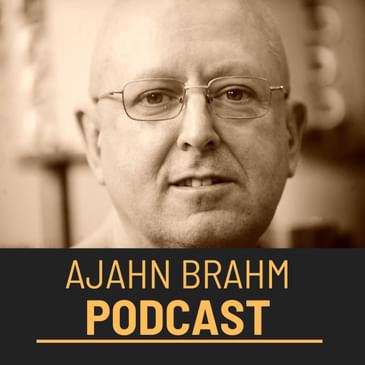

This is a talk about Buddhism and politics, given by Ajahn Brahm after returning from a conference for the Australian Sanga Association. He talks about the perception that Buddhism is seen as non-challenging and irrelevant to politics, but believes that Buddhism has a lot to contribute to society and make a difference in political processes. However, he does not support monks getting directly involved in politics, but rather encourage responsibility and compassion from a distance. He also discusses the importance of sincerity and ethics in politics. Buddhism has a strong ethical code that emphasizes compassion and inner peace. The focus on compassion leads to strong friendships among Buddhist communities, and this compassion can also be applied to politics. Buddhist ethics are resilient and can last longer in the political world compared to other systems. Buddhism teaches to bend the faith to fit the truth, not the other way around, and this process-driven approach is beneficial in politics. Buddhist communities have a democratic structure, which some argue has influenced modern democracy. Buddhism has a long history of democratic values, stemming from the ancient tradition of democratic decision-making in monasteries. The process of democracy, patience, and reflection are important in Buddhism and can be used to defuse anger and create harmony.
—
This dhamma talk was originally recorded in 11th July 2008. It has now been remastered and published by the Everyday Dhamma Network, and will be of interest to his many fans.
These talks by Ajahn Brahm have been recorded and made available for free distribution by the Buddhist Society of Western Australia under the Creative Commons licence. You can support the Buddhist Society of Western Australia by pledging your support via their Ko-fi page.
Buddhism and Politics
by Ajahn Brahm
Transcription
Okay. For this evening's talk, I have a subject had a subject clearly in mind from yesterday because I just returned early this morning from Canberra. Uh, 12:30 this morning, uh, because I went over to Canberra for the annual general meeting and a conference of the Australian Sanga Association, which is a body which we formed. I was right up to it, up to my neck, getting this going. Having a forum for all of the monks and nuns of all the Buddhist traditions in Australia to meet together, to support each other, and to use our combined resources for the betterment of our country, especially for Buddhism. And, uh, there was only yesterday, and because of our contacts. So we had the former premier of Western Australia, Geoff Gallop, who gave the keynote for us. So he hangs around, but is quite a lot now. So, uh, it's nice to be able to get his input on, you know, how Buddhism is regarded in our Australia and some of the more external aspects of Buddhism. And one thing which he noticed was that in a big wide world, outside places like this, uh, in places where I never go, that Buddhism or other Buddhists are regarded as inoffensive, ineffective, compliance, and thereby not challenging. Basically irrelevant to the Buddhist process, to the political process in Australia. Basically, we're just nice guys, nice girls who people can take for granted. And the thrust of his presentation was that we should get more involved. And so this evening's talk is a very controversial issue. Buddhism and politics. And I've been in this country over 25 years, you see, in Buddhism grow. And this as a leader in Buddhism in this country, sometimes you do get quite frustrated at, you know, the fact that we could offer so much to the political processes and to the government of a country and to some of the resolution of the issues which affect not just you, but me also. Now when things do go wrong that especially religious people have to pick up the pieces with counselling and with holding people's hands. And there are certain things which you know could be done which aren't being done. There are problems like global warming, the price of oil are just the materialistic society in which we live in, which cannot be solved by just one monk or nun sitting in front of a microphone. Even though if you have got a large audience over the internet and sometimes you know I am a compassionate monk, even though I love spending time by myself in my own cave, still, I spend a lot of time outside of that cave talking, helping, and contributing as best I can to the betterment of society at large. And you do feel that some of the Buddhist ideas, practices, ethics, compassion has an enormous amount to contribute, and it's a shame it's not contributing. So this evening's talk is how Buddhism can better the political processes. How can it enhance it? So many of the problems with its attitudes without itself being corrupted. The first thing I will say is I am certainly not going to stand in any election to be anything. Monks and monks. And they should never get involved in the political process themselves except as referees, encouragers, teachers or whatever, but not directly involved. Uh. You may know. Those of you who read newspapers that a group of monks in Sri Lanka were so involved in the political process, actually stood for the parliaments and were elected because they have a lot of respect. And I remember meeting one of those monks and talking with them, and instead of chanting, because one of the first things which Buddhist a very strong act is we don't judge people. First of all, you'd think a Buddhist monk in a parliament. That doesn't sound right. That's my first impression. But now hold that back. Meets one of these people. Taught them first of all, and understand, you know, their point of view. This is too easy to judge from a distance without understanding exactly what's going on. So when I talk to one of these monks in Sri Lanka a couple of years ago, you know, he told me just he said first thing he said it was a mistake. We shouldn't have done that. But you can understand why he was so concerned with the political process and the corruption in that process in his country. There was his concern that he thought, well, instead of just complaining about it, let's do something just like that wonderful Buddhist saying, rather light a candle than complain about darkness. Too many people complain about things, but that doesn't really help anything. If there's something you can do, let's do something about it. But there's nothing you can do. Then you just use your wisdom and compassion and just let it be. But if there's something you can do, I think we have an obligation to do something. That's why I'm an active monk. We have a rule in our monastery for months, and I think for nuns, any monk who has a bright idea about what to build and a monastery or how to improve it, we acknowledge their bright ideas and say, okay, it's your idea, you do it. And it actually stops a lot of ideas because people can have an idea. They can complain if they don't want to do it and act it out. So the rule is, if it's your idea, wonderful idea, do it. So it's more like an active taking responsibility for your ideas. And that's exactly why these monks decide to run for Parliament. They wanted to take some responsibility instead of just complaining to try and do something about it, but they realise there is something about, especially Buddhist clergy. They don't fit in those situations, but Buddhist laypeople do. But how can they contribute to something like politics? And how can they do this without, uh, becoming what people regard as, you know, politicians in our modern world? Because politicians are not really regarded with much respect. Unfortunately, they do attract a lot of criticism. And some of that criticism is ripe for criticism, because a lot of times that they don't appear to be honest or sincere. And I say that as appearances, because so many people who have any understanding about politics knows that there has to be a lot of compromises. However, I still remember this story of a preselection meeting for a political party, and I won't say which one it was. Where three the field of candidates for this one political party standing in an election was narrowed down to three candidates, and they wanted to come in for their final interview to find out who would be their candidate standing for the election in that, uh, um, in that area. And the first candidate went in and they said, we have a simple question for you. Please immediately give your answer. What's two plus two? Five. Okay. Go out. Don't ring us. We'll ring you. Second candidate. Same question. What's two plus two? Four. Thank you. Don't bring us. We'll win you. Third candidate. What's two plus two? Whatever you tell me it is. Boss, you've got the job. That's an old joke, but it's a good joke. Which means sometimes compliance in the political party or the political process is actually rewarded much more than sincerity. And obviously, one of the important things which say a Buddhist could contribute, you know, is a very, very strong sincerity and ethics. And I think one of the reasons why the Buddhist sincerity and ethics is more, uh, resilient, you know, to the push and shove of the political process is because if one is really a sincere Buddhist, one understands the law of karma, that one cannot escape from the consequences of one's actions. And as the Buddha said, in the mountains, in the seas, in the distant places, you cannot run away from the results of your karma. They follow you and understand that that karma or the consequences of karma not just are residing in your body or in your material life. Because some people do acknowledge that people who do cheat and who are frauds, or who do exploit other people tend to live in mansions. But remember, the result of karma is not just seen in the material world. Much of the results of karma as seen in the mental world. Yeah. People may be living in mansions, but what type of head are they living in? What is their head space? Not the house space. And my experience and again, I've been a monk for a long time, and I've met some really interesting people. And some people are, you know, famous criminals or people who have exploited others. It's amazing life as a monk. You meet people from all walks of life, from the very top to the very bottom. Now from the prisons and the wealthy when you meet such people. So you understand that those people, does it really matter with their poor or wealthy, famous or infamous? It's their headspace, if you like their mind. Which is the most important, uh, place for suffering or for happiness? For contentment or for fear and anxiety to live. And those people who have misbehaved and exploited and hurted and so exploited and hurt others in a big way, they're the ones who have a very difficult time living with themselves, even if they are in a big house next to a beach with servants, still they are totally unhappy. This is actually where you see the results of karma. And you know this because the you know, if ever you done something which is cool and heartless, that that lingers in your conscience and sometimes you can't get it out of your conscience. People feel bad about what they've done. And just in passing that we have means of dealing with this, but we know it is real that these consequences of one's actions, they do linger in the one's mental space and cause enormous amount of suffering. Which is why it's great being a monk, because you haven't done anything bad for years. And I don't know the last time you've been really naughty and evil because, you know, you have this great sort of rules of ethics, and you've got the other monks to make sure that, you know, you're keeping your rules. And because of that, you know, you have this beautiful mind which, you know, you look back on the last 34 years, I've been a monk. No regrets, nothing I can look at which has been really bad or evil or hurt other people. It has been really kind all this time. And imagine that type of headspace which you're in and there's not I know perfectly, you know, just the results of karma in their head. And because of a person really understands that there's a huge there's a huge imperative to be good, to be honest, to be kind. And the ethics of Buddhism is very, very clear. And I'll never do anything which harms another person, nor harms yourself and material prosperity. Now we're very good at saying that's just no material prosperity. If it comes, it's okay, but it's not important in life. The happiness of the mind, the peace of mind, inner contentment. That's the most important thing in life. And because we stress that so often. I think it does give us a more resilient ethics. I use the word resilient because when you go into the workforce or into the world, especially into the difficult world of politics, people go there with ethics, with a morality, with a cause, but they get worn away after a while. They've got ethics, but it's not strong enough. It's not as hard as stone it gets, sort of. It's like balsa wood or plastic. It soon gets worn away. And so they lose their ethics the longer they stay in these political systems. But the more resilient and strong the ethics to begin with, obviously, the longer they will last. And I do really feel sort of that the Buddhist ethics and its focus can really assist that political process. We have many, many teachings in Buddhism, and obviously the compassion is one of the most important things, but it's also why we have that compassion. And because we have such teachings as no non-self. No, this is not me, not mine, not a self doesn't belong to me. This body is just belongs to nature because my body belongs to nature. I can emphasize that your body belongs to the same place. And thereby we can have this incredible empathy between others. It's going to this Australia Sangha Association. There was only yesterday we had our AGM there and we were talking with each other. What strikes me, and you know, I'm right in the middle of this was very clear. You know, even though you're right in the middle, I think it's really sincere friendships which we have with each other. And that's the sincerity of the friendship, even though that these are monks from different traditions, nuns from different countries. The amount of friendship and real, honest, sincere, tangible warmth which we have towards each other is quite remarkable. And that's not just between Buddhist traditions. You don't see that between different Christian traditions, or even between Jewish religion or even Muslim traditions, you know, Buddhist traditions and monks. We don't have wars. We don't fight each other. Never have, never will. And is something even more than that. You see, like the Buddhist monks and nuns going, associating with the Christian priests and the Christian nuns. And that, as I was saying a few weeks ago, a month ago, that I attended the first ordination of a female Anglican bishop in Australia at Saint George's Cathedral. And that was a wonderful occasion, even though it was two hours long. Buddhist or Buddhist ordinations are far more compassionate because they're over in 20 minutes. Two hours. That was really a long time. But it was ameliorated because, you know, there was most of the people, obviously, in the cathedral in Perth were Anglicans, but they had one pew, one bench for members of other faiths. So that's where they put me. And I was squashed between Abbott Placid near the Catholic from the Benedictine monastery. And next to me was the moderator of the Uniting Church. So, you know, we were sort of the, the, the others, the heretics beds. But, you know, these are my friends. And there you go. You go Buddhist, next to a Christian, next to a Catholic, next to a Uniting Church. And after an hour of all this silly ceremony, that's when we started trading jokes. And of course, you know, I've got lots of jokes and I say, we can tell the jokes because, you know, we're not Anglicans. We can't tell jokes. Maybe in our own cathedral when we're listening to talks. But, you know, so it's a really sincere and warm friendship there. And I was saying the Buddhist can do that. It is a strength in our compassion and an ability, you know, to put aside a different views which separate people and realize that rather than the different views and outlooks which separate people, we got something which takes a stronger priority. It's what's really important in life. For some religion, the, you know, the view, the dogma. You know, what is your religion. Teach is so important that we can fight over our teachings, over what we believe in. But in Buddhism, it's as I said last week, it's not what we believe in. It's how we believe. You know, it's the compassion, the kindness, the investigation, the ability to say, well, we may not be sure. So you may be right. So what's the point of fighting you at the moment? I might be wrong. It's how we believe that compassion, that tentativeness, the ability to challenge our beliefs at every place and the ability to be able to let go of anything. If we find the evidence doesn't support it. As I said many times, one of these little key statements just like sound bites because I'm learning about this process. Two types of religion, those which bend the truth to fit the facts, to fit the facts. So no, sorry, I've got that wrong. I better try my sound bites again. Those which bend the truth to fit the faith. And those which bend the faith to fit the truth. Then the truth. To fit the faith or bend the faith to fit the truth. Okay, so you can see a lot of religions. They actually bend the truth because their faith said otherwise. Doesn't matter what the truth says, the faith is more important. So bend the truth. You know, like the evangelists who say, yeah, there were dinosaurs, you know, not real dinosaurs. So they were just planted in the rocks by God to deceive everybody. So not real fossils. That's like bending the truth. In no way you can accept things like that. But many people do that and sometimes do Buddhists do that. Maybe they do. So we have to use the evidence. And this is what the Buddha kept on saying, has to be evidence based. So some bend of faith to fit the truth. That's Buddhism. We bend our faith to fit the evidence. So straight away you can see that it's not what you believe in, but how you believe these processes of finding out. And I think that makes Buddhism has always been non dogmatic from the very beginning, which is one of the reasons there hasn't been religious wars in Buddhism, because that dogma is not there. And that type of attitude. You can imagine how that would work in politics. Where Buddhist politicians would not have this dogmatic attitude, who always saying, yeah, I know now, and spinning the facts to fit the religious dogma. And I wonder if they if we were we really were a Buddhist politician. You would be what I read in newspapers, a flip flopper. Because as Buddhist I wear flip flops. You can see them just outside a flip. A flip flop of thongs means you are willing to change. And I sometimes when I read these newspapers about, you know, whether it's Kevin Rudd or some other politician changing their policy, why do people sort of criticize that? If you get a better idea, throw away the old idea. There's actually Buddhism, so why can't we actually encourage these ideas and traditions of of being able to bend our policies to fit the facts as they sort of evolve, as we get more information? So I think the lack of dogma, the lack of ideology of a Buddhist was more interested and more focusing on the process rather than the results. A process driven politics rather than a results driven politics is much, I think, more effective. Not know exactly what we achieve, but how we achieve that. And that just reminds me just of a lecture which I did attend at this human resources conference in London about 15 months ago, where this human resource guru, this uh, UK, African, so UK Jamaican, brilliant lady, she gave this very inspiring talk that she was working with one of the government departments in London and she was just again forcing, forcing, forcing the minister there. I think it was David Miliband. He was actually an up and coming politician in UK, probably might be a prime minister soon, or at least one of the leaders of the the party, but forcing him to say, look, you might get one of your, um, senior management officials taking a policy to the European Union in Brussels and getting it accepted. And then you go and reward him by a promotion, but at what cost? Because he she noticed that many people in those departments were working so hard, they were burnt out. They weren't being valued, they weren't being cared for. And at the end of the process, they resigned and went somewhere else. Yeah, they got the the agreement at the end of the day, but they lost all these important people. Which was actually weakening the possibility of getting successes in the future. Yeah, they got the results for the process was totally dysfunctional. And I think that many of you are paying attention here because that's what happens in your office. Do you get the contract? Do you get the results? Do you get the sales? When it's result driven, it burns out people. People get negative. They don't feel valued. They feel exploited. And what happens? You just lose motivation. You get into negativity, you resign. You just don't work. Now of course, that happens also in the political system. But a Buddhist politics, it's the process. It's the karma you're doing now, not whether you get the goal or not, but it's how you're doing it. What I said last week, the relationship between you and what you're doing, it's the how, not the what. And now I have a huge amount of understanding. And because of this understanding, it usually out of faith in the process of calm, if you do it the right way, eventually you get the best results. You don't look at the results, you look at the how, the why. And that type of Buddhist driven politics will also understand why. And this is a fair claim. The Buddhism has carried democracy in our world. The longest are monastic Sanger's, the communities of monks and nuns. We run by a democratic principle. Our constitution is democratic, and it's been like that for 25 centuries. I know that sometimes people, even people in your universities, professors assume that democracy started in Greece. And that is questionable because 2500 years ago in India, there were established democracies, and the area where the Buddha was born was one such democracy. It wasn't half. It didn't have a full franchise. It was the landowners, the aristocrats, the elites. They were the ones who would go to the. They called it Sabha, the assembly hall, and they would discuss things regularly. So much so that there's incidental details of that. For example, there was one monastic rule, one of the 227 rules laid down by the monks, which we still have to keep today, happened because a man was about to give a monk a robe. He said, no, venerable sir, you know you need a robe. Can I offer you white? He said, yeah, I'll have one right now. He said, look, I've got a meeting at the assembly. And he said, no, I want it right now. Is it? Can't you wait till later? Because people were arriving for these meetings so late that they were fining. Anyone who was late said, I get fined. If they said no, you said you're going to give me one now, give me one right now. So this poor man was was imposed upon by a monk in the time of the Buddha. He had to go and get the robe because he promised it. And he went to the meeting and he was fined. And eventually they told the Buddha, you know, monks, he shouldn't be so demanding. But that was actually the role that the actual occasion was showing just how the democratic process was actually happening in 2500 years ago. And Buddhists have actually carried that democratic tradition without a break for 25 centuries. So this is a well-worn, well-tested democratic institution. In fact, the longest continuous democratic society in our world is the Buddhist monastic community. That's no doubt about that. Why did the Buddha choose a democratic principle? Because that was the best process. Sure. As everyone knows that democracy sometimes the wheels take a long time to turn out a result. Sometimes a benevolent dictator is sometimes said, well, at least you get things done. At least, you know Adolf Hitler made the trains run on time or whatever. Yeah, but that's just result driven rather than process driven. And because it's not process driven. You get the trains running on time, but you get sort of people thrown on the train tracks, you know, because they're arguing with you or whatever. So it does lead to sort of difficulties in other areas of the democratic process, especially in, you know, the Buddhist monastic tradition. It has a lot to actually to offer, you know, to say, the political process. Things like anybody concerned with the decisions which monks or nuns have to make. They have to be there. You can't make a decision in anybody's absence. So they have to be there and they have to be listened to and the decisions have to be made, but they're made. In our Buddhist tradition, the monastic tradition, they have to be made in unanimity. If any one monk says, I disagree, then you have to stop the decision making and talk about it a little bit longer to try and get them on site. So it has to be done in unanimity. And you think that, my goodness, how can that actually work? There'll always be someone who objects, but that's actually not how it works in practice. When we sort of take a type of folk like that, you know, who's I agree, who doesn't agree? If someone really doesn't agree, it's much more important. We wait for a while and we try and convince that person, even if it's just convincing that person because. No, it's better that they don't get their own way, and they have some harmony in the group and have some sort of progress rather than just hold it up. But if they are so convinced they're going in the wrong path and they say no, fine. We respect your opinion so much, we won't proceed and maybe have more time to consider what you say. But usually we'd go with the majority once we find out what the majority is, because part of the process is recognizing the priority of harmony. In fact, that was so strong in the Buddhist way of doing things. Harmony was so important that that was more important than getting it right again. It's how we get it right, not whether it is right. We may make a wrong decision, but as a matter is harmony. For those of you who go visit our monastery tomorrow having an entry to the rain stay, if you go to the Upper Story dining room, you will see that the walls are painted a pale yellow. When we built that room, I decided to have an exercise in democracy. So I got all different colors there, and the monks could vote for the color they wanted. And so they chose this very, uh, you might call fluorescent yellow. And even though I had a bit more experience, that's a stupid color. But if that's what you want. Off we go. And so they spent a whole half day painting a quarter of the wall, fluorescent yellow. And I think even the painter had to wear sunglasses. That soon, the monks realized, then made a mistake. And even though we wasted. And I don't mind saying this, I'm embarrassed about it. But it's worth saying I wasted about $800 of donors money. Because as a Rothko, we had to paint over it afterwards. Still, it was really important that the process was done properly, that the monks who were going to live in that area had an input, and even though it was the wrong input, it's more important it was done well. Sure, we wasted $800, but we had a very good, strong, harmonious sanger. Which would you prefer? Is it the point of our Buddhist society to save money? Is that what we're about? Or is it about creating harmony and peace and growth and respect and compassion? You can see that we the process is more important. We talk about the Buddhist ideals of peace and compassion and kindness. That's all about process. It's not what you do, but how you do things. Non-attachment. That's about process, the ability to let go of your desires and know even the end result about process. How it's done. Now you can understand why that type of democratic ideal of Buddhism, which has been tried and tested now for 25 centuries in our monastics anger. And we've we've lived, we've survived after all that years in different countries, in different regimes, communist regimes, dictatorial regimes, tyrannies, democracies and often chaotic regimes. Anarchy. This Buddhism was always survived. And so you actually see it here right now. And we don't change very much. Even these robes, which we were pretty much the same as a Buddha wore 25 centuries ago. And the way we do things. Pretty much the same. Almost identically the same. So you can see there's a lot to be given here by the Buddhist idea of process. And part of that process is that we have the ability just to let go for a little while and have these pauses in our life, these retreat moments, meditation moments, to give everybody some subjectivity, to be able to stand back for a while, to see what you're saying and what you're doing and why you're doing it. I think I mention this here worth mentioning again, because this is a great tool, social tool to deal with people's anger. It's it's a meditative little practice, but it's powerful when somebody is arguing with you, shouting, you getting angry at you. When they finish, you pause for 10s. Don't shout back. Don't even say anything back after they've finished arguing with you. Shouting at you. Pause for 10s. This is retreat time. This is quiet time. Because when you give that person 10s of quietness, what will they do? Only one thing. They see what they've just said. It's as if those 10s of silence are a mirror for themselves. To see how they've just spoken to you. And it's very effective. Giving people 10s of silence after you've, you know, they've been shouting, argue at you. They actually know what they've just done. They feel it and they know the harm to themselves and others, which they've just done. If you just they shout at you and you speak back or shout back. They don't have the opportunity to reflect and see. Moments of silence and moments of reflection, moments where we can assess what has been going on and how it's been going on. Now, this is part of our Buddhist process. Even in a school in rolling Stone, where one of our disciples started teaching meditation to grade six sixes many years ago, sometimes people say kami introduced meditation in schools. It has been done, but not in a systematic way. But when it has been done, she noticed something really strange. When there was a problem in that class, there was about to be an argument or there was already was an argument. One kid will put up their hand and say, miss, can we have quiet time now? That's what they called meditation. So people of other religions wouldn't be offended because meditation means Buddhism. Can we have quiet time now? And all the kids would sit quietly for five minutes, and that were completely defuse the anger in that classroom. Simple but very effective psychological means of telling people to stop for a while. Be quiet and you can see what you're doing. Wouldn't that be wonderful in our parliaments if that speaker could actually bang them out at quiet time? And they had to. You're laughing. But it's true, isn't it? Wouldn't it be wonderful if we could do this? Because what would happen is that in that quiet time, people would see what they were doing and realized they were going on a wrong process, which wasn't going to fulfill their aims of actually caring, doing something good for themselves and other people, for serving society. And also that ability to stop and reflect is basically where I get all my wisdom from. We actually see things in a deeper way at that little conference which we had, that you heard it here first. Actually, I was talking about this later on. I had to write an article. Uh, as for a speech in Japan next November. And they gave me free rein, whatever you want to talk about. And so I talked about the problems of Buddhism in Australia because there was an international conference and said, I would like to see the positive articles, which I usually write. I said, well, what's the difficulties and problems you've been facing? And one of those problems was actually reflected with what Geoff Gallop was saying, which I mentioned earlier, that basically Buddhas are seen as compliant, irrelevant, just concerned with their own personal problems and the solution to those problems. Very individualistic. And even though we know that each one of you care for society and contribute in many, many ways, now you are so. You are generous. Well, how much money did we raise for the Cyclone Nargis? Was it 12,000 or something? 15,000. Do you remember Rachel? No. One person here gave $5,000 for Cyclone Nargis. They wrote a check out for 5000. And that was just one person who met with all the money we raised with the help of the Singapore. There's about 3 or $4 million for the tsunami, and we're still running away from some of that money which you raised here. We're still running an orphanage in a cow like Thailand. And I was there just a couple of months ago seeing some of these kids, which your money helped. We also run this orphanage in Bangladesh for girls. You can see the pictures of what we are doing. We do help. But he was saying it's invisible. And so that when I proposed here a few weeks ago. Actually, it was in this article, I said, what a wonderful thing would be wonderful to do is to have an Australian Buddhist charity called No Australian Buddhist Care or Australian Buddhist Charity. This basically to show that Buddhists are effective in the community. So it is to say we do these things. And I think that's very important for us eventually to do this. And at this meeting that that was, you know, really sort of endorsed and said, yeah, let's go ahead and do this. Because it's also even the process of Buddhist caring. Somebody was talking to me, for example, because there was an article about in Singapore about transplants, because there was in Singapore just last week, some of her people were sent to jail for buying organs from people who wanted to donate them, poor people, and wanted to donate them to give to people who needed organs for transplant. The people they wanted to give their organs. They were very happy to receive money for it because they were so poor. But it was against the law in Singapore, and so the person was prosecuted and given a jail sentence. And so they asked her, what about this, you know, giving of organs? And I said, look, why don't you tell about this Sri Lankan monk a few years ago, like many people, I've got my organ donor card, you know, in my, my bag here. So my, my organs can be for anybody. I wouldn't actually have my nose because it keeps on getting high fever. But you can have the rest of the body. It's pretty good shape. But this particular monk was an organ donor. He gave blood regularly, and the organ group contacted him because they found a perfect match with him and somebody who needed a kidney. But there was a problem. The problem was this was a Buddhist monk. He is perfectly healthy. He could actually give a kidney, but the recipient was an evangelical Christian who was going around the aisle and converting Buddhist to being Christians. Understand the problem. So they asked this monk, what do you think? I said, what do you mean, what do I think? I don't care who that fellow is. If he needs my kidney, he can have it for free. And so this monk donated his kidney to an evangelical Christian who took the kidney and went around converting a few Buddhist. But I think many Christians, when they saw that example in the paper, became Buddhists because the examples are so beautiful. Look, it is okay if you don't really want anything back in return if somebody needs it, find. And that type of giving and process, it's why you're doing it, not where it goes to, how it works. That is beautiful. So Buddhists do these amazing, compassionate things, but people don't know about it. We need to actually publicize it more. And that degree of selfless compassion. It'll be wonderful for someone like that to be saying politics. We do have to have politicians and we can't get away from that. Now, we do need people who assumed power for the rest of us who can make decisions. We need to know how to manage that power and to have some ethics, some sort of even religious ethics, which can manage that power in the most positive way. For the best result, the best procedures, and the best for everybody concerned who has to deal with these? There is a joke which somebody put in my my trade just a few minutes ago. I don't know who it was, but there was an envelope there. I only had a couple of minutes and they put urgent on it and I opened it. It was jokes. It's very urgent because I didn't have many jokes as a politician. Politicians joke. They say that yesterday was so cold they saw a politician with his hands in his own pockets for a change. And why is that funny? Because I think the politicians are always taking something for themselves. And then people laugh at that because there's some truth in it, because there's no sort of selflessness enough, and because Buddhism actually takes that selflessness. No. To an extreme, to no self, you know, to give rather than to get to materialism is not the be all and end all of life is your karma, your kindness, compassion. That's the wealth of life, not the money or the big house. It's all know what's in your heart. And when you go home in the evening, that's the wealth of Buddhism. That's what we focus on and be great. If we have a politician like that, there are politicians like that, but we need more of them. So you can see those sorts of attitudes if they really start to, to be expressed in our political system, how much Buddhism actually give to our political institutions. One thing which Jeff Gallup said, which was a great little saying, this is one of the reasons why he thought Buddhists would be great as politicians, because he described the political process as a tension. Conflicting interests or conflicting views, conflicting information. And the politician has to make a decision. And that conflict, that tension which you can recognize in some of the decisions you have to make in your life. It's hard to make decisions. Big decisions now, not small decisions. And that ability, you know, which I've mentioned here, how a person makes a decision. Remember the four things you should consider before you make a decision. From the Buddhist texts, straight from the Buddhism. No personal desire, no ill will, no delusion and no fear. Whatever decision you're going to make. If it is. Should I do the abortion? These are big decisions you will make. Some of you make those. I'm not going to say it's good or bad how you make that decision. Some of it might be just changing your job. Sometimes it may be changing your partner, becoming a monk, leaving, stopping, being a nun. Whatever decisions you make. Make sure it's not out of personal desire. What's in it for me? Not out of ill will. Negativity. You never make good decisions out of negativity and not as stupidity and delusion. Get all your facts as much information as you possibly can. Even though you know what information is like, it's never conclusive. You can't just make a decision just on information. And lastly, and this is the one which I always like the most. Not out of fear. Fear of your reputation. What other people will say about you. You make a decision fearlessly. Now that makes people very strong decision makers. And of course, I make decisions all very often now in all my roles and responsibilities and duties, which I have. And with no retreat center, you have to make snap decisions what color the walls are going to be. I am not afraid what you say when you go to that retreat saying, oh my God, who made it that color? Oh, that's okay, because what I do know about this is, is I'm not afraid to make decisions because I know you can always do something with them afterwards. Decisions are not the end of the world. They just allow other decisions to be made afterwards. So that tension, which Jeff Gallup was saying of the political process, it's not resolved when you make the decision. Is it this tension afterwards? The repercussions of that decision? In other words, you never expect it to be perfect. Basic Buddhist law of suffering. This world is not meant to be perfect. And I know many political systems have really failed because they've been they've been utopian. And still I read that in the newspapers. If we can only sort of do this and do that, we'll have no global warming. If we only have just the right sort of ideology, people will live in peace and harmony forever. Oh come on, get real. No matter what system we have, we will always have some people abusing others, some crime. There will be some effects of global warming. There will be problems in life. This is life. Our job is not to make this world something it will never be. Not a utopia, but what we can do as good as we can make it better. Not the best, but better. That pragmatism which comes out from understanding to sin, the four noble truths of suffering and the Middle Way, avoiding extremes. Basic Buddhist teachings gives us the ability to accept that tension and not to think there's something wrong. When you make decisions and it doesn't work out. We can be at peace with that. We realize we're not going to do the best, but we can always do better. Now, that type of wisdom means that we become empowered to make decisions, and we become empowered to make wise decisions and their wise decisions, because we know from the very beginning there's going to be problems afterwards. It's not a thing which is going to solve everything. This is part of the whole process, the process again, never thinking about the results because the law of karma just works and works slowly, but it does lead to a better life and you know that from your own decision making. As long as the process is correct, you know eventually you'll go to better places, better situations, whatever you're aiming for, and more inner prosperity, harmony, peace, social cohesion, whatever else you know we're looking for in this life. One of the other wonderful things which Buddhism can give to politics its ability not just to pause and reflect on things, but the ability to listen to the other. And that's one of the amazing things which you'll learn when you allow the mind to be still. And you stop thinking, for goodness sake, you stop believing in your own ideas of what the other person is saying, so you can just empty your mind and listen. The ability to communicate is essential in politics as it is in any relationship. And people just do not know how to listen. When someone's talking, they're talking as well. Inside, they're talking to themselves. Which is why that as a meditator, even in my books, I've written about total listening. Way to sit there or stand there, whatever position you're in and you listen to every word, every nuance. Pick up the body language because your mind is still empty. No thoughts. Perfectly mindful and aware. And when you have that degree of mindfulness and awareness, which is not hindered by this thinking and conceptualizing going on in your head, when you're totally aware of totally there with that person when they're speaking, you'd be amazed at what you can pick up and how much comes in. It's amazed. Here it is. This is not psychic powers. Even this afternoon of visiting someone in the ICU. And no, just talking to the family, they're getting much worse. They may die tonight, but I'm not sure. But when I saw them afterwards, you know, they say. Hmm. How are they? And I said. I just said just came straight out of my mouth because I was still meditating this person. Because they'd make it through tonight. I think they might survive. But tonight is a difficult time. And when I went out of the ICU, I met the family, and the family said, oh, the doctor just told us sort of earlier on this afternoon, if they make it through tonight, then they will survive. So I got exactly what the doctor said, but I don't get any money for this. Doctors get heaps. And it was just amazing just how you can actually pick that up just from your mind. And it's not psychic powers, it's just being still and have total listening with somebody and get an idea of what's going on inside of them. Now that's how much I could totally listen. This is how much you can totally listen. Imagine if a politician can totally listen. How much they would receive and how much they would understand. And these are people who are responsible for so much of our lives. So that degree of total listening for a politician, imagine what they could do. They'd be efficient, uh, responsive, and not just to the electorate and to the Australian people or the world people or whatever, but they'll be able to be responsible and responsive to each other. How much time is wasted in stupid arguments when people just don't listen to each other, they don't understand each other, and so they can't resolve the problems and waste too much time. So Buddhist politics will be a politics. Politics of listening, total listening of politics, which is devoted to process and trusting. If the processes is right, the results would eventually be right. No politics of kindness and respect to each other. A politics of ethics. Strong ethics. Because you know, if you mess up, you are going to have a messed up mind. You can't get away with it. And even you can't go after some Jesus or some Halo or something and and think they're going to forgive you. We are stuck with our karma and not saying no. When I die, it's all over. No, you have to get reborn. And many of you politicians are going to come back here. I think that it's karmically appropriate that George Bush gets reborn in Iraq in his next life. Wouldn't that be appropriate? It's a possibility. Now, if he knew that he was going to get reborn in Iraq, wouldn't that give him greater motivation to look after that place and to clean up his mess? So I think sometimes the whole Buddhist ethos can be so positive. So in our political system. So who knows, maybe there may be some people who are the Buddhists and they stand for election. Maybe they are strong enough with these attitudes and ethics to actually make a difference, a real positive difference. We've had many, many political movements in the past. Who knows? I'm not sure because this is unchartered territory. There may be a lay Buddhist politics here in a political system party, I don't know, but I do know one thing. Never ask a monk. Because I could to finish off with this old Chinese story. A long time ago, apparently the Emperor of Japan. And so the Emperor of China was finding it so hard to get ethical, non corrupt ministers in his government. People who are wise, resourceful, kind. Just like it's hard to get good politicians even these days. He heard about these two hermits living up in the mountain. Strong ethics. Kind. Compassionate. Deep. Meditative. Really, really wise. So he knew. He's no way, though if he'd sent anybody up there, these monks would leave the hermitage and come and help run the Empire. So he had to go up there himself. So the emperor, you know, with his royal guard, marched to this mountain. And these two hermits, one was living at the top, one was living halfway down. So, you know, he thought the one at the top was a wiser. So he went to the top one, first of all, and said, Venerable Sir. And I've got this. You have a such a wonderful reputation. You're incorruptible, and you're just so compassionate, and your wisdom and peace from your meditation is immense. You could do so much for the Empire. You can help so many people. Can you be my Prime Minister? And the Emperor himself asked this. And, you know, in those times, like, you know, the emperor was a big shot and had lots and lots of power, and many of them wouldn't think twice about killing monks. So this monk, he couldn't actually actually say no. He said, just excuse me for a moment, sire. And he went to the the stream and he washed out his ears. I'm sorry, sire, but there's some filth in my ear. Now, what did you say? And the Emperor knew what he meant. The filth was the words inviting him into politics. So he said okay. And he left to go to the the second monk halfway down the hill and is about to ask the second monk the same question. Your wise, your compassionate. You're wonderful. Can you please be my prime Minister? And just before the second monk answered, the attendant of the top monk ran down and said, I got a message. A message from the top hermit. Don't drink the water, this filth in it. And he ever said go. For the Emperor left because like monks, nuns, they've got no place in politics. My job is exactly what I've done this evening. In other words, give guidance to know that the lay community, the monastic community. We serve each other. We depend upon each other. We care for each other. We look after one another. Am I done my job? To teach. Encouraged. To give to how to but not tell you how to. To encourage. To inspire so you know how to and how to even serve in this world of politics is there. And instead of complaining about it, why not? Some of you even get involved, but get involved, empowered by these Buddhist teachings in such a way that you can make a difference. And you're not just another politician, but you have the training, the means, the inspiration. The know how to make our world a better place. Why? Hello, compassion and kindness. How to service basic good is kindness. So let's a talk this evening. Buddhism and politics are. So different aspects. So you don't always hear the same talk. Hear everything. Sometimes you hear the same jokes. But this evening, a couple of new ones. So has anyone got any comments about the talk this evening? Yeah. Got one from the back over there. Yeah. Okay. He was say so that there was a nice talk. He had a few points that. What was it? Electric purple was a wonderful color for the retreat center. Guard carrier. That's not the color, by the way. Well, there's a good example. I mean, it's inspirational examples of Buddhist in politics. Aung San Suu Kyi, you know, who throughout her life has never actually espoused violence towards her tormentors and is actually took a very strong moral line. And I think on on process rather than outcomes. So I'm repeating this because your voice will not get on the the tape. Carry on. How could that. Be. Well. Okay. The. We are fortunate living in a democratic society in Australia. We should be grateful for that. And also to take responsibility otherwise that the power can move away from the democratic process. Is that what you say? I've got the end. Roughly. Roughly. Okay. So it's great to take responsibility and Buddhism, which shows why can't it sort of be applied to different areas of people's lives especially? Maybe not. Don't even need to call it Buddhism. But the idea is an attitude which I taught this evening. I think you all agree that could be very positive. And as a last word. This is not just politics in the Parliament. Everything which I've said to this evening applies to politics in your house, as well as politics in the office of politics in the Buddhist society or politics in the office. When I was especially mentioning politics in the Parliament. Yes. Comment on Buddhist monks participation in protests, rallies in Burma. Our background is twice in my lifetime. Buddhist monks have protest in Thailand. Both times they were slammed by the press as inappropriate. And you can see why it is a matter of their protest. And the cause was not really appropriate the first time when, as a young man was anti-communist. It was really a political rather than a moral protest. And the second time was just protesting about who was going to be the Sanga Raja of Thailand. Again, that was absolutely ridiculous. Most would worry about things like that. So in Thailand it was slammed. Rightly so, I agree. I think that in Burma the protest was almost universally, um, universally accepted and commended. Why was that? Because what they were protesting for and the man of their protests, they actually chose a sort of an important reason. And the actual the reason for those protests. For those of you who don't know, was nothing to do with trying to get rid of the military junta. They weren't protesting against people. They were protesting against poverty and hunger in those areas. And it's important in political protests, we don't focus on people. We focus on situations, poverty, war or something. So we take the personalities out of this. It's not down with the junta, but down with poverty, down with hunger. And you can see the difference there. But it's not personal. It's not attacking a group. It's much more focused and it's best blaming anybody. It doesn't rile people. It works. So I think it's a man of their protest, the nonviolence and also their cause, which made it a very beautiful protest. So when you choose political protests, please not down with governments or down with this group, not even now. If you're a Buddhist, down with the evangelist or down with the terrorists. It's now with terrorism, down with dogma, wherever we find it. And then it's got much more power. Can we stand kindly? Otherwise the protest. If you protest against violence and you become violent, as happened in the protest in Gaza, because that became violent, it lost its force because Buddhist and Buddhist monks were seen on the television, it seems, although some people said it was people dressed up as monks. But I don't think the Chinese were that were doing that. I think there was a real monk who was kicking down a door. Images like that take all of the the moral force away from that protest. The Burmese monks had their act together. They protested, but they protested kindly and gently and non-violently, even at the point of a gap. So that's my answer. That's my opinion on that. Yes, Chris. Which one? Right? Yeah. Okay. And you don't do that. Wrong. Yeah. Okay. Okay. You are saying that the Burmese monks who protested last October in many cities in Burma or Myanmar. Was it a wise thing? They protested. They were chanting the Metal Sutra, which you would have chanted before the meditation here this evening. That's what they protested. What I was told was that the first few days it was a very peaceful demonstration. There was no violence, no from the the military, because they weren't attacking the military or the junta, but that later on, uh, the committee which was organizing these marches, they allowed students, those students to get involved, and they started chanting slogans against the junta, which was where it became violent. It was almost like a pure Buddhist protest became infected by politics, which was focused on groups or persons. But still, those marches by the Buddhists. The Quiet marches, though, were seen on many people's televisions. And karma sometimes takes a while for it to work out. Obviously, the junta in Burma lost a huge amount of credibility, support and legitimacy just waiting for that to work its way through. It's not the end, but it's an important step towards sort of the solution of that problem. So I think it was a beautiful thing to do. But they they made a mistake there instead of allowing it to get personal. Even it's one of the suitors of the Buddha, the Aranya Banga Sutra. It's a very beautiful. This is called the exposition of non conflict. There he tells the monks. Nuns, many, many women. If you're going to criticize, criticize and act at seeing the situation, but don't criticize a person. You don't criticize the janitor. You criticize oppression, exploitation, lack of consultation, whatever. But don't criticize the person. He said that way you avoid much conflict in the world, and also you're focusing on the important things on corruption, exploitation, whatever it is. That's what we march against. Not the people doing that. Okay. Okay. Last question, Eddie, because then we can finish off this is my last tour for three months, so you can exploit me even more. What's my opinion about Tibet? That's a very that's a very. It's okay. Okay. What's my view about Tibet? Uh, because that I am a Buddhist and I've got many friends who are Tibetan Buddhist, but I've got many disciples who were Chinese from Singapore, Malaysia and Hong Kong and other countries. I got I got sort of letters, emails criticizing both sides. It was actually fascinating to see that it wasn't just criticizing the Chinese response to the the marches in Mars and other cities was also criticizing the Tibetans actions against the Chinese, which is why it's so difficult to get you to support one side in those protests. Because it wasn't a pure on either side. There is a problem there, but of course there can be some resolution, but I believe any violence just puts back the time for such resolution. So I think there was a wasted opportunity. That's my particular take. But I know I am a Theravada Buddhist. I don't know much about the ins and outs and the historical situation, but I do know that there's a difference between nationalism and freedom. I think we've got to the state of post nationalism. Look at all the people here. What countries were you born in? We've got a certain mix of nations living in Australia. As far as nationalism concerned. Yeah, we can support the Australian rugby team or cricket team or soccer team, but that's as far as they should go. And we shouldn't sort of say that One Nation sort of owns a particular tract of land. Nations share the earth. We don't own the Earth. So I don't think one nation should say, this is my land. I'm saying this is controversial. This is our land. We have to share it together. Throw things. Any other option. As such, she was at Chief Seattle. Said. How can you? You Europeans know invading America. How can you say you know you own land to him is like saying it's like owning the earth, owning the air. No one can own the air or own the waters. That's what he thought. The idea of owning land was completely incomprehensible. They shared land just as we share the air. Interesting concept. And actually quite enlightening too. Anyway, if we can have a just sharing of resources, not an ownership of land, but just sharing of resource, if we can focus on the important issues and don't complicate it with nationalism or ownership of things, I think then we may be able to find solutions. Maybe. Anyway. Again, I may not not have given the correct answer. Outcomes are not important. It's a process which lead to the outcomes. So the process that I respected your question and answer to my best of my ability, even though it might have been a stupid answer. Complex a process is important.