

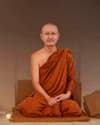
This episode is a talk given by Ajahn Dtun Thiracitto and is titled “This is the Path” . It was published as part of the anthology of teachings also titled “This is the Path”.
Links:
[00:00:00] - [Ajahn Dtun]
Welcome to the Forest Path Podcast, a podcast sharing the teachings of awakened meditation masters of the modern era. This episode is a talk given by Ajantan Dehracitto, and it's titled This is the Path. It was published as part of the anthology of teachings also titled This is the Path. May you all benefit from hearing this gift of dhamma. This is the path by Ajanta Thiracitto.
[00:00:40] - [Speaker 0]
Born into this human realm are all Buddhas. They are men of amazing qualities, truly phenomenal, or they could even be called great men. For every Buddha had to build up a tremendous amount of parami, spiritual perfections, before finally attaining enlightenment, thus becoming a Buddha. Such a being is so extremely hard to find in this world. Second to the Buddha were his Arahant disciples, who were also truly very rare.
[00:01:11] - [Speaker 0]
If we try considering the life or practice of the Buddha or the arahants, we will see that their lives were lived out with integrity and virtue. They staked their very lives in the course of the practice. Within their hearts, they gambled their life, their all for the perfecting of the Paramis. Having made the aspiration to be either a Buddha or an Arahant disciple, they never relented in their effort as long as the Dhamma had not yet been seen or realized by them. The practice of the Lord Buddha or the Arahant disciples can therefore serve as a beautiful role model by which to direct our dhamma practice.
[00:01:53] - [Speaker 0]
The Buddha laid down the principles of the dhamma and the Vinaya, the monk's rules of discipline, being that which steers the heart towards peace and coolness. The dutangas, the austere practices, were also set down by the Buddha as tools for wearing away the kalesas, the defilements or impurities, making us put up a fight in order to conquer the kalesas within our own heart. We must persevere and endure everything, such as the heat and the cold, for our esteemed teachers from Thanajanman down through to the present day all had to endure and go against everything. They developed their practice in the solitude of the forests and mountains or in the silence of caves. They made every effort to seclude themselves by seeking out suitable places to develop and cultivate their minds, so as to do battle with the chalices of greed, anger, and delusion that existed within their hearts until subduing them, bringing their presence to an end.
[00:02:59] - [Speaker 0]
If we look within our lineage of Kuruberajans, meditation masters, their biographies tell how much each one practiced with complete single mindedness. They sacrificed everything so as to know and see the dhamma. Being one with the dhamma. We should recollect the Lord Buddha and his Arahant disciples or the Kurupa Ajans as our ideal, recalling how they applied their minds, hence realizing the dhamma. Therefore, always resolve that if we haven't brought an end to the defilements within the heart, we will not ease off in our effort of practicing sila, samadhi and panya for the burning up of the heart's impurities.
[00:03:45] - [Speaker 0]
One must be patient and persevering in doing the routine duties and practices, for this goes against the chalices. Doing so allows the heart to have some victories over the defilements, for it has been their slave for countless lifetimes. In this present life, we have this good opportunity to come and take up the brown robe, ordaining as disciples of the Lord Buddha within his teaching and dispensation. Thus, we must make ourselves worthy of our teacher. We each adamantly resolve to conquer the kalesis within our own heart.
[00:04:22] - [Speaker 0]
Even though at times we may feel disheartened, beaten by the kalesis, we still have to constantly find the mindfulness and wisdom to contemplate in order to give rise to faith and energy within our mind. Sometimes our body may feel weak, so we rest to regain our strength. Sometimes the mind is lacking in strength. Mindfulness and wisdom cannot keep pace with all the mental and emotional activity being too slow for the chalices. Whoever wishes to eliminate the chalices, ridding them from the mind, must have the mindfulness and wisdom to detect them, recognizing one's thoughts and emotions as being the heart's enemy.
[00:05:09] - [Speaker 0]
We must therefore resist and endure, being determined that we will defeat chalasis. Today we lose however, tomorrow we must win. We have to build up and strengthen the mind by developing samadhi bhavana, meditation and concentration, just as we monks normally do. Even if we have spells of being too easy with the monastic routine, observances, and with one's personal practice, being too relaxed in our effort, Nevertheless, we must always be building up the confidence and the faith to put forth the effort that will take up the fight with the chalices. Don't be daunted or lose heart.
[00:05:51] - [Speaker 0]
Always remember the resolute ness of the krubrajans and the extent to which they sacrifice their lives so as to know and see the dhamma. In practising the dhamma, we can't be forever lax, slack in our effort. It may be so during some periods when the heart is unable to fight with the chalices. However, when there is a chance, an opportunity to get the better of the chalices, we bring mindfulness and wisdom to do battle with them. We must train the mind, making sati and samadhi arise so that panya can contemplate to see the true nature of the defilements that are within one's heart.
[00:06:31] - [Speaker 0]
Ajahn Chah would always say that in practicing the dhamma, there isn't anything much at all. There is only the contemplation and investigation of this very body to see that it is impermanent and without self, together with the contemplation of the citta, the heart and mind. Contemplating the emotions and thoughts within the mind to see the impermanence and selflessness of this mind that we cling and attach to all along with everything within it. There are only these two topics to be investigated, the body and the mind. To narrow this down even further, we contemplate the mind only, for this is where greed, anger, and delusion are born, thus being the very place where they must be destroyed or abandoned.
[00:07:22] - [Speaker 0]
To contemplate something as subtle as the mind, however, we must first start by contemplating something that's more gross, such as the physical body, because the mind is forever clinging to the body as being oneself, one's own. As a result, greed, anger and delusion arise within the mind. Therefore, once we have settled the mind, having firm, grounded mindfulness, we take up the body as our object of investigation. Contemplation probes to see the impermanence of the body and its absence of self. One may investigate the 32 parts of the body, examining any part, or use any of the asuba contemplations for reflecting upon the unattractiveness of the body.
[00:08:09] - [Speaker 0]
Alternatively, one can investigate any of the four elements to realize the impermanence and selflessness of this body. Anicca dukkha anata: impermanence, unsatisfactoriness, and not self are its true nature. We always have satipanyan contemplating to make the mind see this more clearly. Once seen, even if only briefly, the mind will temporarily put down its attachment towards the physical body, and the mind will enter and rest in samadhi Once the mind withdraws from this peaceful state, it will have the strength and energy to further contemplate the emotions within the heart. When outside of formal meditation, regardless of whether one is standing, walking, sitting, lying down, or doing some other activity, we have sati observing the mind and its emotions, knowing whatever arises within the mind.
[00:09:09] - [Speaker 0]
When mindfulness perceives emotions, be it greed or anger, satisfaction or dissatisfaction, then Panna takes up the task of investigating to see the impermanence and selflessness of that emotion, always using skillful ways and means to abandon the emotions, which are kalesis, from the mind. The mind will, at that time, be empty and free of emotions. When Panna sees the impermanence of emotions and that they are anatha, without any entity that could be called oneself, the mind will have a foundation of sati and samadhi firmly established here in the present moment, even if only temporarily. Sattipanya will always be investigating and contemplating the coarse emotions or defilements of greed and anger. Pleasure and displeasure towards forms, tastes, odors, sounds, and bodily sensations as they rise, so as to let them go from the heart.
[00:10:13] - [Speaker 0]
As a result, there will be equanimity of mind. When we contemplate like this over and over, the mind will gradually put down its grasping and attachment for forms, tastes, odors, sounds, and bodily sensations. Even if it only puts them down temporarily, it's still good. Sati, Samadhi, and Panna are firmly established in here, and now due to one's frequent contemplation, laying down the more coarse emotions. Mindfulness and wisdom probe into the physical body, seeing it more clearly, repeatedly investigating within the range of the body.
[00:10:53] - [Speaker 0]
Once the mind has settled, we then take up the body for reflection to see the impermanence and selflessness of the body until the mind unifies again in concentration. When the mind withdraws from samadhi and we wish to practice further, we then take up the body for further investigation. Contemplation alternates between the body and the emotions within the heart, hence weakening them. Greed and anger will ease off due to the arising of skillful means within the mind. The skillful means and methods used will, however, vary from person to person.
[00:11:30] - [Speaker 0]
We must find ways and means to contemplate that will free the heart of greed and anger, satisfaction and dissatisfaction, every time that these emotions arise. We have to destroy the chalices, destroy any emotions. In other words, we let them go. Practice like this in each and every moment that chalices arise. If there are no defilements present and the mind is free of emotions, then bring up the body for investigation until seeing each part clearly.
[00:12:02] - [Speaker 0]
For example, head hair is clearly seen as something that is inherently dirty, so the mind lets go of any attachment towards it. As for skin, we reflect upon it so as to remove or let go of any doubts about its true nature. Teeth and bones are investigated by Sattipanyana, they too being let go of once clearly seen and understood. What has been let go falls away. If any doubts still remain regarding the body, then mindfulness and wisdom must further investigate on a more refined level, requiring the breaking down the body into the elements of earth, water, air, and fire, or taking the contemplation further on into the body's innate emptiness.
[00:12:50] - [Speaker 0]
When the mind sees the unattractiveness of the body and that it's comprised entirely of elements, it will gather in samadhi. The heart will be free of attachment and clinging towards the body, even if only temporarily. It becomes apparent to the heart that this is the path, the way leading to the realization of the dhamma, for it enables one to let go of all attachment and clinging from one's heart. Therefore, when seela, samadhi, and panya coalesce into a single force, there will be the seeing of one's own body as being impermanent and without self. One will also start to see that all material objects are inconstant.
[00:13:33] - [Speaker 0]
Having come into existence, they must, as a consequence, break apart. The mind gives up attachment to its conventional view of reality. Dhamma of the first level thus arises. The chalices are being cleansed away little by little. One constantly contemplates the body and the emotions of one's mind until the body is truly understood.
[00:13:57] - [Speaker 0]
If one's own body and those of others are truly seen as merely being elements complying with nature, then the heart will completely let go, putting down its attachment for one's own body, the bodies of others, and for all forms of materiality by recognizing that they are just elements according to nature. Everything in this world, whether it be the lives of humans, other sentient beings, or material objects, all will be viewed objectively with equanimity. That is to say, the mind looks upon them as being mere elements in compliance with nature, all broken up and scattered in pieces. Regardless of whether it is one's own body, those of others, or all other material objects, all without exception come into being, exist, then break apart, being merely elements of earth, water, air, and fire. Within the heart, it is seen vividly in its entirety.
[00:14:57] - [Speaker 0]
The heart lets go. In seeing, it just sees. In hearing, it just hears. Greed and anger cease. Delusion towards the body ceases.
[00:15:08] - [Speaker 0]
Lust and sensual pleasure have come to a final end. This is the first stage of giving up, upadhana, attachment and clinging towards the body. Throughout the day and night, the mind has only peace and tranquility. No longer remaining is the suffering that arises from greed. Gone is the suffering that stems from anger.
[00:15:32] - [Speaker 0]
Sensual attraction causes suffering no more because it's finished, exhausted. Such a mind is free, free from attachment to one's own body, the bodies of others, and all material forms. In the heart, is peace, happiness, and tranquility owing to the absence of any dukkha that would normally arise due to one's attachment to the physical body and material objects. The mind is now free from the human realm, the deva or celestial worlds, or from the lower Brahma worlds. The mind will never be reborn into these realms again, for there is no longer any home for it to again take birth in to.
[00:16:15] - [Speaker 0]
There is a more refined type of becoming still remaining in the heart, that of the citta, deludedly clinging to the more subtle activities of the mind. They being Vedna, feeling, Sanya, memory Sankara, mental formations Vinyana, sense consciousness. All of these are just conventional names for the mind's activities. Sati and Samadhi are now automatic, being firmly grounded in the present moment. Even so, there are chalasis still present within the mind due to the chitta grasping at whatever is present in the mind as being the mind itself.
[00:16:55] - [Speaker 0]
Thus, it is stuck, deluded in the present moment due to mindfulness and wisdom not yet being refined enough to perceive the chalasis. Even though one has put down all thoughts and emotions regarding the past and the future, the mind, however, is fooled by the present moment, clinging to it as being the mind. Sometimes chalasis, the villain, can't be detected because the mind is so calm and tranquil. Any sign of dukkha, albeit minute, rarely manifests due to its subtlety. Sattipanyana must again analyze and probe even further into the delicate workings of the citta, namely, vedana, feelings of the mind, be it happiness, dukkha, or indifference.
[00:17:46] - [Speaker 0]
One must see that they are impermanent and devoid of self by having satipanyan contemplating Vedana so as to let go from the mind. Sanya, memory. The citta clings to this and takes it for being a mind. When remembering or recognizing things, we understand and believe it to be our memory, our chitta. Sati and Panna are naturally refined and will, by their nature, contemplate to see the impermanence and selflessness of memory, it arises and ceases and is not the mind.
[00:18:22] - [Speaker 0]
When this is seen clearly and constantly, it will be gradually let go of. Sankara, thinking and imagination. Sattipanyara recognizes we have thoughts about a variety of good, wholesome topics and that they are merely conditions of states of mind. Mindfulness and wisdom investigate seeing more clearly that Sankaras are fleeting and without self. Vinyana, awareness or self consciousness.
[00:18:52] - [Speaker 0]
Sattipanyana begins to see more clearly being aware of happiness, dukkha, and other objects of one's awareness by recognizing that this knowing or consciousness still has a self present and that the knower of one's sensory consciousness still has chalasis. Sattipanyam must investigate the subtleties of Vinyana to see its impermanence and absence of self. Taken together, we reflect upon Vedana, Sannya, Sankara, and Vinyana to see the tilakkana, the three universal characteristics of all conditioned phenomena, impermanence, unsatisfactoriness, and not self, reflecting upon them in all their subtle details. Finally, we turn to the investigation back onto one's own mind, The mind that grasps to the belief that it is the true genuine mind or that it is the knower. The teaching of the Buddha has us investigate, probing to destroy this knower because this one who knows is still defiled.
[00:19:54] - [Speaker 0]
The knower being no other than avija or fundamental ignorance itself. Khaleisas preside over the mind by letting moha, delusion, manipulate the mind into grasping its emotions and thoughts as being the mind self. The Buddha therefore taught us to come back to having mindfulness and wisdom, reflecting to see the impermanence and nonexistence of self in everything, removing from the heart that which we deludedly hold and cling to, namely the emotions, thoughts, and conceptualizations which the mind mistakes for being the mind itself. Sattipanyana reverts to investigating and probing into this delusion by seeing its impermanence and absence of self until destroying it, giving it up so that pure knowing can arise. All the Kuru Barajans, the forest meditation masters, conducted themselves and practiced for the purification of this very heart.
[00:20:55] - [Speaker 0]
The dhamma practitioner, as a consequence, must work at the practice until attachment towards the physical body has been put down along with attachment towards the emotions and thoughts within the mind until there is no holding or clinging to anything at all. Even though these matters are subtle, being beyond speculation or get guesswork, we all should try to have an adequate enough understanding of the way or direction of practice. We must conduct ourselves and practice in seela, samadhi and panya so that the heart will have the mindfulness and wisdom to investigate this body and mind, seeing their impermanence and absence of self, for we've always clung to both of these as being one's self. This is the path of practice for the destroying or the abandoning of the chalices from the heart. Therefore, the fundamental way of practice that is direct and certain is that which has been practiced by the Lord Buddha and his Arahant disciples.
[00:21:59] - [Speaker 0]
If we stray from this path, the path of our esteemed teachers, it will be to our harm and detriment, for it will not be the path of practice for the knowing and seeing of dhamma, the transcendence of all suffering. The various daily practices and observances, or any of the Jatanga practices, are therefore the things that wear away at the chalasis. We must restrain the mind, always keeping it within the bonds of dhamma vinaya, in order for one's body, speech, and mind to have a degree of calmness. We then must press on with our efforts to develop samadhi because one satipanya is not yet able to see the defilements that are still remaining within one's heart. Hence, we must develop samadhi bhavana so as to make the mind peaceful.
[00:22:50] - [Speaker 0]
As peacefulness arises within the mind, sati will perceive the mind's emotions, seeing the chalices that manifest within the heart. It is essential that Sattipanya investigates and contemplates the defilements in order to eliminate them, successively from the gross to the moderate until finally covering and removing the subtle chalasis. Consequently, we haven't come here to live and practice complacently. Each day and night is passing, so we must be giving our total effort. When tired, take a rest, resting in order to fight again.
[00:23:31] - [Speaker 0]
Once the body is energetic and strong and with the heart firmly established, we again take up the fight with the chalasis in one's heart. Wearing this brown robe, the Arahant's flag of victory puts us in a favorable position. We must have the aim and expectation of conquering the chalasis, which will require sati and panna to defeat the greed, anger and delusion within one's heart. As long as we still have breath, mindfulness and wisdom, we will never give up trying to conquer the chalasis. Today we may be discouraged, so we have to contemplate, searching for ways to give rise to the confidence and effort that can one day defeat the chalasis.
[00:24:18] - [Speaker 0]
Take the practice of the Lord Buddha and the Arahant disciples for example. They gave up everything. They retreated to meditate in the forests, the mountains, and caves, never seeking out any material gain or veneration, only making use of the eight personal requisites of a monk, a set of three robes, bowl, waist belt, razor, needle, and water filter and the four general requisites: robes, alms food, dwelling place, and medicines for sickness so as to go about their practice from one day and one night. All of us, therefore, are presently living off the legacy of the Lord Buddha. We have a comfortable existence being dependent upon the laity who have faith in the Buddha, the Dhamma, and the Sangha, supporting and maintaining this supreme dispensation of the Lord Buddha.
[00:25:13] - [Speaker 0]
In one's heart, therefore, one should never forget why one came to ordain. We depend upon the four requisites offered by the laity for practising dhamma, so we must practice, as is befitting for the transcendence of all suffering. In each day and night we should put forth effort to the fullest. When tired, take a rest in order to go on to defeat the chalices. That's all.
[00:25:41] - [Speaker 0]
If one does this every day, relentless in one's effort, the knowing of dhamma will arise within one's own heart. Normally, with regards to knowledge, we've heard and listened to it a lot and studied a lot. This is called knowledge or understanding, but it isn't the understanding or seeing within one's heart. From this knowledge, we bring about the seeing within one's heart by practicing seela, samadhi, and panya. The heart's knowing will arise when we have mindfulness and wisdom contemplating one's own physical body to see that it's impermanent and devoid of self.
[00:26:20] - [Speaker 0]
Together with contemplating the thoughts and emotions within one's heart, recognizing that they are fleeting and without self, each one arises and passes away. Sattipanyana contemplates viewing things like this, constantly seeing impermanence and the nonexistence of self. For it to be called seeing, that is, the seeing or knowing within one's heart. Once seen, disenchantment will arise. Joy will arise.
[00:26:51] - [Speaker 0]
There is letting go. This is called knowing within one's heart. Sattipanyana probes and sees this frequently until clear realization arises in the heart. This is how it has to be for the arising of the dhamma that has gradually, little by little and stage by stage, abandoned the defilements. That which we call the dhamma is, at the first stage, the fruition of stream entry, at the second stage, the fruition of once returning, at the third stage, the fruition of non returning and at the fourth stage, the attainment of arahantship.
[00:27:33] - [Speaker 0]
This is the arising of the dhamma. If it is arahantship, it is the dhamma in its complete perfect wholeness. The heart is pure, free of greed, anger, and delusion, the absolute extinction of the chalasis. It is supreme happiness, just as the Lord Buddha said, there is no happiness greater than peace. Meaning the peace of there being no defilements within the heart.
[00:28:03] - [Speaker 0]
We all, therefore, should endeavor to put forth effort. We have heard and studied the Dhamma as well as the texts quite enough already. We know the way of practice, so practice for the knowing and seeing of dhamma, following in the footsteps of the Lord Buddha and his Arahant disciples. For tonight, I offer just this much for you to reflect upon. That concludes the Dhamma teaching.
[00:28:37] - [Speaker 0]
This is the path by the venerable Ajahn Tan. If you'd like to hear more talks by Ajahn Tan and other meditation masters of the forest tradition, subscribe to the forest path podcast using your favorite podcast app. The forest path podcast is part of the everyday dumber network. If you go to everydaydumber.net, you can discover more about the forest path podcast and other podcasts on the network. This podcast is produced and narrated by Sol Hanna.
[00:29:08] - [Speaker 0]
If you like these audio resources that I'm making available for free in a convenient podcast format, you may want to become a supporter or even a member of the Everyday Dumba network on the Kofi Creators platform. There are links in the descriptions below. Thank you for listening. May you all experience insight and peace.