

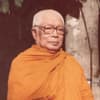
This episode is a talk given by the forest meditation master Ajahn Buddhadasa and is titled “Looking Within” . It was translated by Rod Bucknell and published under a Creative Commons Licence by the Buddhadasa Foundation in 2020.
---
[00:00:00] - [Speaker 0]
Welcome to the forest path podcast, a podcast sharing the teachings of awakened meditation masters of the modern era. This episode is a talk given by Archan Buddhadasa, and it's titled looking within. It was translated by Rod Bucknell and published under a Creative Commons license by the Buddhadasa Foundation in 2020. May you all benefit from hearing this gift of dhamma. Looking within by Arjuna Buddhadasa.
[00:00:40] - [Speaker 0]
In this talk, I will discuss a matter which is extremely important but which most people are inclined to regard as nonessential or as too troublesome to be concerned with. This extremely important matter concerns looking within, examining all things within ourselves. Looking within is essential for an understanding of dhamma or Buddhism. Failure to look at things in the right way can be a barrier to understanding, as when two people disagree because one of them has failed to look at a question in a certain certain important way and so is not in a position to understand the point that another person is making. Disagreement is usually caused by two parties looking at the matter in question in two different ways.
[00:01:29] - [Speaker 0]
If we are to understand the teaching of the Buddha, we must look within. The Buddha was concerned exclusively with things within, and his teaching is an account of what is to be seen when we look within. The teaching of suffering is important, as one of the four noble truths, as one link in the chain of conditioned arising, and in other contexts, all of which exclusively concern suffering within. Unless we attempt to look within as the Buddha did, we have little hope of understanding the Dhamma and the teaching of the Buddha. Consequently, I regard this matter as one requiring detailed examination.
[00:02:13] - [Speaker 0]
My previous three talks were also devoted to this matter of looking within. Looking at the inner life is what dhamma is all about. We must look within if we are to make dhamma one with our life. In my third talk, The World Within, the explanation that I gave of the true meaning of the term birth also depended on this important point. Understanding dhamma correctly is simply a matter of observing the important and relevant aspects of our inner life.
[00:02:47] - [Speaker 0]
It is essential that a person studying Buddhism should practice looking within. Some people would say that this matter is too complex and that we would do better not to discuss it. They are under the impression that young people are not capable of looking within. That is the old people's view. They themselves would never look within, so they try to make out that young people would never look within either.
[00:03:14] - [Speaker 0]
Nevertheless, we need not concern ourselves with that kind of talk. We need not concern ourselves with these notions about how different people look at things. We need concern ourselves only with how we may come to understand this most important of things, dhamma. This brings us to the question, why speak of a without and a within? I assume you will understand this yourselves.
[00:03:43] - [Speaker 0]
I don't imagine that you will need anyone to explain to you at great length that all things have these two sides, an outside and an inside, are without and are within. There is a word in philosophy and in ordinary usage too, the word quintessence. Quint means fifth. Essence means fundamental nature, true substance. Quintessence means fifth essence.
[00:04:10] - [Speaker 0]
Philosophers spoke of four outward essences, the elements of earth, water, fire, and air. These four were the without. The fifth f essence was not earth, not water, not fire, and not air, but something else again, something within, namely consciousness, the mental side of things. It is this fifth element or essence that we must take an interest in and come to understand properly and fully. I ought to mention here that Buddhism recognizes a sixth element, a sixth essence.
[00:04:46] - [Speaker 0]
The first four elements are earth, water, fire, and air, and the fifth is the mind, the element of consciousness. The sixth element is the void, the element of voidness. It is also called Nibbana dhatu, but the most straightforward word for this is voidness. So we have six elements, earth, water, fire, air, mind, and voidness. Mind and voidness are the fifth and sixth elements.
[00:05:17] - [Speaker 0]
They lie deep inside. They are the within. Thus, looking within that we are speaking of means looking at the mind, looking at the ideas of I and my, which are the causes of action, good and bad. This one aspect of dhamma. As for the sixth essence, this is the state of the void of I, void of my, void of the idea of being I or belonging to I.
[00:05:47] - [Speaker 0]
In other words, void of all defilements. To be free of defilements is to be free of suffering, free of all the things that constitute suffering. That all these six things should be regarded as elements is completely sound. However, the average person is likely to consider this classification unfounded because he knows only the elements of earth, water, fire, and air or the elements of modern chemistry. He does not think of the mind and things even deeper again as elements, and as soon as he hears you call them elements, he is likely to lose interest.
[00:06:26] - [Speaker 0]
The word element, as used here, refers to things that really do exist, nothing more than that. The things without really do exist without, and the things within which lie so deep that they cannot be seen, they likewise exist. Since these deeper lying things do exist, they too are to be counted as essences, as elements, or potentials from which all things are composed. For clarity of understanding, I should add a few further words of explanation. In discussions of Buddhist principles, it is often stated that there are ultimately only three elements, the form element, the formless element, and the quenching element.
[00:07:10] - [Speaker 0]
Of these three terms, the first, form element, refers to the physical elements, which have discrete physical extension, which can be seen, smelt, or felt. These taken together comprise the form element. The second, formless element, refers to things that lack this kind of form, but which nonetheless have real existence, things that can be known only through the mind simply because they themselves are of the mind. These taken together comprise the formless element. The third, quenching element, has real existence too, but it consists in the quenching or extinction of the remaining elements.
[00:07:51] - [Speaker 0]
When the first two elements, form and formlessness, reach this element, they are quenched. Become devoid of meaning as if they did not exist. So this quenching element is neither form nor formlessness. It is beyond them both. It cannot be said to have form or to lack form because it is beyond both form and formlessness, which is why the Buddha called it the quenching element or the nibbana element or the voidness element.
[00:08:19] - [Speaker 0]
But the clearest term is quenching element. Please bear in mind this broader meaning of the term element. Here it means much more than it does in the physical sciences where it covers only the states of matter and energy or the chemical elements. All the elements of modern science are covered by the form element alone. As for the other two elements, the formless element and the quenching element, you have probably never thought about them.
[00:08:49] - [Speaker 0]
Some of you have never learned anything about them, and some have never even realized they exist. Coming to listen to this discussion of the Buddha's teaching on this subject is bound to make you wiser by making you realize the existence of certain hidden things. These things are hidden to us, but they were not hidden to those who attained enlightenment, in particular, the Buddha himself. That is to say that for the Buddha, the formless element and the quenching element were ordinary familiar matters, easily comprehended and not especially profound. He knew about them just as we know about earth, water, fire, and air, or about the 100 odd chemical elements that modern researchers have discovered.
[00:09:35] - [Speaker 0]
It is necessary, then, to set up new and more refined theoretical framework in which the term element has this wider meaning. The less superficial elements can be perceived only if we look within. If we are to recognize and understand them, we have to look within. This will bring us to an understanding of the teaching of the Buddha, the person who wasn't adept at looking within. For a variety of different reasons, you have come here to do special research into Buddhism.
[00:10:08] - [Speaker 0]
Your Buddhist study group exists for the purpose of bringing about an understanding of Buddhism. It is absolutely essential that this research and study be founded on sound Buddhist principles. We can't just study Buddhism. However, it happens to suit us according to our own preferences and convenience. If we insisted on doing it that way, we would get very meager results.
[00:10:31] - [Speaker 0]
We would waste a lot of time, and in the end, we would simply have to abandon the attempt. No real benefit would come of it. So I call on you, indeed, I entreat you, to practice looking within, studying within, in order that you will gradually come to a deeper and deeper understanding of the fifth and sixth elements. This looking within can be explained in terms of two ordinary everyday words, which are also special terms in the language of philosophy, the antonyms objectivity and subjectivity. The term objectivity, strictly speaking, refers to the condition that appears when we observe or experience from the perspective of purely physical things, the things which are acted upon.
[00:11:18] - [Speaker 0]
The term subjectivity refers to the condition that appears when we observe or experience mental things from the perspective of the doer rather than the receiver of an action. We must define the meanings very clearly like this. The objective side is the physical side, the world of objects on which actions operate. The subjective side is the mental side, the world of the mind, which is the doer of actions. This all becomes much clearer if we go by the original meanings of the Pali terms.
[00:11:53] - [Speaker 0]
The word citta, denoting the mind or the subjective side, translates literally as builder, doer, knower, that which leads away other things. Rupa, denoting the physical or objective side, is literally that which is built, that which is easily broken up or destroyed, that which is known, led away or acted upon. What we must do is practice looking at the subjective side, the mind. We have to look at the doer rather than the recipient. It should be clear that to go foolishly looking only at the objective side is to look at that on which actions fall rather than at the actor.
[00:12:38] - [Speaker 0]
This means that one becomes a slave, a slave and servant of objects. By contrast, to look at the subjective side, the mind, the doer, is to become the master and to gain the upper hand. If you look at the objective side, you are looking passively. If you look at the subjective side, you are looking actively. So it is essential that we practice looking at the side which puts us in the advantageous position, the side which has the upper hand, the subjective side.
[00:13:11] - [Speaker 0]
This is the value of looking within. Since the day we were born, we have lacked proper training in both dhamma and philosophy. From the day we were born right up to the present, we have been allowed to sink into materialism, to become infatuated with physical things, and we have looked only at the physical objective side of things. It is as if we have refused to look at the opposite side of things, the loftier side, but nothing can ever come of just carrying on in the old way. Thus, we must make a new resolution henceforth to look at everything as winners, not as losers.
[00:13:51] - [Speaker 0]
This is why it is essential for us to practice looking at the subjective side of things until we are able to make the state of things within reveal itself to us in all clarity and no longer be a mystery to us. Let me clarify further this matter of looking without and looking within by using the most ordinary everyday terms. Looking without and looking within are exact opposites. The without and the within belong together and are inseparable because the things within are dependent on the things without. For example, the body is the basis or dwelling place of the mind.
[00:14:31] - [Speaker 0]
The mind depends on the body. Body and mind are inseparable, yet we can distinguish them as outer and inner, respectively. It is just like a piece of fruit, which has outer rind and inner flesh dependent on each other and inseparable. If we look only without, we see only the inedible rind. But if we look within, we find the flesh, the part that is good to eat.
[00:14:57] - [Speaker 0]
If we can't distinguish flesh from rind, we can't eat. If we were forced to eat the lot, the flesh and rind together, we would do so very unwillingly. Thus, there is a great benefit in being able to distinguish the within from the without, and then to look at the within. Looking within is essential, but let us not go so far as to develop a negative cynical attitude towards the without. That would be an error as grave as ignoring the within.
[00:15:29] - [Speaker 0]
We always have to recognize the value of the outer shell, the without, just as in the case of a fruit. If a fruit had no rind or shell, the flesh could not exist. Without the rind, the fruit could not produce seeds or flesh and could never develop to an edible and useful stage. The rind is essential, but to think the rind is everything would be altogether pitiful. In any case, to look without is to see only the outer shell.
[00:16:00] - [Speaker 0]
To look within is to see the real kernel. If a person only looks without, he is the slave of external objects, but if he looks within, he becomes the master of those objects. As I said the other day, sense objects, all the shapes, sounds, odors, tastes, and tactile sensations that exist, are the world. As long as the mind is allowed to wander carelessly under the influence of outward looking, it is a slave to objects, dominated by them, overpowered and dragged along by them, as if it were being led along by the nose. As soon as the mind looks within, however, it becomes free.
[00:16:43] - [Speaker 0]
It cannot be led along by the nose, and it is a condition of freedom from all suffering and torment. Looking without prevents us from understanding dhamma, and looking within enables us to understand dhamma. Always bear this contrast in mind. Why should it be like this? Simply because this thing called dhamma has to do with the within but is hidden by the without.
[00:17:11] - [Speaker 0]
In saying that dhamma is hidden, I mean that it is a truth that is as difficult to see as if it were hidden. Dhamma is hidden by the without. We know only about the without. We don't get to know about the within which is hidden by the without. This is our ignorance.
[00:17:31] - [Speaker 0]
To put it simply, we are deluded, infatuated, pig headed, stupid, worldly, thick, or however you care to describe it. In the language of dhamma, this condition is called avija, ignorance. So dhamma is the truth that lies hidden in all things. It is the within of all things. We could put it as I did a few days ago and say simply that the idea of I and my cannot be eliminated by looking without, but can be eliminated by looking within.
[00:18:06] - [Speaker 0]
And why? Again, simplifying somewhat, because this I and my is extremely well hidden, located deep within where we can't see it and don't know how to discover it. If we practice looking within, however, using the method taught by the Buddha, the habit of I and mine simply will reveal itself to us as clearly as do things without. Looking within will reveal in all clarity that the I and my alone is the cause of all our chronic suffering. So the I and my must be killed off by using the right technique, for example, starving them until they wither and die of themselves like animals penned up without food.
[00:18:54] - [Speaker 0]
We might go on to make the point that to look without is to be stuck in materialism, while to look within is to go the way of idealism. Materialism and idealism are opposites. These terms will be familiar to you, so there is no need to spend time explaining them. Looking without is materialism itself, and it inevitably brings the fruits of materialism, namely endless slavery to material things and endless problems. Because of materialism, our modern world is full of trouble.
[00:19:30] - [Speaker 0]
No matter who is fighting who, each side is fighting for materialism. Each side may hold its own particular variety of materialism, a cruder variety or a more refined variety, a very extreme, unmitigated, thoroughgoing materialism, or a very subtle, fine, barely discernible materialism. Nevertheless, they are all equally infatuated with materialism. There is absolutely no way that the present crises in the world can be resolved other than through both sides curing their mad obsession with materialism and becoming more concerned with idealism. We must understand that which has nothing to do with materialism and which is the highest ideal.
[00:20:15] - [Speaker 0]
We require an inner or spiritual idealism. There will then be no need to outlaw war. People will stop fighting of their own accord and begin seeking the true happiness, which comes without any loss of flesh and blood or expenditure of materials. People will live in supreme happiness in what we might call an age of true enlightenment. Look at the cost of looking without and at the value of looking within.
[00:20:45] - [Speaker 0]
Do take interest in looking within, in the one and only way of penetrating the Dhamma to Buddhism. If any of you already detest materialism and honor idealism, you ought to practice looking within according to Buddhist principles, which I guarantee will bring genuine benefits. I can't speak for other religions, although they may have the same principles. For the present, we are only speaking of Buddhism, and we are asserting that the Buddhist ideal has nothing whatever to do with material things. It is far above material things.
[00:21:23] - [Speaker 0]
It is supramundane, beyond this world, beyond materialism. Infatuation with the world is the essence of materialism, so we must always look above and beyond the world. There is another pair of terms that we often come across. They refer to two different manners of speaking to be found in the dhamma. One is used when speaking about people and their affairs, about things, about the material side.
[00:21:52] - [Speaker 0]
It is called everyday language. The other is used when speaking about the mind, about dhamma. It is called dhamma language. Let us take as an example Mara the tempter, the Buddhist Satan. If we have in mind a kind of demon riding an elephant or a horse or carrying a lance or sword, then we are using everyday language.
[00:22:17] - [Speaker 0]
If, however, we have in mind those most dangerous and destructive things, the mental defilements, stupidity, greed, and anger, then we are using dhamma language, the language of mind and dhamma. If you don't practice looking within, you will never recognize dhamma and the language of dhamma. You will know only everyday language. If you are particularly deluded, you may fall victim to the propaganda about making merit in order to get to heaven or making merit in order to escape Mara's snare. But if you practice looking at things in the right way and penetrate to the truth of dhamma language, you become a knower of truth, and no one can deceive you.
[00:23:02] - [Speaker 0]
There are two more words that we meet frequently in the texts. They describe two kinds of wealth, the wealth of the worldling, outward wealth, and the wealth of the enlightened being, inner wealth. We needn't say a great deal about this. Jewels, ring, silver, gold, land, fields, elephants, horses, cattle, buffaloes, fame, and power, you know very well that all these are outward wealth, the wealth of the worldling. As for inner wealth, the noble wealth of enlightened beings in dhamma, that which brings about the extinction of suffering.
[00:23:42] - [Speaker 0]
The outward wealth of worldlings consists of material things with which we become infatuated. The inner wealth of enlightened beings can be perceived only with a superbly refined mind that is capable of looking deep within. The relative value of these two kinds of wealth has been described often. We shall use just one example. Outward wealth is not part of us and does not really belong to us.
[00:24:11] - [Speaker 0]
It can be stolen, be destroyed by fire, and fall prey to other disasters. It is never really ours. And what is more, outward wealth is potentially harmful to us. Often it turns on us, creating difficulties and hardships for us. By contrast, the inward wealth of enlightened beings is free from all these bad properties.
[00:24:35] - [Speaker 0]
It never does harm. It never makes people weep, and it probably never makes people laugh either, because weeping and laughing both leave us out of breath and cannot be compared to freedom, voidness, and equanimity. Thus, the wealth of enlightenment makes us neither laugh nor cry. It brings only stillness and coolness. That's all.
[00:24:59] - [Speaker 0]
We have to use mindfulness and wisdom to penetrate through the exterior to the within. Then we will gain this special kind of wealth, the wealth that is unique to followers of the Buddhist way. Now let us talk about illness. We find that a person who sees only the without is familiar only with illness of the physical kind, bodily ailments, diseases, aches, and pains. He is afraid of them and always losing sleep over them.
[00:25:30] - [Speaker 0]
He is quite unaware, however, of the existence of nonphysical illness, of the mental disorders, which are far more dangerous than physical disorders. Furthermore, he is unaware that common ailments of the body are often really due to mental disorders. If a person is suffering from some mental disorder, he is likely to develop a physical illness. Certain intestinal complaints, for example, which are a big problem and very widespread, are recognized by doctors and medical researchers as being the result of prolonged anxiety or mental stress. Every time anxiety arises, the blood circulation to the intestines becomes inadequate as a result of the excessive demands of the overtense disturbed brain.
[00:26:22] - [Speaker 0]
Consequently, the intestines become disturbed too. You may have observed yourselves that if you become very upset about something, you experience abdominal pain so acute as to prevent you from eating. It could be fatal to force yourself to eat when in that condition because the bowels cannot accept food. The mental ailment comes first in the form of anxiety. This anxiety is caused by mistaken ideas and false views regarding things of the world.
[00:26:55] - [Speaker 0]
These false views lead one to grasp and cling in a way that causes anxiety and mental illness and ultimately physical illness also. As soon as the mind's condition is weakened, the body's power to resist infection is diminished so that even slight exposure to infection can lead to serious illness. If we are completely free from mental disorders, if we have a strong healthy mind, as do forest dwelling yogis and moonis, then even considerable exposure to infection has no effect. Resistance to infection is adequate so that no illness results and there is no need for medication. Thus, mental strength and well-being is the foundation for resistance to physical illness.
[00:27:41] - [Speaker 0]
We ought to look more closely at this connection between physical and mental disorders, because the only medicine required and the only thing needed to completely control mental disorders is dhamma. With dhamma, ninety nine percent of physical illness could be eliminated. We find that people who live according to dhamma, such as rishis or moonis are strong, healthy, and never know sickness. If we want long life, this is how we ought to live too. If we look into the matter of happiness, we find another useful comparison.
[00:28:20] - [Speaker 0]
In the texts, two kinds of happiness are mentioned. One of these is the kind found in home life called kihani sitika sukha, the kind of happiness that is derived from home life and raising a family. This is external happiness with which we are quite familiar. Contrasted with this happiness is a kind called, literally, the happiness that comes from forsaking the home life. This refers to a mental forsaking, a state of mind in which there is no longer the idea of my home'.
[00:28:57] - [Speaker 0]
That is all it takes. That is all we need to attain the happiness that comes from forsaking the home life. Even or an old man who can hardly move about and must remain at home all the time, if he knows dhamma at this level while still living in the home, may attain the happiness that comes from forsaking the home life. This is because the term forsaking the home life refers to a mental forsaking, to a state in which the mind transcends worldliness and goes beyond it. A person who is living at home may experience the happiness that comes from the home life, or he may experience the happiness that comes from forsaking the home life, provided he is capable of looking within using the technique and method of dhamma.
[00:29:48] - [Speaker 0]
The happiness of home life is called lokhya sutta, worldly happiness, and the happiness that goes beyond the home life is called lakutara sukha, transcendent happiness. It all depends on the state of the mind. If a person's mind is this worldly, he may stay in a monastery or in a forest yet attain nothing more than the happiness of home life because that person is still yearning and struggling as if his mind were trying to get out of a cage and return home. Solitude in a monastery or any other place cannot help him. All that can help is for the mind to be able to look within.
[00:30:30] - [Speaker 0]
No matter where we are, we have it in our power to dwell above and beyond the world, above and beyond the home, simply by looking within. That is all. If you think about it, you will see that there is a big profit to be made here. Without having to invest any capital, we receive this special kind of happiness which appreciates all the time. As the Buddha said, This sentence means that Nibbana costs nothing.
[00:31:03] - [Speaker 0]
It is free, and we don't have to pay for it. All we have to do is throw away. It's alright to use this term throw away. Just throw everything away, and Nibbana arrives. This simply means having a mind high enough not to remain stuck in the world.
[00:31:22] - [Speaker 0]
That is all there is to it. Throw away the world completely, and the bana is here. We don't have to do anything, and we don't have to invest anything. We only have to be uninvolved and empty. Live rightly, and Nabhana will come of itself.
[00:31:40] - [Speaker 0]
The danger of always looking without is that we get a distorted view of things. We see a snake and think it is just a fish. Anyone who looks within correctly sees all things in their true nature. He sees all things for what they are. He sees a snake as a snake and a fish as a fish.
[00:32:01] - [Speaker 0]
A person who sees a snake as a fish is likely to try and pick it up, and we know how dangerous that can be. Another way of expressing this is with the saying, seeing a toothed wheel as a lotus flower. The meaning is the same, but the danger involved is greater. There is the story of the man who saw a demon with a toothed wheel on his head from which blood was spraying all over. He mistook the wheel for a lotus flower and begged to have it placed on his own head.
[00:32:33] - [Speaker 0]
When we say that some people would misidentify a snake as a fish or a toothed wheel as a lotus flower, we mean that they look at all objects the wrong way and so fall slaves to those objects and are worse off than if they were in a prison or suffering the torments of hell. These two examples that I have given should suffice to clarify the point. If I were to go on giving examples, we would be here all day. What has to be seen is, first, the difference between looking without and looking within, and then the importance of looking within so that this mind can liberate itself from all things. Now let us look at how we are going wrong, the ways in which we are behaving incorrectly in respect to this matter.
[00:33:24] - [Speaker 0]
Let us look at Buddha, Dhamma, and Sangha, at hell and heaven, at Nibbana, at religion, at beauty, goodness, truth, justice, and so on, at all the things that we admire and aspire to. Let us see how we stand in respect to them and whether or not we are as we ought to be. We should look first at the matter of Buddha, Dhamma, and Sangha. The foolish person considers this to be very simple. It's as easy as peeling a banana and eating it.
[00:33:57] - [Speaker 0]
He just recites, Buddham Sarananga Chami, Tamang Sarananga Chami, Sangkang Sarananga Chami. I take refuge in the Buddha. I take refuge in the Dhamma. I take refuge in the Sangha. And there he has them, the Buddha, Dhamma, and Sangha.
[00:34:19] - [Speaker 0]
So he thinks it's very easy, but of course, these words are not the Buddha, the Dhamma, and the Sangha at all. What he has in mind is merely an outer shell or even something more superficial than an outer shell. Suppose we want to see or reach the Buddha. If a person looks without, he may identify a Buddha image as the Buddha, which is a mistake, or he may think that a compassionate human being who lived in India over two thousand years ago as the Buddha, but that would still be a mistake. The Buddha strongly condemned that kind of ignorance.
[00:34:55] - [Speaker 0]
He said, to see the dhamma is to see the Buddha. To see the Buddha is to see the dhamma. To see the Buddha, it was not sufficient just to see his physical body walking about. Even among contemporaries of the Buddha, people born right in the same town, Kapilavastu, there was a great many who never saw the real Buddha. They saw only the outer shell of the Buddha and did not recognize the real Buddha.
[00:35:26] - [Speaker 0]
This is why a great many people become the Buddha's enemies and sought to harm him. Becoming the Buddha's enemy is an unfortunate result of not looking at things the right way. There are many of us like this, and we pass our wrong views onto our children and those less educated than ourselves. Just what is the level of university undergraduates in this respect? This is a question you might well do to think about.
[00:35:53] - [Speaker 0]
Ought we to look for the Buddha in the Buddha image, or in the physical body of the man who lived and moved about in India all those years ago? We must look for him in the condition of voidness, in the condition of being void of I and my, in the condition of perfect purity, enlightenment and peace, in which the mind of the Buddha constantly dwelt. That is, in the Dhamma. To see the Dhamma is to see the Buddha. To see the Buddha is to see the Dhamma.
[00:36:26] - [Speaker 0]
As for the Dhamma, if we look within, we are in a position to perceive the Dhamma, which is a source of joy to the mind. If, however, we look without, we lose ourselves in the books and manuscripts of the Tipitaka, the three baskets of the Buddha scripture, or in the sound of monks chanting and preaching, which is thought as the sound of the dhamma, or in rites and rituals, the outward poses of dhamma practice. Even the practice of insight meditation is usually a kind of pose. We lose ourselves in the poses of dhamma and fail to penetrate to the dhamma itself. This happens to many people.
[00:37:06] - [Speaker 0]
How well are we succeeding in penetrating to the dhamma? The essence of the dhamma, the real dhamma, is the condition of freedom from I and my, the condition of complete purity, enlightenment, and peace, identical with the mental condition attained by the Buddha himself. Considering the Sangha, if we look without, the Sangha is people, someone's son or grandson ordained at this or that monastery and having this or that title. Worse than this is to see only the yellow cloth and identify that as the Samgha. There are some people who do identify the Samgha with men dressed in yellow robes.
[00:37:48] - [Speaker 0]
This is just the shell, but there are a great many people who grasp at the shell in this way. For example, some people take a dislike to certain monks and then try to make out that the entire Sangha is the same. This is just ignorance, and it is the worst form of slander against the Sangha because the Sangha is not to be identified with yellow robes or with people who ordain as monks. The real and genuine Sangha is the dhamma, the condition of freedom or near freedom from I and my, the condition of complete or nearly complete purity, enlightenment, and peace. The true Sangha is identical with the essence of the Dhamma, the Dhamma that exists in the mind of the Buddha.
[00:38:35] - [Speaker 0]
So anyone who has looked deeply and perceived the real truth of the matter knows that the real Buddha, Dhamma, and Sangha are not three different things they are one and the same thing. Outwardly, there may be three different things, but these are just the shell. The real kernel and essence of them is one simple thing, namely, the condition of freedom from selfhood, the dhamma which consists in purity, enlightenment, and peace, totally uncontaminated. This is what we call voidness. Even in the scriptures, we find statements such as, in terms of externals, Buddha, Dhamma, and Sangha are three different things.
[00:39:15] - [Speaker 0]
In terms of absolute truth, in essence and real nature, they are one and the same thing. Heaven and hell are usually viewed in physical terms. People are interested in hell as it is depicted on temple walls with various kinds of torments. In fact, these were originally nothing other than the 30 odd forms of punishment meted out to criminals in India at the time of the Buddha. You can read about them in the history books.
[00:39:46] - [Speaker 0]
At least at the time of Ashoka, these forms of punishment for criminals were still in use, so people depicted the worst of these forms of punishment in their illustrations of hell. This is the superficial view of hell. This is hell as seen by people looking without. Some people who are a little more perceptive identify hell with prison, but this is still hell without. It doesn't burn the mind like the hell within.
[00:40:15] - [Speaker 0]
The hell that is within is stupidity, greed, and anger, delusion, desire, and hatred, fear, worry, and anxiety. These are a kind of hell that is much more to be feared, a kind of hell that is much more difficult to avoid. The kind of hell that is depicted on temple walls is easy to be bold and unconcerned about. We think that no matter what we might do, we would never fall into it. But no one can be bold and unconcerned about the real hell, the hell within that I have just spoken about.
[00:40:48] - [Speaker 0]
If we look within and truly examine it, we find it is something really terrible. It burns us without there being any sign of fire. It ties us up without appearing to. It binds and and ensnares us without our knowing. This is the real hell, the hell that we see when we look within.
[00:41:09] - [Speaker 0]
Seeing this, we become frantic, desperate, and start seeking a safe refuge from it, and that refuge is easy to find and easy to put into practice. But if we go on foolishly looking only at the hell without, we just go on forever lacking a refuge. It is the same with heaven. The real heaven is contentment, that state in which we are content with what we get and with what we have, the state in which we have dhamma. When we are content with what we have, that is heaven.
[00:41:43] - [Speaker 0]
As for the heaven that is depicted on temple walls, that is just another case of addiction to external forms, sounds, odors, tastes and tactile sensations, total subjection to sense objects. Celestial beings are smarter than we human beings, and millionaires have the means to do more than we poor people. At each level, we think that the level above must be heaven, owing to our limited understanding. But all this is the kind of heaven that burns us with anxiety. It is all about the kind of happiness that cooks us until we are well done.
[00:42:20] - [Speaker 0]
It boils, grills, roasts, and bakes us till we are well done. There is nothing peaceful and cool about it. Contentment consists in knowing how to be satisfied and pleased with what we have and what we get. To have this is to have real riches, to be really in heaven. A person who doesn't know how to be content with what he has and with what he gets is in hell.
[00:42:47] - [Speaker 0]
He is in a perpetual pauper. Even if he is a millionaire with millions or hundreds of millions in the bank, he is the poorest of paupers because he suffers from chronic and incurable thirst. So let us not go looking for heaven in the wrong place. Let us seek it intelligently and with right understanding. Now we come to the word Nibbana.
[00:43:12] - [Speaker 0]
We often hear old people say that they want to be reborn after death in the land of gems or in the land of immortality. They think of Nibbana as a land of gems, having seven levels and so on, because that is what they have been told it is like. They think that Nibbana is a land with a definite location. Sometimes they confuse Nibbana with the Western paradise of the Hindus and Mahayanists. Some people think of Nibbana as similar to heaven, but 10 times, a 100 times, a thousand times better.
[00:43:45] - [Speaker 0]
They think that if you multiply heaven by 10, by 100, by 1,000, that is Nibbana. They are materialists infatuated with central pleasures. They take Nibbana to be one and the same as heaven. This is what comes of always thinking of Nibbana in terms of outward things, thinking of it as something objective. In reality, as we said before, this thing called Nibbana is voidness, the epitome of purity, enlightenment, and peace, because it is the absence of all mental defilements, of all mental suffering.
[00:44:23] - [Speaker 0]
This brings us to a word that we very often misunderstand, the word religion, sarsana. In Buddhism, as in any other religion, older people always have in mind the physical side of it. They identify religion with temples and with rites and rituals. But these are all just output forms, just fragments of the tangible material side of it. They are not the real religion, not what the Buddha meant by religion.
[00:44:51] - [Speaker 0]
The word religion, as used by the Buddha, referred to three things: knowledge, practice in accordance with that knowledge, and the purity, clarity, and calm that comes as a fruit of that practice. These three together are religion. In Pali, they are called Pariyatidhamma, Patipatidhamma, and Pativedadhamma, theory, practice and experience, the three components of religion. It is to this religion that we must penetrate and attain. Whether for the knowledge or for the practice or as a refuge, you must realize this religion.
[00:45:32] - [Speaker 0]
And what I have just said is true in a very broad sense. It is true of all religions. Now we come to some miscellaneous matters, an assortment of concepts which are nevertheless very important. There are things that are very important to us as human beings because they are very basis of suffering and happiness. Consider beauty, goodness, truth, and justice.
[00:45:57] - [Speaker 0]
Just what is beauty? What is goodness? What is truth? What is justice? Physical beauty is perhaps easy enough to understand.
[00:46:09] - [Speaker 0]
Some people make their living out of bodily beauty and are concerned only about that aspect of beauty. Such people are of two kinds, those who themselves possess the bodily beauty and those who come to buy it from them. That is physical beauty, beauty in the body, beauty in skin and flesh. Then there are people who consider that there is beauty in the possession of wealth, and there are some who see beauty and knowledge, such as in a high degree of education. Such people are concerned with the body, wealth, or level of education, but these forms of beauty are all of the physical kind.
[00:46:48] - [Speaker 0]
They are just what we see when we look without at the outside. Real beauty is something within, something in the mind. If the beauty of dhamma is present in a person, then that person is beautiful. That person possesses the beauty of dhamma in body, speech, and mind. It has nothing at all to do with external appearance, wealth, or level of education, though a person who has superficial beauty also is beautiful in both ways, both within and without.
[00:47:20] - [Speaker 0]
If you must choose between external beauty and internal beauty, which kind will you take? Think it over. On the question of goodness, the materialist is bound to consider that goodness consists in getting. To get this or that and to make it mine is good, and everything else is not good. Let's have a look at this.
[00:47:41] - [Speaker 0]
Let's look at ourselves and at other people, at all the people in the country, and see what kinds of things they consider to be good. They all consider the things which they get and the process of getting them as good, don't they? Some people just accept as good whatever everyone else accepts as good. They think, if everyone else considers such and such a things as good, how could I possibly disagree? How could I possibly be the one and only person to have a different opinion?
[00:48:10] - [Speaker 0]
The Buddha never thought like that. Even if everyone in the community disagreed with him, he didn't mind. For him, the good had to be genuinely good, and the genuine good, the ultimate good, consisted in freedom from sorrow, anxiety, suffering, and ignorance. The genuine good had to consist in purity, clarity, and calmness. Some later schools added to this definition.
[00:48:36] - [Speaker 0]
There have been numerous schools that have come into vogue and then gone out of vogue again just like short lived fashions in men's shirts. Each introduced its own particular concept of good. Each was localized to a certain region and lasted only a short while. At a certain historical period, it was considered that the good consisted in this or in that, and then in the next period, it was no longer thought to be so. Those kinds of good are all just deception and delusion.
[00:49:06] - [Speaker 0]
Each of them is a function of the then current level of sophistication. As for the real and genuine good, that good which human beings ought to attain in this life, there is nothing higher than the coolness of kind found in dhamma. That alone can be called the good. Now let us talk about truth. Each of us has eyes, ears, a nose, a tongue, and a touch sensitive body, so all of us can judge things as true according to what our eyes, ears, nose, tongue, and body tell us.
[00:49:41] - [Speaker 0]
We can test and verify material things. Worldly truth, which has nothing to do with dhamma, is a matter of what we see or feel or believe to be true. We are deceived as to the nature of objects and of cause effect relationship, all of which are subject to change. What is true one moment may not be true the next. Even the laws of science are subject to change, as scientists well know.
[00:50:07] - [Speaker 0]
A law, which at one point in time is firmly believed to be true, is later found not to be true, and so is thrown out. This is because the truth at any particular point in time is a function of our ability to perceive it, of our resources for testing and verifying. This is worldly truth, the kind of truth that has nothing to do with dhamma. Truth that is truly truth does not change. In identifying suffering, we must identify true suffering.
[00:50:38] - [Speaker 0]
Freedom from suffering must be true freedom from suffering. The cause of suffering must be the true cause of suffering, and the way to the elimination of suffering must be the true way, not some false lead. These truths are the very special truths of the Buddha and of all enlightened beings. Let us think of truth or of truths in this way. The whole purpose of education in whatever form is to get at truth.
[00:51:04] - [Speaker 0]
The purpose of all philosophy is to arrive at truth. But as things are, education and philosophy are incomplete, are half baked, and go only halfway. They just fumble and bumble around with no hope of finding the truth. In seeking truth, let us concentrate our attention on the most important matter of all, namely the matter of suffering and the elimination of suffering. To realize this truth is to arrive at the most useful, the most precious, and the best thing there is.
[00:51:36] - [Speaker 0]
Although there are countless other things we might examine which would be of no use whatever whatsoever. This is why the Buddha said, one thing only I teach, suffering and the elimination of suffering. There were countless other things about which he might have talked, but regarding which he remained silent. From the first day, he spoke only of one thing, the thing that is the most useful of all. Finally, we come to the word justice or rightness.
[00:52:05] - [Speaker 0]
In this world, it may sometimes be the case that might is right or that expediency is right or that the evidence given by a witness is made the basis for rightness and justice. Now if the witness is lying or if he's is mistaken regarding the accuracy of his evidence, then the supposed justice based upon it is totally deceptive. Real justice can only be based on dhamma. Justice based on worldly criteria is worldly justice. It is always only outward relative justice.
[00:52:39] - [Speaker 0]
On the other hand, justice that is based on dhamma is totally independent of human error. It is absolute. Examples are the law of kamma, the law of impermanence, suffering, and non self, the truth of suffering, the cause of suffering, the extinction of suffering, and the way leading to the extinction of suffering. These are absolute, and they are totally just. They do not favor anyone.
[00:53:07] - [Speaker 0]
No one has any special privileges in respect to them. They are laws of nature which have fixed absolute force. Let us keep in view the kind of justice that we can genuinely rely on and make it our refuge. Don't become infatuated with worldly justice, which is inconsistent and relative. Don't be too much for it or against it, because worldly justice is bound to be only as it is.
[00:53:34] - [Speaker 0]
Sometimes we may disagree with worldly justice. Sometimes we may totally disapprove of it. The workings of worldly justice sometimes make us feel elated and sometimes make us weep. This is an intolerable situation. We need a kind of justice which doesn't make us weep, feel elated, or get excited about worldly matters.
[00:53:57] - [Speaker 0]
That kind of justice is to be found in the principles of dhamma. They are the best criteria for rightness. Holding to dhamma is the basis for justice. We shall be able to laugh within, not without. We shall be able to smile within forever after, and that is the elimination of suffering.
[00:54:18] - [Speaker 0]
There is just one more little thing I would like to say, something about charms and talismans, about outward talismans and inward talismans. Outward talismans are the sort that people wear around their necks, foreheads, waists. They are so common that I don't need to tell you anything about them. But what kind of protection do they really give? We can go and look at the corpses of people who have been killed and find that they were wearing talismans.
[00:54:46] - [Speaker 0]
We can see people yet living who are suffering greatly, people who are being burnt up with distress and anxiety. The more distressed they become, the more talismans they hang around themselves, and the more they perform rituals like pouring prayer water. And the more they do all this, the more distressed and anxious they become. The more they do this, the more deluded they become too. These are the benefits of outward talismans.
[00:55:14] - [Speaker 0]
The benefits of inward talismans, the genuine Buddhist talismans, are just the opposites. Anyone who wears the talismans of calmness and coolness acquires instant purity, clarity, and calm. If, in the ultimate case, he wears the highest of all talismans, he dwells in total voidness, in total freedom from harassment, annoyance of any kind. This is the effect of the Buddha's talismans. All that has been said here simply explains the conditions and characteristics necessary for an understanding of looking within.
[00:55:49] - [Speaker 0]
Should we look without or look within? How should we look? Which way of looking is most important? If we are loyal to dhamma, to religion, or to the Buddha, there's nothing to do but hurry and practice looking within. In particular, we ought to extinguish inner suffering.
[00:56:09] - [Speaker 0]
The genuine cessation of suffering is an internal matter. It must happen within. Thus, there are no sacred objects, holy ceremonies, divine powers and persons, or any such holy things. Dhamma alone is sacred and holy. Genuine Dhamma is reality.
[00:56:29] - [Speaker 0]
We needn't mention holiness, for Dhamma far surpasses holiness. Compared with the word Dhamma, holiness has very little value. So it is best to give up all of the holy objects and sacred ceremonies. If one falls for such holy things, one will never meet the truly sacred and holy thing, Trust in, dependence on, or complacency towards superficial external things prevents one from realizing the essence within. It's like only eating the bitter rinds of mangosteens, but never the sweet flesh.
[00:57:07] - [Speaker 0]
The refreshing fruit is never experienced, although such benefits exist in the world because nature has created them for us and created us with the ability to realize them. Realizing the fifth element is one of the fruits of looking within. Realizing the sixth essence, voidness, is an even better one. This looking within penetrates to the heart and center of all things. In the end, there is oneness with voidness, being empty of I and my.
[00:57:40] - [Speaker 0]
These are the fruits and benefits of knowing how to look within, of realizing the subjective state that becomes apparent when we look within. Looking within is characterized by activity rather than passivity, and the active one is always victorious. We should be victorious, undefeated in this way, as is appropriate for the disciples of the Buddha. The Buddha is sometimes called the victorious one, the victorious lion, and the victorious monarch, for he is victorious over everything. We too can be victorious by using his methods.
[00:58:18] - [Speaker 0]
As explained above, success comes with expertise in looking within. That concludes the dharma teaching looking within by the venerable Ajahn Buddhadasa. If you'd like to hear more talks by meditation masters of the forest tradition of Theravada Buddhism, subscribe to the forest path podcast using your favorite podcast app. The forest path podcast is part of the everyday dhamma network. If you go to everydaydhamma.net, you can discover more about the other podcasts in the network also.
[00:58:58] - [Speaker 0]
I'd like to extend a big thank you to everyone who has supported the Everyday Dhamma Network through a donation over the past year. It's really made a big difference and kept me not only through pay for all the services that make this podcast possible, but also give me the encouragement to keep on recording the talks and posting them regularly. If you like these audio resources that I'm making available in a convenient podcast format, you may wanna become a supporter also by going to the Ko fi Creators platform, and you can find links in the description below. Thank you for listening. May you all experience insight and peace.