
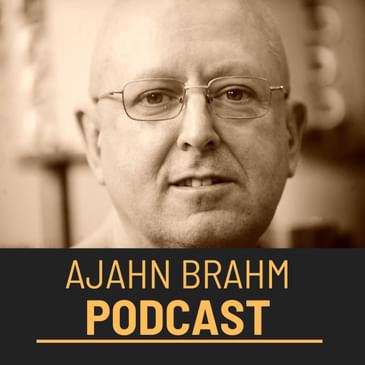

Ajahn Brahm discusses the role of loving kindness and compassion in Buddhism and how we can use it in our lives. It emphasizes that compassion should not just be limited to people, but should also extend to all beings and circumstances in life. Troublesome people or situations are not the problem, but our relationship to them is what needs to be addressed. The talk also suggests ways to turn difficult situations into advantages and addresses the benefits of downsizing and living in smaller homes. Ajahn Brahm talks about how important it is to have loving kindness in our relationships, especially in difficult situations. He gives examples of how compassion and wisdom can be used to deal with difficult people or situations, and how it can help us put boundaries in place without causing harm.
---
This dhamma talk was originally recorded in 30th January 2009. It has now been remastered and published by the Everyday Dhamma Network, and will be of interest to his many fans.
These talks by Ajahn Brahm have been recorded and made available for free distribution by the Buddhist Society of Western Australia under the Creative Commons licence. You can support the Buddhist Society of Western Australia by pledging your support via their Ko-fi page.
Freeing Problems With Metta – Ajahn Brahm
Transcription
For this evening's talk. I just came back this afternoon from overseas, and there's an email waiting for me, and somebody was asking a question, and I make it a subject in savings talk. In Buddhism, we talk a lot about loving kindness and compassion. But how can we use loving kindness and compassion? And they said for troubled people and how can we put boundaries around those troubled people? And it's a very good question, because even though Buddhism is regarded as a very compassionate religion or path, it also has to be a wise path as well. It is a very old simile in Buddhism of like a bird always has two wings and one wing is compassion, the other one is wisdom. If you only have one of those wings, a bird can never fly. If it does take off, it goes around in circles, never gets anywhere. So we always have to balance our compassion with wisdom. And this is a case in point here. We may have some difficulty in life and that's actually part of life. Life is what is difficult. If life was really easy, there wouldn't be much point. Taking rebirth as a human being. This attests the difficulties which we face on our journey between birth and death, which actually provide us with the wisdom and the experience to understand what compassion truly is. And even to develop our wisdom even deeper. For example, our caretaker young was wise enough to know it was still a bit warm in here and also compassionate enough to turn off the fans at the same time. So there you go. There's an example of wisdom and compassion. If you were just compassionate and thought, oh, may all beings be cool, that would not have worked if he was only wise and he knew how to turn on those fans that would not have worked. Only have wisdom and compassion get together. The fans get turned on and every everybody gets some cool down. And I'm sure there are some people, though, who are now too cold, and I already see a few people putting blankets around them. And so even being kind to one person is actually, uh, torturing somebody else. This is one of the most important parts of compassion. When we practice compassion and kindness, it should always be to all beings. It's all beings. Not just this person, not just that person, but to all beings. And sometimes when we practice compassion, we have to put every, every stakeholder into the equation. So because of this, because it's to all beings, sometimes that makes life very difficult. How can we actually be kind to all beings? And I think the solution comes in just the way that question was asked. I think I got it right. I may have not remembered the email accurately. They called likely the sun. People call like troubled people. But really, I never see that this actually troubled people. There's always, like, troubled relationships. There's not a person. There's a trouble. There's actually when they're a long way away, they're no trouble at all. That's why there's the old show. You said you couldn't understand a person. Well, I'm going to be kind. Almost always. Watch what I say. Walker. Walker. Ten miles in their shoes to really understand them. And they always joke that that's a very good thing to do. Because after ten miles, you know, ten miles away and you got their shoes. But when purse is a long way away, of course, doesn't matter how mean nasty they are, they don't travel to you. The only trouble comes when they're right in front of you, either next to you or they're associated with you. Her travel person is no such thing as a troubled person. It's always the way that some people relate to you or you relate to the other person. It's always troubled relationships. And it's not just people. Because with compassion, it's not just people. Sometimes things. Sometimes life is so-called troublesome. Too hot, too cold. Sometimes, you know, trouble is it economic problems, health problems, how things go wrong in life. So it's not just people. It's just life is sometimes troublesome. Now with people, you could actually get away from them. That's why I've got a cave in my monastery. Got two doors. I can hide in that cave and get away. But no matter how deep your cave is, you can never get away from life. And also, you can never get away from one person. You get away from your wife, from your husband, from your friends, from your enemies. The one person you can never get away from in life, obviously, is you. No matter where you go, you take yourself with you. Sometimes that's why people could enter alcohol and drugs just to try and escape from themselves. But of course, it's only a temporary escape because after a while you're back there with you again. And that's why also, sometimes people get so upset at themselves they can't stand themselves. They even commit suicide. But even then, as a Buddhist, I know that if you can't commit suicide, he commits suicide to try and get away from yourself. You're still there afterward. And I know you're a ghost, but you're still stuck with yourself. There's one thing I will let you know in life. You can never escape from you. If you can't escape from you, what should you do? If you're troublesome to yourself, it's not you. The problem is it's your relationship with yourself. It's not the economic problem. It's your relationship to that. It's not like a troublesome baby. I think it's a baby in there. Or a cat squeaking in the corner over there. It's not the baby over there. It's our relationship to that noise. That's the only difficulty over there. But first of all, let's actually redefine the question how can you employ or put boundaries in troublesome relationships and those relationships with other people, with life or with yourself? And of course, once we redefine it there, it becomes more and more easy to see. It's not the other person's problem. So often we think therefore when. Everybody thinks it's somebody else's fault. That's why we always get conflict in this world. Palestinians think it's Israelis, but Israelis think it's the Palestinians, for they don't know the workers against the bankers, for the bankers think it's the government, for the government thinks, I don't know what the government thinks it's for. They are the opposition. The government thinks the opposition. And it's very easy to think that other people are troublesome. Again, it's not other people. There is one of our favorite stories, and this is actually comes from an old historian who put his commentary once there was a dog, and a dog had mange, and the dog skin was so itchy, no matter if it scratched it, the manes, the the skin disease got worse. That's why sometimes in poor countries you see dogs with no hair. So this mangy dog was just having such a lot of suffering. And so he decided to run away from the village and live in the forest, who went in the forest but still had a suffering there. So he went actually under water in the pond and still his his his back it. So then he went under the shade of a tree, then out in the sun and under a rock, wherever that dog went. It was always suffering until it realized it wasn't the village's fault. It wasn't the other dogs. It wasn't the the forest or the shade, or the sun or or the rocks. For it was actually carrying around the mange inside of itself. And that's the important thing to remember that it's not your wife for. It's not your husband's fault. It's not the government's fault. It's not the economists fault. It's not my fault. Certainly it's not my fault. And it's not your fault either. Because we take this thing around with us. It's always powerful. The wonderful way of looking at the mange is that way. We don't have a proper relationship to things. Sometimes in life, you do have to deal with troublesome situations. Now, first of all, when you have a difficult situation, let's not say a difficult person, a difficult situation in life. Sometimes you look at that situation, it may be economic problems. It may be like sort of an itchy throat. It may be like your plane is delayed and cancelled. It's not. That's not the problem. The problem is, is always what you do with that. How you relate to that. How you make that work to your advantage. So if I've got an itchy throat and start coughing like this, then people got much more sympathy for me. And there are so many questions when I'm finished. So I actually turned it to my advantage so I can get to bed earlier. If if you have an economic problem and you know you haven't got so much money, then you can become much more green in your life. Be more environmentally friendly because when you got poor, you can't afford the big things or you can't afford the car. And instead of getting a car because you're too poor in get a bicycle, which is not only good for your environment, but also good for your health as well. So even in economic difficult times, you could turn it to your health advantage and other advantages as well. There's so many things we can do. And one thing I've often said here, I told us in Colombo, and people really were stunned by it because they'd never heard this before. You've heard it many times before. If you're in economic problems, what a wonderful advantage that is to downsize and to get a smaller house or apartment, or even better, a small monk's cootie, a little hut. Because you'll find, number one, it's so much easier to keep clean. The smaller the house, the less room, the less work is brilliant. And also the smaller your house, the less chance there is of any burglars coming in. Now take one look at your small house and think, wow, that's the size of their house. Is nothing in there. Where do burglars go? The big house is anyone's got a big house. There must be big things in there. They would have to have no problem with burglars. And also, my most important things. When you have small houses or the people in those houses, because they're close together physically, they soon come close together emotionally. Big mansions caused so much loneliness in the family. One husband in one room, wife in another room, son in their room, daughter in another room. And even the dog's got its own kennel in the back. So why do we do such things? A big mansion is actually separate people. Do you ever notice why that there's sometimes the kids don't know how to get on with each other or get on with their parents? When you're really stuck together in a small place, you have to get on together. And I've just come back from Sri Lanka. It's quite a big island, but there's so many people in that place. They're all crammed together. They have to get on with each other, even though it's actually crazy being driven along those roads. You know, there's so many traffic in there and tractors and and goats and goodness knows what else goes along the main roads. These are the main highways. But still, you know, people because they're used to that. They're much more skillful drivers than sort of here in Australia. At least those who are still alive are somewhat skillful drivers. They learn to get on together so close together they have to. But there's no other alternative. They're so close proximity towards each other. Actually, actually, it's a good thing, I think. And sometimes I spread out suburbs. You know, we all know we don't know our neighbours. I think it was actually, uh, Tim Costello once said that more people know the neighbours TV show than the neighbours living next door to them. So we really should live in small communities so we get to know one another and that gives us social harmony, social cohesion. So this is just an example that if it's not sort of the economic downturn, which is the problem, it's our relationship to it. And we can do it with loving kindness, embrace it and make the most out of it. Otherwise, we've always carried the mange with us wherever we go, whatever we do, it's not. The economic downturn is a problem. It's what we do with it. So saying we have a difficult person, which we have to deal with. So how can you have a loving kindness to a difficult person? Because many people think if you have loving kindness to them, they never change and they even get worse, but they take advantage of your compassion. And of course you don't have compassion for the other person. You put compassion towards that relationship which you have and this is what you deal with. It's not them. It's not me. This is what happens in between us when we're together. So that's where I always thought, by loving kindness in that space between me and that bastard over there. Whatever it is, I like to use the local language. Please don't get shocked. So. And I didn't point to anyone over there, I wasn't looking. It could be over there as well. It's not. It's just an example. But as there are sometimes some difficult people in life. A good example of this is, you know, this many years ago. This is part of the history of burning down a monastery. We had a huge problem with clay trucks past our monastery. It was noisy, but. And that wasn't a main problem because I keep on mentioning it was the danger of those huge trucks with trailers down that steep, narrow road. And once I saw one of those trailers tipped over, they lost control. And I saw that. And that was very scary. But I knew if any one of you would come to visit our monastery or mine was visiting the monastery or going, I was coming and going. If I'd have been in front of that truck, you'd have no chance. You'd be dead. So because of that, I thought we'd have to actually fight this. This is wrong. I was very impressed with the secretary of the time. It was actually a transfer charter, because during all this time, his court cases and legal sort of wranglings because they had to get to that. During this whole time it came to Christmas and our secretary wrote Christmas cards. Happy Christmas. May you have a wonderful New Year for all of our bursaries. That really sort of shook them and undermined what they thought of us. If you're having a legal case with someone and you send someone a Christmas card, I think, my goodness, what's going on here? I think he even got told off. I think because we're only supposed to legally contact our adversaries through our lawyers. We should have set that Christmas card to our lawyer who had given it to their lawyer, but then given it to this person. Crazy sister. We just sent it straight to them so that even that's your adversaries. You're actually giving some loving kindness because we realized it was out as a common problem. As our problem. So have to work together somehow or other. Even during a legal battle. No, no ill will. But we had to put some boundaries around this because we thought this was wrong and this was going to cause injury if it carried on. So whenever you practice loving kindness, it doesn't mean that you sort of allow other people to do what they want or you just give in. It is our problem. The relationship which I had with those clay trucks was a difficult one. You had to mend it, do something about it. But do something about it in a kind and compassionate way. Our usual problem is when we have a problem person or a problem situation. Too often, instead of using loving kindness, it is incredibly powerful. Too often we use anger. And that anger never works. I've never seen anger really work it. It gives temporary solutions, maybe for someone to back off, but really they just go and put somebody else, or they go and sort of come back and harm you later on. It's all anger does. It creates fear in the other person. And when that fear disappears or they get stronger, then they come do the same old things again. So anger never really works. I remember once there was a nun in a monastery in Thailand years and years ago, and she had looked like a psychological problem. She was getting anorexic, thinner and thinner and thinner. We were just really concerned about her and whatever we said. She said, no, she was fasting. It was good for her meditation or that she felt healthy. But to look at her, she was skin and bones. And of course, you know, we were responsible. With, you know, if, you know, I don't have that problem, obviously. But if any man had a problem like that, you know, I'd be responsible for them to do something to make sure they're okay. So but whatever we did as Mark's and she just would not listen. We had a senior mark came over from England and he said he said to him, look, we haven't been able to do anything. Can you help? So he brought the nun to her. And this was a very great monk. He was so kind. But he looked at her and he started shouting at her and scolding her. And I thought, my goodness, this mark. All I really respected is getting angry. I never seem angry like that, ever. I said I was going on and he was shouting and scolding her and all sorts of stuff. And then afterwards, you know, she went away and as soon as she went away, that's when he changed his demeanor and he smiled and said, I told her, didn't it? He was acting it out. And so I was actually quite relieved that my canon got angry. He was a good actor. He'd actually tried to use that as a skillful means. He really was out of compassion, but it didn't work. Even if you try, you think you're just. And this was a very good man. You know, he had enough mindfulness and control when he played at being angry. He didn't become angry. He could do it, but still it never worked. All the times which I've seen, monks trying to scold their disciples or see men scolding their wife or wife's go to their husband, oh, it doesn't really work. The whole relationship loses its loses its love, loses its kindness, loses the glue which will bind us together. You feel so much more. So much unhappiness. It's not really worth to me. However, as I mentioned a few weeks ago, I'm going to. Repeat this now. This is a very powerful thing. If ever in your relationship, someone shouts and scowls at you. When they finished. Remember the 15 seconds of silence after they finishing shouting at you? Don't say anything back. Don't shout back. When they finished, they finished their shouting and scolding. You look at them and keep quiet for 15 seconds. Giving them time to hear what I just said. To reflect on the anger which they poured out of you. Because if people have that opportunity to listen to what they've just said, and you do that, if you've given the 15 seconds of silence after someone's been shouting or scolding at you, you give the other person that opportunity. They will learn what a stupid thing that was. This sounds the skull, so it's other ways of dealing with the problems relationship. We do have to put boundaries on people. We can be firm. You may have heard me. I was just, uh, talking with Skyway about our builder. We're building a retreat center, and the retreat center is supposed to be finished by April, the first meditation retreat. And we're looking at the builder is going really slow. So we've been quite firm with him. So as a monk, I don't say. Oh, builder out of compassion and car. Did you just take your time? If it's not finished for the retreat, never mind. I don't want you to have a headache. You just do it as slow as you want. That'd be really stupid, wouldn't it? Because now Australian builders are like. So instead of doing things like that, you have to be quite firm. But it's compassionate, just keeping the relationship with loving kindness. So your intention intention is to keep the relationship good. Term mutual respect so you can get things done. You do have to put boundaries. That's compassion. With wisdom. If you have that compassion with wisdom, then it's not just being compassionate to the builder, being compassionate to me, to be compassionate to all those people who are going to come on that first retreat. Because sometimes we do have to put boundaries, just like many sort of Buddhists who work, who are managers or even CEOs or supervisors. Sometimes they find it hard to tell people off at work. You may have someone working for you who's not doing the job. An example you've got a troubled employee. What do you do about that? And you've heard this before, but it comes up in this talk. If you have a troubled employee, then you use what we call the sandwich method. You go up to them as soon as possible, because if you let these things fester, they get worse and worse. So you get up to up to the person, and the first thing you do is to give them some loving kindness, some praise. Just tell them how much you appreciate them working here. What a fun person they are to be here. I'll find something which you can respect in that person and let them know it. Because as soon as you do that, people start to listen to you. They open their ears and their mind because they want to listen to more. And once their ears are fully open and a channel into their mind is fully open, then you hit them with it. Because otherwise, if you go to someone to say no, you put your facial features, your body language, you stupid employee, you just don't know how to do things. You're hopeless. I don't know why employed. You're a complete loser. Terrible. Now, of course, people might have said that to you. You listen to that. Does anything go in straight away? Whenever this criticism, a big barrier comes up in front of you. You defend yourself. You think to yourself, why is he saying that to me? I'm not stupid. I'm a good worker. You just don't listen anymore. There's not a way to communicate. So by facing the other person, they're listening to you. And they also realize that you have metta towards them. You have loving kindness. You care about them. What a wonderful thing it is to know that someone actually cares about you. This is a boss. You care about your employees. You're also caring about your company. Is it a poor thing to be able to do this? The employers know you're caring about them. They'll be more willing, number one, to listen. And then number two, to take the advice and to maybe alter. So after the brace, you give them the criticism, but in a kind voice. You're coming in too late. Well, you know, you can't do the job properly. And then you find out some strategies together because it is never your employees problem. If you're the manager is your problem as well. Because, you know, your big manager might sort of sack you, not because you haven't done a job, because your employees haven't done a job. So we're all in this boat together. There's always our problem. So we try to find strategies. These are the boundaries which we mean for by kindness, compassion. Are you in the wrong job? Can we get you another job? Do you need more training? No. Is there something else we can do? Have you got any emotional problems at home which is causing you not to perform well at work? What can we do to help you? So wait a minute. Together you work together to find a solution for this problem employee or this problem person? You thought it's amazing where you can find out. Now we actually understand where a person is coming from. And then afterwards to complete the sandwich method. So you can actually leave on friendly terms. You finish with a bit of praise. Please remember, we really value you. You're a good friend. I really like you. Because that leaves with a person wanting to maintain that friendship, wanting to actually to work hard and change themselves to please someone who's been kind to them. That's actually how we use compassion in business. And that's how you can use compassion in the world, especially to problem people. Find out where the problem is, first of all. I recall one of my old school friends. He became a teacher, a school teacher, and he chose one of the worst schools in the whole of England. It was in Wandsworth. Wandsworth comprehensive school. I think it was actually, I shouldn't say it's the worst school because the teachers are very motivated. They had some tough kids in that school. That was a suburb of London, next to Brixton. And there was that time they had the big Brixton riots in the south of London. They had some very tough kids in this school. And he told the story once that, you know, his class of kids came into the classroom one day and one of the kids spat on his feet, on his shoes, putting on his shoes, just on the floor, just in front, just walking in. So he was quite clean that up. And the kids said, f off. What would you do as a teacher if somebody did that and swore at you? I said, go straight to the. The deputy principal was the disciplinarian that sent the kid to the deputy principal. There are about half an hour. An hour later, a deputy principal came into the classroom with his arm around this boy. The deputy principal had time to find out what was happening with this kid, and found out the night before that the father had viciously beaten his mother and she was hospitalized. The piece had been around, the whole family had been separated, and here was like a young 11 or 12 year old who probably hardly slept that night, had just witnessed his father and mother, who he depended upon, the mother he loved dearly, viciously beaten and sent to hospital and said, now you understand why he did that? Sometimes if we take the time, we can take the time to understand why a person acts in these ways. We don't feel like we should get angry anymore. So is 11 year old. If that ever happened to me, I probably would do something worse. Just how the sheer confusion. 11 year old doesn't know how to ask for help. Instead of accepting his really strange, violent ways with his son 11 year old. So we understand where a person is coming from. Are they really a troubled person? Should we just cut them off as one? Wonderful. If we can have time to ask you to ask them what's happening? Where is it coming from? What's really upsetting you? Unfortunately, our society these days that there is so busy and I am busy person number one, probably that sometimes we don't have enough time for each other, which is unfortunate. But at least we can understand that some of the reason why a person is troubled or causing us trouble. It's not as something apparently wrong with them that they've been born in a state where they're always going to be like this. There are some causes and reasons for this. For understanding this. Now we can have some kindness. We can have some compassion and if possible, some understanding of where they're coming from, because many of us haven't got that time, we haven't got that wisdom. Sometimes, again, out of compassion, we have to draw a boundary. Sometimes, you know, we have to call the police. That sort of teacher had to send that boy to the principal. So we have to sort of move away to protect ourselves and protect people. We do have to have prisons. As I keep on saying here, the prison should never be for punishment to doors, be for rehabilitation. Because I don't believe in punishment. I don't think it really works. The only time which I think the only thing which happens with punishment is people make sure they don't get caught next time. They feel somehow they want to take revenge on the people who punish them instead of punishment. Learning, rehabilitation and understanding why we can't do these things. Understanding the importance of relationships. It's not just about me. I think many people have been hurt in life because I'm just like that kid. Having a family which is very violent, probably violent to him as well. Go straight inside oneself and think self-preservation is number one. You have to preserve yourself because all the people they trusted let them down violently. Such people, sometimes they are so self-protective they can't have a relationship with other people except with violence, or they are the problem people. If we can find some way of drawing them out and giving them a life. Over the years, you do collect some stories of people who were born on the wrong side of the tracks, who make it in life. And one of the stories which I read, I think was in a prison. But it's an amazing story. I don't know if it's got much to do with this talk, but it's one of those inspirational stories. It shows no matter how down you are, you never know what's around the corner. And how your life can totally change. Is about this young. Uh, no, this is not young. This career criminal in Los Angeles. In and out of jails ever since he was a child, because he ran away from home when he was six years of age. Violent mother and father was not really a father, but just many men. As being abused and beaten and not properly fed as a six year old, he ran away and lived on the streets of Los Angeles, just living out and just gathering food from wherever he could. Mostly by stealing. Being a six year old, he could get away with a few things, but that was his life. He get caught sometimes and put into juvenile centers, but because he had no family, he was tired of his petty crime and then just went up the ladder to more major crimes. Later on. He had no chance. But he said when he was about a 13, about 14 year old crim, sort of in one of the big jails in California for a crime that he was soon to be paroled. And that was when he had a case officer who was trying to make sure that they found him a job, got some work, so he would need to re-offend. But now how can you get a job for a career criminal? Because who would want to employ someone who is a thief, violent and got sort of a history of crime just stretching back to when he was six? He was almost unemployable, but his karma must have been about to ripen because this case, officer, this young girl knew someone who knew someone who knew someone who worked in Hollywood, and they were about to produce a movie, a gangster movie. And they wanted the movie to be authentic, not just like Hollywood gangsters, but real gangsters. It was about to be paroled, so she went to the friend of the friend of the friend and said, look, I got this guy is about to be paroled soon, and he's the expert. He's like, you know, a criminal consultant because he is one, you know, his life. So the director actually hired him as a consultant for the scriptwriters, so that the language used in this movie could be authentic. And when the director saw him, not only was the way sort of his language, but the way he moved, he looked like a criminal. They gave him a part in the movie, and the director was called Quentin Tarantino, and the movie was called Reservoir Dogs, which was a movie which made Tarantino's name. And this guy went straight out of jail, unemployable to act in a movie. And just with that one movie, he could buy a mansion, I think, in Beverly Hills, and retire for the rest of the life. He actually married his caseworker. So he turned from a career criminal. Into a movie star. And I had I haven't seen that movie. Don't watch the movies. But people say that of those criminals in the gang, he's the one who really stands out as another tough guy, the authentic guy, because he was a criminal. He knew how it worked. So there's actually a case where a person was really having a terrible time in his life. Everything was stacked against him. Sounds like we understand why these things happen, why people have trouble. Maybe you can actually give them a bit of slack. Obviously protect yourself, protect them, but rehabilitate and all of the things which you learn in life, you can always make make use of them. There's that famous story I say. You've heard many times when you go home, you tread in a dog shit. You never scrape it off your shoes until you get home. Because when you get home, you then you take off your shoes. You scrape off the dog shit under your mango tree or apple tree. You dig in and one year later, your mangoes or apples will be sweeter than ever before because of the dog shit. But when you eat that mango so juicy, so sweet, you must always remember what you're really eating. It is this dog shit you're eating. It's amazing how you can transform the most disgusting and smelliest of things into the most juiciest of fruits. But that's why the problems a person has, if they know how to use them, they can become just amazing qualities which people have in life. And that's why instead of punishing people, I like to rehabilitate and exploit exploit the skills which people develop. They're troublesome because they don't know how to use those qualities or use their experience in life, use their wisdom. So I think all the things which happen to you in life, you can make use of even the most unpleasant things, can sometimes be the best ingredients for your wisdom, compassion, and understanding about life. So if you do see a trouble that trouble person, that can be something which, if you have the time and the skill to bring out in them, could transform to something amazing and wonderful inside of them, just needs to be transformed and encouraged and turned from something. A power which is negative to a power which is positive. And of course, I think that's the most wonderful thing about loving kindness. You can actually maybe do that because with that kindness, instead of a person retreating into themselves or just defending themselves at all costs, which is usually what problem people do. They're so scared of relaxing and letting go and actually being with you. They just don't know how to make proper relationships. A bit of kindness of somebody else, a bit of respect for somebody else may allow them to open up and to be a friend, and then their problems are just banished. With so many cases of people who were problems, they found a good friend, somebody who did trust them, and they lived up to that trust. There's a story which, if ever I write a sequel, I open the door of Your heart would appear in that in The story of the monk and the thief. Once there was a monk, the Buddhist monk and abbot of a temple. Early one morning he was woken up by a sound in the in the main hall. It wasn't a monks chanting. They don't get up there early. They got up early himself, went into the heart. He saw a burglar, and the burglar was trying to open up the donation box there with a knife. And as soon as a burglar saw the monk, he threatened the monk with a knife. Get out of here! I'll kill you! Know, the monks said, sir, if you want to open up the donation. But here are the keys. If he gave the keys of the donation box to this burglar, he said, I can see you're probably very hungry too. You just look above that box in the cupboard. No tricks. Just above there is a leftover from this morning's food. Take something and eat. And a burglar, sort of half looking at the monk to make sure there's no trick. He really was hungry. Managed to open the top cupboard and there was some food. Then he grabbed a couple of sandwiches, shoved some in his mouth and some in his pocket, and he opened up the donation box with the key, shove the money in his pocket and again wave the knife of the monk. If you tell the police, I'll come back and kill you. The man said, it's a donation, but. Maybe it's good for poor people like you. Take it and go. I give it to you. So the burglar ran away. The monk never did tell the police. Although he had a lot of explaining to do. The treasurer of his committee. There's not that much money anyway. A few days later. What usually happens. Burglar robbing another house. He got caught and sent to jail for many years. After he was released from jail. He turned up at the temple again early in the morning. He got out the knife again and he threatened the abbot. Remember me? I rubbed your temple five years ago and I said, I remember you. I've come to rob your temple again. Is that what happens when you give too much matter? You have pushed over and people take advantage of you. That's not what he meant. He's. The burglar said last time I came here. I stole the wrong thing. I've been thinking about you all the time. I'm in jail. You're the only person who was kind to me. I realized I've started the wrong thing. Now I've come to steal your secret of kindness. You put the knife away. Please make me your disciple. He became a monk to learn what compassion and kindness and wisdom truly is. First time he stole the wrong thing. Now he came to steal what was really important. Kindness, compassion and wisdom. What would you rather have? A bag full of money or the secret of kindness? There's another little story there about what's really worth taking from a monastery. Not the donations in the box for the kindness and wisdom of people who know what's most important in life. And there is a troubled man who came at peace with himself. So often, if not, if you do need this, these circuit breakers for the troubled people can actually see what they're doing and see another way in life. And sometimes our kindness and compassion can maybe generate that circuit breaker so you can do things in a different way. On the other great ways of circuit breaking with with kindness is again, with forgiveness. Forgiveness is such a powerful thing. Two weeks ago I bet in many cases of forgiveness. If a person has that a bad act to you, they're really bad acts and you go forgive them. Really forgive them from the heart. Sometimes I can change their whole life. The very fact that somebody has forgiven what was almost unforgivable. This is the circuit breakers. It almost. I can't comprehend why you can do that. About to do that. It's an amazing thing. When it happens, it changes the way people do things. I gave a talk maybe a year or two ago in Curtin University as part of the human human rights course, Human Rights and Religion. And one of the students at this human rights course was that Dennis Edgington is now the head of the Aboriginal Legal or Aboriginal Legal Support Group. Whatever. Sorry. Aboriginal legal service. Yeah, I often see him in the paper and I thought he said, it's amazing what you've just been talking about because he had an experience a couple of weeks before. Couple of drunk drivers had rammed into a car containing two Aboriginal boys that killed them. And these original boys were really good students. They're not getting into sort of any sort of trouble at all, doing really well at school, very promising. They're really, really good guys. They're the cream of the crop, and they've been killed by these stupid drunk drivers. The problem was the drunk drivers were also Aboriginal man the funeral service because it was all youngers. Everybody had to be there. The two drivers were in custody for the father and other relations. Of those, two drivers had to attend the funeral ceremony, together with the relations of the two boys who had died. Noongar custom meant there had to be payback. And payback means if you can't give payback to the people who killed your children. The closest relation to the whole crematorium. I think he said he was so tense because no one knew when payback would happen. In the middle of the service, the father of one of the boys who had died got up and before there was a priest said the father, please could stop him. When the father of one of the murderers, one of the boys who had killed his son, went for him. Hugged him and said, I forgive. No payback. He broke the custom. But everybody was so impressed. Even though he was quite young at that time, they made him an elder. The person who was wise, who gained the respect of the whole community. It's amazing just what the power of forgiveness can do, and change a whole custom and change so much problems in our world. To do something like that. So even though it might be an age old custom to have payback, there was a person who said, no, I'm going to forgive and end all this cycle of violence problem, people, forgiveness. That type of compassion is an amazing way of changing the cycle of problems. Because the difficulty is, yeah, we got a problem person there. So if you put a boundary around them or put them in jail or just move away from them, is that really the end of the problem? Is it going to be another problem afterwards? So it's loving kindness, compassion and wisdom we don't seek just for short term solution. We want a long term solution. The solution was going to last in our world. How we can deal with problem people and problem things. If I run out of time, the problems in life, how to deal with problems in life, you just run away from it or just suppress it with anger, with force, go and get drunk, or just run away to a cave or a monastery or somewhere. There's no way to run away from problems. Problems in our life. We used loving kindness to embrace it. Embracing it means we bring it close enough together to really understand it. There may be a sickness and maybe a cancer, and maybe you're dying, or someone else is dying when you embrace it and bring it close to you and actually understand it. When you're running away, your face is turned in the opposite direction. When you embrace someone, you're actually looking at them face to face. When you're running, you can't see them because they're behind you. When you embrace, you see, when you see, you may be able to understand. When you may be able to understand. You may be able to appreciate. The problem was not the thing itself, the cancer, the death, but just the way we relate to such things. Part of my job as a man to take away the stigma of death. Nothing wrong with dying. It's okay to die. So if someone dies, you say. I'm terribly sorry. Are you glad? Wow. Wonderful. They're dead. And get a nice new life again. Again. Now there is so sick and so old and ugly and falling apart. You know you say that maybe now you've. You've got rid of your old car and you got a new car. Do you ever say. And the summer comes along and said, I've just bought a new car today, and I got rid of that old car. I said, I'm terribly sorry your old car has gone to this other wreckers yard. That one says I shall. Delighted. You got a new car. Well done. That's a nice model. Isn't that the same as dying? So you get a new model. So wonderful. So you don't worry about the old car anymore. The old bomb of a body, which many of you got. My body's going to be a bit of a bomb now. There you go. There you go. So. And getting sick. What's wrong with being sick? You learn so much from these things. That and Charlie's told me. Learn from the so-called problems of life. They're your teachers. And that's. That's the most important point of this talk. There is a problem person. About your life or problem with your health. These are our teachers. This is what we really learn from. We learn compassion. Facing our first problem, we learn that in the spring we learn that this too will pass. That person won't always be there. The sickness won't always be there. Sadly, death. It goes pretty quickly. Only a few seconds and it's all over. Whatever it is, you know it's not always going to last. Which gives you the the wisdom which produces the strength just to be with it as it's visiting you so you can actually learn from it. We learn so much from these things. We learned just how to be at peace with the problems in life when those problems aren't learned there, how to appreciate the times in life when there are very few problems. We don't take life for granted. In other words, when you hang up on problems with your health, you don't. You don't take those not sick moments for granted. The economy is going well. You don't take the good times for granted. That's one of the main reasons when economic problems, too many people took those good times for granted, obviously thinking they're going to last forever. Probably many of you did that too. You should know, as Buddhist, boom times are also impermanent and each other cannot pass. You know that. So you should have sort of spilled some money away, not in banks because they really passed, but, you know, sort of safe deposit. So I don't know where the best place to actually to invest your money squirreling away is in the good karma box, donations to monasteries, because good karma and the good karma stock market never crashes. So it doesn't matter how much you put in the bank that can disappear very quickly for your karma. It's there forever for you. So this way that we can learn how to deal with the problems of life, to understand them and learn from them, to grow from them. And the problems also tend to disappear and grow as well. That way that when we see someone, if we have got the energy, the time and the spiritual strength, they're not a problem anymore. They're a teacher so that we can learn from them as we learn from them. It's a two way street. They also learn that person grows and we grow as well. That's the whole purpose of life is growing in our knowledge and our wisdom and our kindness and our spiritual strengths and problems are what help us this evening are supposed to be about dealing with problems in life. I think it's pretty much dealing with problems with metta, with loving kindness, but also with wisdom. So hopefully that answers the question in one way or another. Thank you for listening. Does anyone got any questions I want to ask? As a result of the talk this evening. If I may make a request whenever I cough in public the next day, I have about 20 bottles of cough medicine. So, out of kindness for me, please don't buy me any, cause I've got enough. Okay.